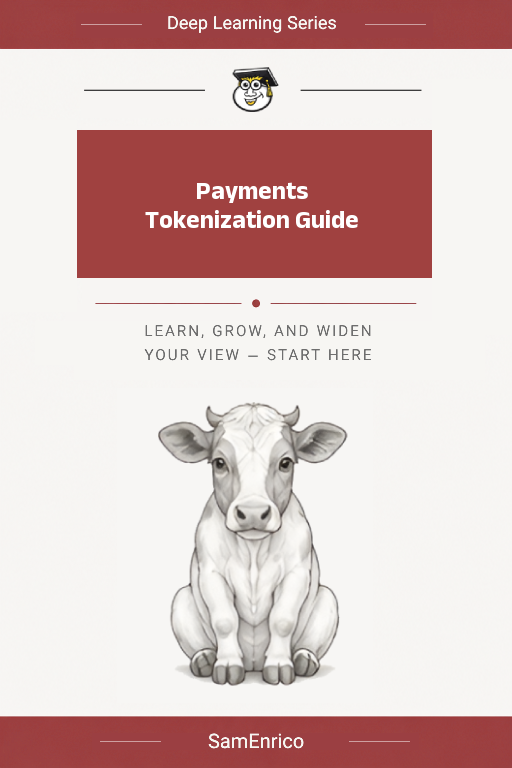
Payment Tokenization Outlook eBook
Forecast network tokenization adoption, merchant-o
Forecast network tokenization adoption, merchant-on-file tokenization, and PAN replacement rates through 2030.
Formats
Free sample
Chapter 1: The PAN Trap...--Every time you type your sixteen-digit card number into a website, you are effectively handing a stranger the keys to your financial life and trusting them to return it. That sounds hyperbolic until you understand what a Primary Account Number actually is. Unlike a password, which you can change after a breach, or a physical key, which you can re-cut, your PAN is permanent, static, and irreplaceable for the life of that card account. Once compromised, it can be used again and again, cloned, sold in bulk on dark web marketplaces, and tested against thousands of merchants until a fraudulent transaction slips through. This is not a design flaw.
It is a design feature from an era when credit cards were swiped in person, the card never left the merchant's sight, and the internet was a military research project. The world changed. The PAN did not.This book is about the end of that era. It is about a technology called tokenization that replaces the PAN with a disposable, context-bound surrogate that has no value outside a specific transaction, merchant, or device. And it is about the forecast, through 2030, of how quickly this replacement will happen across three critical domains: network tokenization (driven by Visa and Mastercard), merchant-on-file tokenization (for subscriptions and recurring payments), and the eventual replacement of the PAN itself as the primary identifier in payment systems.
But before we can look forward, we must fully understand the trap we are in. This chapter diagnoses the vulnerability of static PANs, quantifies the accelerating cost of fraud and data breaches, explains why encryption alone has failed to solve the problem, and provides a foundational taxonomy of tokenization that will frame the entire book. By the end of this chapter, you will understand why the sixteen-digit number on your card is not an asset but a liability, and why tokenization is not merely an improvement but a necessity.The Sixteen-Digit Vulnerability The PAN was invented for a physical world. When the first credit cards appeared in the 1950s, transactions happened face-to-face. The merchant imprint your card on a paper slip using a mechanical device called a knuckle-buster, you signed the receipt, and the merchant deposited the slip at the bank days later.
The PAN was never transmitted over wires. It was never stored in a database accessible from the other side of the planet. The security model was physical possession and handwritten signature, both of which are weak but at least required the attacker to be present.The internet destroyed that model. When you enter your PAN into a web form, you are transmitting that number across dozens of servers, multiple payment processors, and at least one acquiring bank before it reaches the card network and the issuing bank. At every hop, the PAN exists in plaintext somewhere, even if briefly.
And at many of those hops, it is stored for later use: for recurring billing, for chargeback resolution, for analytics, for fraud detection models that need historical data. Every merchant that stores your PAN becomes a potential point of failure. Every third-party processor becomes a potential vector. Every employee with database access becomes a potential insider threat.The scale of this exposure is staggering. According to the Nilson Report, global card fraud losses reached nearly thirty billion dollars in 2023.
Projections through 2028 exceed ninety-one billion dollars annually, driven not by any single innovation in attack methods but by the simple arithmetic of more cards, more online transactions, and more stored PANs across more merchants. The average compromised card is used fraudulently within an average of seven minutes of being posted for sale on the dark web. Attackers have automated the entire pipeline: breach a merchant, extract PANs, validate them through small test transactions, package them by issuing bank and card type, and sell them to fraudsters who then cycle through thousands of compromised cards until they find one that triggers an approval.The PAN's permanence is what makes this business model viable. If every PAN expired automatically after a single use, the dark web card markets would collapse overnight. But they do not.
A card number issued today may remain valid for two, three, or even five years. During that time, the cardholder may use it at hundreds of merchants. The cardholder may have no idea which of those merchants suffered a breach. And the issuing bank may have no way to know whether a given transaction is legitimate or fraudulent until after the fact, when the cardholder disputes the charge.This is the PAN trap. The number that enables convenient payments also enables convenient fraud.
The same properties that make the card easy to use make it easy to abuse. And as long as the PAN remains the primary identifier in payment systems, fraud is not a bug but a feature of the architecture.The Ninety-One Billion Dollar Question Let us put that ninety-one billion dollar figure into perspective. Annual global card fraud losses exceeding ninety-one billion dollars by 2028 is not merely a cost of doing business. It is a transfer of wealth from honest consumers and merchants to criminal enterprises. Every time you pay a higher price for goods because a merchant has to absorb fraud losses and chargeback fees, you are subsidizing the fraud economy.
Every time your bank raises your interest rate or annual fee to cover its fraud investigation and remediation costs, you are paying the tax of the PAN trap.But the direct fraud losses are only the visible tip of the iceberg. Below the surface lies a far larger cost structure that most merchants and consumers never see. Consider the cost of PCI compliance. The Payment Card Industry Data Security Standard requires any merchant that stores, processes, or transmits PANs to maintain a sprawling set of security controls: firewalls, encryption, access logging, vulnerability scanning, penetration testing, and annual audits. For a small merchant, these costs can easily exceed twenty thousand dollars per year.
For a large enterprise, they run into the millions. And the irony is that PCI compliance does not prevent breaches. It reduces the likelihood of certain types of breaches and mitigates the damage when they occur, but a compliant merchant can still be breached, as the long list of PCI-compliant companies that have suffered data compromises makes painfully clear.Then there are the indirect costs that never appear on any profit and loss statement but nevertheless destroy value. Fraud detection systems generate false positives, declining legitimate transactions because they look suspicious. These false declines, also known as false positives, cost merchants an estimated twenty times more than the fraud they prevent, because a declined legitimate customer often abandons the purchase permanently.
The customer does not know it was a false positive. They know only that their card was rejected, they are frustrated, and they will take their business elsewhere. The best estimate from the industry is that false declines cost global merchants more than one hundred billion dollars annually in lost sales, exceeding the direct cost of fraud by a wide margin.And finally, there is the human cost. Every cardholder who has received a fraud alert for a transaction they did not make has experienced the…
This is the end of the free sample. Get the eBook to keep going. Buy now
About this book
Details
- Author
- Alderman Rossie
- Publisher
- SamEnrico
- Language
- English
- Genre
- Non-Fiction, Forecast & Outlook, Tokenization
- Released
- 2026-06-01
- Pages (approx.)
- 143
- Available as
- eBook, Audiobook

Read better in the ZLOADR app
Your eBooks on your phone or tablet. Sign in with your SamEnrico account and start reading.
More by Alderman Rossie
 Harvard Extension vs LSE Technology RequirementsAlderman Rossie$11.99
 IBS Food Chemical Sensitivity GuideAlderman Rossie$11.99
 The Lake Superior MysteryAlderman Rossie$11.99
 Glial Cell Pain AmplificationAlderman Rossie$11.99
 Frostbound: The Troll King's HeartAlderman Rossie$11.99
 The Unlikely Alliance: How a Tech Titan and a Fast-Food Mogul Reshaped AmericaAlderman Rossie$11.99
 Understanding Hydrocephalus Endocardial Fibroelastosis CataractAlderman Rossie$17.99
 Employment Compliance HandbookAlderman Rossie$12.99
 Software Engineering SpecialistAlderman Rossie$11.99
 How to Become a Screen OperatorAlderman Rossie$11.99