
Non-FictionBiographyTragic Legends
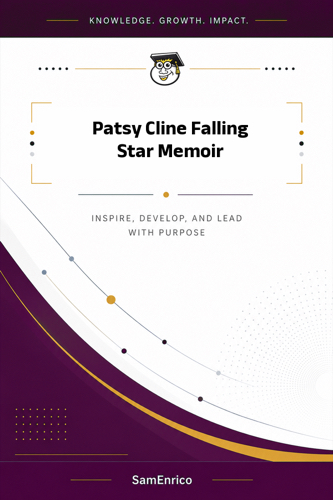
Patsy Cline Falling Star Memoir eBook
Trace the tragic brilliance of country's first cro
Trace the tragic brilliance of country's first crossover female superstar.
Formats
Free sample
Chapter 1: The Rocking Chair Pact...--The chair was maple, stained dark by decades of tobacco smoke and sweat, and it sat on the porch of a white clapboard house at 608 South Kent Street in Winchester, Virginia, where the Shenandoah Valley curled into the Blue Ridge like a fist unclenching. Virginia Patterson Hensley was not born in that house—she arrived in 1932 at the Winchester Medical Center, a squalling six-pounder with her father’s dark hair and her mother’s stubborn chin—but the rocking chair would become the geography of her childhood boredom and, later, the symbol of everything she needed to destroy.She learned to walk in its shadow. She learned to sing while her mother Hilda rocked in it, humming Methodist hymns through chapped lips. And one night in 1947, when she was fifteen years old, she sat in that chair herself for the last time, stared out at the darkening street, and made a pact with the hollow dark: I will not die here. I will not become this.The rocking chair would outlive her.
It sits now in the Country Music Hall of Fame, behind glass, a relic of the stillness she spent her whole brief life fleeing. But in 1932, when the Depression pressed its thumb into the Shenandoah Valley and turned farmers into beggars and fathers into ghosts, the chair was just furniture. The real story was inside the house.The Blacksmith and the Silent Woman Samuel Lawrence Hensley was a man built for a century that had already left him behind. He stood six feet tall with hands that could shoe a horse or shatter a doorframe, and he worked as a blacksmith in a town that no longer needed blacksmiths—the automobile had seen to that. By the time Virginia was born, Samuel had already begun the slow, spectacular unraveling that would define her childhood.
He drank corn whiskey like other men drank coffee. He came home with his knuckles split and his breath a furnace of rotgut and rage. And he beat his wife Hilda with a frequency that the neighbors learned to ignore.Hilda Patterson Hensley—she kept her maiden name as a middle name, a small act of defiance—was the daughter of a railroad man, raised to endure. She had married Samuel at sixteen, believing his charm was character. By the time she realized her mistake, she had three children: Sylvia, Samuel Jr., and the baby, Virginia, born September 8, 1932, in the depths of the Depression.
Hilda’s face settled into a mask of grim acceptance. She did not scream when Samuel hit her. She did not run. She simply waited.Virginia, called Ginny by the family, learned two things from her mother: that silence was survival, and that survival was not enough.The house on South Kent Street was small—three bedrooms, a parlor, a kitchen with a wood-burning stove—but it felt smaller when Samuel was home. His presence filled every room like smoke.
The children learned to read his moods: the heavy tread on the porch steps meant trouble; the jingle of keys meant he was leaving, which was its own kind of relief. Virginia, the youngest, became an expert at disappearing. She would slip into the backyard, climb the crabapple tree, and sing to herself—gospel songs from the Methodist church, hillbilly tunes from the radio, anything to drown out the sound of her mother’s quiet weeping.Music was not yet a weapon. It was a door.The Gospel Seed The Winchester Methodist Church stood three blocks from the Hensley house, a white spire pointing at a God who seemed, to young Virginia, perpetually distracted. Hilda took the children every Sunday, not out of faith but out of habit—it was what respectable women did, even respectable women with black eyes they explained away as falls and accidents.Virginia hated the sermons.
But she loved the singing.The congregation’s voices rose in four-part harmony, raw and untrained, and she would stand in the pew beside her mother and open her mouth and feel something shift in her chest. Not piety. Power. When she sang, people looked at her. Not at her father’s disgrace or her mother’s bruises—her.
The alto section became her first stage. The pastor’s wife, a woman named Mrs. Callahan with a voice like a rusty gate, took Virginia aside one Sunday and said, “Child, you’ve got a gift. Don’t waste it.”She didn’t. She practiced in the crabapple tree, in the kitchen while washing dishes, in the bed she shared with Sylvia, late at night, her voice a whisper against the wallpaper.
She learned to mimic the gospel singers on the radio—the Carter Family, the Monroe Brothers—and then to bend their melodies into something new. Something hers.But gospel was only the beginning. The real education came from the other side of the dial.The Radio Education The Hensley household had a Philco radio that sat on a doily in the parlor, and Virginia was its most devoted listener. After school, while her mother napped and her father drank somewhere she couldn’t see, she would turn the dial and let the world pour in.She found Kay Starr, the Oklahoma girl with the swaggering contralto, singing “Wheel of Fortune” like she didn’t care if the wheel crushed her. She found Jo Stafford, whose voice was cool and clear as mountain spring water, and she tried to copy that clarity—failed, realized her own voice was warmer, thicker, better suited to heartache than detachment.
She found Dinah Shore, who had grown up in Tennessee and made the jump from country to pop without losing her Southern soul.And then, when she was seventeen—late 1949, the year Hank Williams released “Lovesick Blues” and changed everything—she heard a voice that sounded like the inside of her own head. Williams sang with a ache that was not表演ed. It was lived. Every cracked note, every catch in his throat, every slide from a high lonesome tenor into a spoken whisper—it was the sound of a man who had been hurt and was not afraid to let you know it.Virginia sat in the rocking chair that night, the radio glowing in the dark, and listened to “Lovesick Blues” three times in a row. Then she rewound it in her head and sang it back to herself, softly, testing each note.I’m lovesick, blue-hearted, and I don’t care who knows it.She knew, then, what she wanted to be.
Not a gospel singer. Not a hillbilly yodeler. A storyteller. A woman who could take the ache of the South—the poverty, the violence, the desperate clinging to joy—and turn it into music that made people feel less alone.The Father’s Departure Samuel Hensley did not leave dramatically. There was no shouting, no slammed door, no final confrontation.
In 1947, when Virginia was fifteen, he simply stopped coming home.One week. Two weeks. A month.Hilda did not call the police. She did not write letters. She told the children, “Your father is working out of town,” and then, after three months, she…
This is the end of the free sample. Get the eBook to keep going. Buy now
About this book
Details
- Author
- Calabrese Anamaria
- Publisher
- SamEnrico
- Language
- English
- Genre
- Non-Fiction, Biography, Tragic Legends
- Released
- 2026-06-07
- Pages (approx.)
- 120
- Available as
- eBook, Audiobook

Read better in the ZLOADR app
Your eBooks on your phone or tablet. Sign in with your SamEnrico account and start reading.
More by Calabrese Anamaria
 Academic Probation Recovery WorkbookCalabrese Anamaria$11.99
 Failure Fear for Gifted KidsCalabrese Anamaria$11.99
 Carson Contrarian Woman Persona GuideCalabrese Anamaria$11.99
 APOE4 Genetic Risk ManagementCalabrese Anamaria$11.99
 Frozen Hearts: The Arctic Love Story of Roald Amundsen and Hjalmar JohansenCalabrese Anamaria$11.99
 Whispers in the Wisteria: The Cursed Bride of KyotoCalabrese Anamaria$11.99
 Ultimate Handbook Guide to Warangal : (India) Travel GuideCalabrese Anamaria$11.99
 AI Budget Monitoring GuideCalabrese Anamaria$12.99
 Prompt Engineering for Deck CreatorsCalabrese Anamaria$12.99
 Understanding Fox–fordyce DiseaseCalabrese Anamaria$17.99
 Water SommelierCalabrese Anamaria$11.99
You may also like
 Hong Kong Handover 1997Dunn Johnnie$11.99
 Zumba For Postnatal Recovery CourseNeal Christian$11.99
 Zumba for BeginnersLadner Nikia$11.99
 YouTube Comment Mining GuideHumes Pandora$12.99
 Worry Box MeditationCarlin Rudy$11.99
 Workplace Stress MeditationNguyen Lynn$11.99
 Workplace Stress and Sleep RepairHawley Ivory$11.99
 Workplace Perfectionism CureDelaney Jeffry$11.99
 Workplace Injustice Anger GuideWallen Isabelle$11.99
 Work Addiction and Burnout LinkGreenwood Ester$11.99
 Women in Yoga and WellnessBeattie Galina$11.99
 Women in Stand Up ComedyChun Evangeline$11.99