
Non-FictionSelf-HelpHome Environment
Pantry Purge Guide eBook
Removes trigger foods from home environment.
by Trask Elma
Removes trigger foods from home environment.
Formats
Free sample
Chapter 1: The Biochemistry of a Craving--–- You are standing in your kitchen at 9:47 PM. The dishes are done. The house is quiet. You are not hungry—you had a satisfying dinner two hours ago. Yet your hand is already opening the cabinet door.
You tell yourself you will have just one. One cookie. One handful of chips. One small bowl of ice cream. Forty-five minutes later, the sleeve is empty, the bag is crumpled, and the pint is in the trash, buried under coffee grounds so no one will see it.
You feel ashamed, confused, and exhausted. Why did you do that again? What is wrong with you?The answer, it turns out, is nothing. Nothing is wrong with you. You are not weak-willed.
You are not broken. You are not lacking moral character or discipline. You are, however, fighting a battle you were never designed to win—a battle against foods that have been meticulously engineered to override your brain’s natural stop signs. And you have been fighting that battle with the wrong weapons.This chapter will fundamentally change how you understand every craving you have ever experienced. By the time you finish reading, you will never again describe yourself as “addicted to sugar” or “lacking willpower.” Instead, you will see yourself clearly: as a human being with a perfectly normal brain, operating in a food environment that has been deliberately designed to exploit your biology.
And once you see that clearly, the solution becomes obvious. It is not more willpower. It is not a stricter diet. It is not self-punishment. It is environmental change.Let us begin with the most important distinction you will ever make about eating.Biological Hunger Versus Hedonic Hunger Every time you feel the urge to eat, you are experiencing one of two fundamentally different biological states.
Understanding the difference is the single most important step in breaking the cycle of trigger eating.Biological hunger is physical. It is your body’s genuine need for energy and nutrients. You know you are experiencing biological hunger when you feel stomach growling, low energy, difficulty concentrating, slight headache, irritability (the classic “hangry” state), or a sense of emptiness in your stomach. Biological hunger builds gradually, can be satisfied by almost any food, and goes away once you have eaten enough. It is your body’s fuel gauge, nothing more.Hedonic hunger is entirely different.
Hedonic hunger is the desire to eat for pleasure, not for energy. You experience hedonic hunger when you are physically full but still want something specific—usually something sweet, salty, fatty, or crunchy. Hedonic hunger comes on suddenly, often triggered by a sight, smell, memory, or emotion. It is intensely focused on particular foods (not “something to eat” but “those chips, that ice cream, this specific cookie”). And most importantly, hedonic hunger does not go away when you are full.
In fact, for many people, hedonic hunger gets stronger the more you eat, creating a cycle that feels impossible to break.Here is what the food industry knows that you do not: approximately seventy to eighty percent of the eating that happens in modern industrialized countries is hedonic, not biological. Most people are not eating because they need energy. They are eating because they have been triggered—by stress, boredom, loneliness, advertising, habit, or the mere sight of food—to seek pleasure from hyper-palatable substances that have no nutritional necessity.This is not your fault. It is the direct result of a fifty-billion-dollar food engineering industry that has spent decades figuring out exactly how to make you eat more than you need, more than you want, and more than you intended.The Dopamine Loop: How Your Brain Gets Hooked To understand why some foods feel irresistible, you need to understand a small molecule called dopamine. Dopamine is a neurotransmitter—a chemical messenger in your brain—that is responsible for motivation, reward, and reinforcement.
When you do something that supports survival (eating, drinking water, having sex, bonding with others), your brain releases dopamine. That dopamine creates a feeling of pleasure and, more importantly, creates a memory of the action that led to the pleasure. The next time you encounter the same situation, your brain releases dopamine in anticipation, motivating you to repeat the action.This system evolved over millions of years to keep you alive. In the ancestral environment, the most calorie-dense foods available were ripe fruit (sugar) and animal fat (fat). Your brain was designed to release a large amount of dopamine when you found these rare, valuable foods, ensuring that you would remember where to find them and seek them out again.Here is where everything changed.
In the last fifty years, food scientists have learned to concentrate sugar, fat, and salt far beyond anything that exists in nature. They have learned to combine them in specific ratios that maximize dopamine release—creating a reward signal far more intense than anything your brain evolved to handle. This is not accidental. It is the result of decades of research conducted by companies like Frito-Lay, Nestlé, General Mills, and Kraft, employing hundreds of Ph D-level food scientists whose explicit job is to find the “Bliss Point.”The Bliss Point: The Exact Formula for Addiction The Bliss Point is a specific ratio of sugar, fat, and salt that maximizes palatability. It was discovered through thousands of hours of consumer testing, where researchers varied the concentration of each ingredient and measured which combination produced the highest “liking” scores.
The result is a narrow window of ratios where the food is not too sweet, not too salty, not too fatty, but exactly right—so right that your brain’s reward system fires at maximum intensity.Here are some examples of foods engineered precisely to the Bliss Point:Potato chips. The ideal chip has approximately fourteen percent fat, one and a half percent salt, and a small amount of sugar (from the potato itself). At these levels, the chip is not greasy enough to feel unpleasant, not salty enough to make you stop, and not sweet enough to register as dessert. You can eat chips continuously without ever hitting a satiety signal.Ice cream. Premium ice cream brands target approximately sixteen percent fat and twenty percent sugar.
At these levels, the ice cream is cold enough to numb your taste buds slightly (allowing you to eat more before detecting sweetness), while the fat content delivers a slow, steady dopamine release that keeps you eating past fullness.Cookies and crackers. These products are carefully calibrated so that the first bite delivers a burst of sweetness (sugar on the tongue), followed by a slower release of fat (butter or oil), with salt added to suppress bitterness and enhance crunch. The combination creates a “vanishing caloric density” where your brain does not register how much you have eaten until you have finished the entire package.The Bliss Point explains why you can eat an entire bag of chips but feel satisfied after a baked potato. The baked potato has fat and salt only on the surface; the interior is bland, triggering satiety signals. The chip has fat and salt distributed throughout every bite, plus the added variable of crunch—which researchers…
This is the end of the free sample. Get the eBook to keep going. Buy now
About this book
Details
- Author
- Trask Elma
- Publisher
- SamEnrico
- Language
- English
- Genre
- Non-Fiction, Self-Help, Home Environment
- Released
- 2026-06-11
- Pages (approx.)
- 156
- Available as
- eBook, Audiobook

Read better in the ZLOADR app
Your eBooks on your phone or tablet. Sign in with your SamEnrico account and start reading.
More by Trask Elma
 Parimutuel Betting AddictionTrask Elma$11.99
 The Pilot Overdose SurvivorTrask Elma$11.99
 Compassion Fatigue in CaregivingTrask Elma$11.99
 Einstein Photoelectric EffectTrask Elma$11.99
 Psychological Relapse Prevention for DepressionTrask Elma$11.99
 Iraq Camp To ManchesterTrask Elma$11.99
 Growth Hormone Secretagogue GuideTrask Elma$11.99
 Anticipatory Grief GuideTrask Elma$11.99
 The Last Stand: The Miracle on Ice's Forgotten HeroTrask Elma$11.99
 Bread and Blood: The Silk Road Uprising of 1347Trask Elma$11.99
 The Icebound Odyssey: Shackleton's Forgotten Rescue MissionTrask Elma$11.99
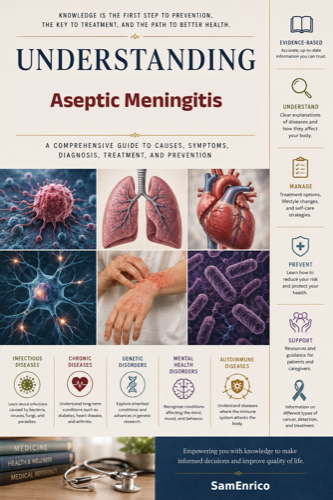 Understanding Aseptic MeningitisTrask Elma$17.99
You may also like
 Hong Kong Handover 1997Dunn Johnnie$11.99
 Zumba For Postnatal Recovery CourseNeal Christian$11.99
 Zumba for BeginnersLadner Nikia$11.99
 YouTube Comment Mining GuideHumes Pandora$12.99
 Worry Box MeditationCarlin Rudy$11.99
 Workplace Stress MeditationNguyen Lynn$11.99
 Workplace Stress and Sleep RepairHawley Ivory$11.99
 Workplace Perfectionism CureDelaney Jeffry$11.99
 Workplace Injustice Anger GuideWallen Isabelle$11.99
 Work Addiction and Burnout LinkGreenwood Ester$11.99
 Women in Yoga and WellnessBeattie Galina$11.99
 Women in Stand Up ComedyChun Evangeline$11.99