
Non-FictionHealth & WellnessPalliative Medicine
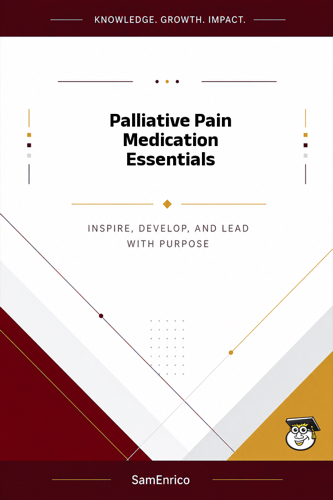
Palliative Pain Medication Essentials
End of life pain control using opioids, adjuvants,
by Worden Debby
End of life pain control using opioids, adjuvants, and non oral routes.
Formats
About this book
Free sample
Chapter 1: The Total Pain Deception--The morphine syringe was pre-filled, the dose had been increased three times in two weeks, and still Mr. Daniels lay curled on his side, eyes squeezed shut, whispering, "Please, make it stop." His prostate cancer had metastasized to his spine and pelvis. By all biomedical metrics, his opioid dose should have been sufficient. But no one had asked about his wife of fifty-two years, who had died in the bed beside him just forty-eight hours earlier. No one had asked if he had a caregiver at home.
No one had asked what he feared most. The answer, when someone finally asked, was simple and devastating: "I'm going to die alone, and no one will even notice."This is the central deception that undermines most end-of-life pain management. The deception is not malicious, but it is pervasive. It is the assumption that pain is purely a biological signal—a nociceptive or neuropathic impulse traveling along nerve fibers to be quantified on a zero-to-ten scale and extinguished with the appropriate receptor agonist. This biomedical model works reasonably well for a postoperative patient with a broken bone.
It fails catastrophically for the dying patient.The deception has a name in palliative care literature, though it rarely appears in general medical training: the total pain deception. It is the false belief that opioid dose is the only variable that matters. In reality, untreated psychological, social, and spiritual distress will render even the most meticulously calculated opioid regimen partially or completely ineffective. Morphine cannot treat grief. Hydromorphone cannot repair a bankrupt family.
Fentanyl cannot reconcile a patient with a God they feel has abandoned them. Yet clinicians continue to escalate opioid doses when a total pain assessment would have revealed that the patient needed a chaplain, a social worker, a phone call to a estranged child, or simply someone to sit at the bedside and bear witness.This chapter dismantles the pure biomedical model and replaces it with a framework that has been validated by every major palliative care textbook of the last four decades: total pain. You will learn to distinguish…
This is the end of the free sample. Get the eBook to keep going. Buy now
Contents
- Chapter 1
- Chapter 2
- Chapter 3
- Chapter 4
- Chapter 5
- Chapter 6
- Chapter 7
- Chapter 8
- Chapter 9
- Chapter 10
- Chapter 11
- Chapter 12
Details
- Author
- Worden Debby
- Publisher
- SamEnrico
- Language
- English
- Genre
- Non-Fiction, Health & Wellness, Palliative Medicine
- Released
- 2026-06-10
- Pages (approx.)
- 142
- Available as
- eBook, Audiobook

Read better in the ZLOADR app
Your eBooks on your phone or tablet. Sign in with your SamEnrico account and start reading.
More by Worden Debby
 Personal Ing For Success Board SeatsWorden Debby$11.99
 Intuitive Eating Body Scan HandbookWorden Debby$11.99
 Scheduling Important Tasks FirstWorden Debby$11.99
 Sponsorship in Twelve Step ProgramsWorden Debby$11.99
 The Great Beer Heist: How a Brewery Outsmarted ProhibitionWorden Debby$11.99
 Beneath the Black Diamond: The Forgotten Vein of ButteWorden Debby$11.99
 Understanding Bk Virus NephritisWorden Debby$17.99
 Career Switcher Bootcamp PathWorden Debby$12.99
 Alibaba Sourcing Playbook For ResellersWorden Debby$12.99
 Solution DesignerWorden Debby$11.99
 How to Start a Poultry Dishes Business (Beginners Guide)Worden Debby$11.99
You may also like
 Hong Kong Handover 1997Dunn Johnnie$11.99
 Zumba For Postnatal Recovery CourseNeal Christian$11.99
 Zumba for BeginnersLadner Nikia$11.99
 YouTube Comment Mining GuideHumes Pandora$12.99
 Worry Box MeditationCarlin Rudy$11.99
 Workplace Stress MeditationNguyen Lynn$11.99
 Workplace Stress and Sleep RepairHawley Ivory$11.99
 Workplace Perfectionism CureDelaney Jeffry$11.99
 Workplace Injustice Anger GuideWallen Isabelle$11.99
 Work Addiction and Burnout LinkGreenwood Ester$11.99
 Women in Yoga and WellnessBeattie Galina$11.99
 Women in Stand Up ComedyChun Evangeline$11.99