
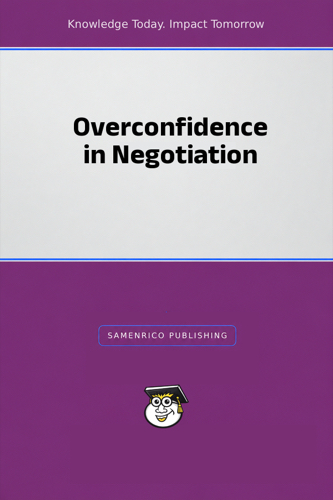
Non-FictionBusiness BriefNegotiation
Overconfidence in Negotiation
Calibrate your certainty to avoid leaving value on
Calibrate your certainty to avoid leaving value on the table.
Formats
About this book
Free sample
Chapter 1: The Winner’s Remorse--–The deal closed in eleven minutes. David, a regional sales director for a mid‑sized logistics firm, had walked into the conference room expecting a fight. Instead, the client’s procurement lead smiled, nodded at his proposal, and said, “We can live with that.” Handshake. Signature. David was back in his car before his coffee went cold.He called his boss to celebrate.
“Easiest deal of the quarter,” he said. “They didn’t push back on anything.”His boss paused. “David, how much did you leave on the table?”That night, David couldn’t sleep. He kept replaying the conversation. The client had agreed to $2.1 million.
But what if they had been authorized for $2.7 million? What if the quick “yes” wasn’t a victory but a sign that he had never asked for enough? He had felt so confident walking in. Now that confidence felt like a mistake.David had just discovered what this book calls winner’s remorse—the sinking feeling that you could have gotten more, not because the other side said no, but because they said yes too fast.The Most Expensive Emotion in Business Most negotiators believe their biggest enemy sits across the table. They prepare for aggression, deception, and hard bargaining.
They study tactics to counter tough opponents. And then they celebrate when the other side folds quickly.That celebration is misplaced.The most expensive emotion in negotiation is not fear, anger, or greed. It is certainty—the quiet confidence that you know what the deal is worth, what the other side will accept, and when to stop asking.Certainty feels like strength. It feels like preparation paying off. It feels like expertise.
But in negotiation, certainty is a trap. It closes your ears, silences your curiosity, and convinces you to stop exactly when you should keep going.This chapter introduces the foundational problem of this book: a deal accepted too quickly is rarely a good deal. We will explore why fast agreements signal missed opportunity, why your confidence is likely overconfidence, and how a single diagnostic question can save you…
This is the end of the free sample. Get the eBook to keep going. Buy now
Contents
- Chapter 1
- Chapter 2
- Chapter 3
- Chapter 4
- Chapter 5
- Chapter 6
- Chapter 7
- Chapter 8
- Chapter 9
- Chapter 10
- Chapter 11
- Chapter 12
Details
- Author
- Valles Stephaine
- Publisher
- SamEnrico
- Language
- English
- Genre
- Non-Fiction, Business Brief, Negotiation
- Released
- 2026-06-08
- Pages (approx.)
- 115
- Available as
- eBook, Audiobook

Read better in the ZLOADR app
Your eBooks on your phone or tablet. Sign in with your SamEnrico account and start reading.
More by Valles Stephaine
 Exercise Emotional RegulationValles Stephaine$11.99
 Tobacco Withdrawal Symptom SolverValles Stephaine$11.99
 Workplace Stress and Workload PrioritizationValles Stephaine$11.99
 Gold and Scandal: The Fall of Middle East's Olympic HeroValles Stephaine$11.99
 How to Produce Art CharcoalsValles Stephaine$11.99
 Audit Trail Automation PrimerValles Stephaine$12.99
 AutocrossValles Stephaine$11.99
 How to Become a Stock ClerkValles Stephaine$11.99
You may also like
 Hong Kong Handover 1997Dunn Johnnie$11.99
 Zumba For Postnatal Recovery CourseNeal Christian$11.99
 Zumba for BeginnersLadner Nikia$11.99
 YouTube Comment Mining GuideHumes Pandora$12.99
 Worry Box MeditationCarlin Rudy$11.99
 Workplace Stress MeditationNguyen Lynn$11.99
 Workplace Stress and Sleep RepairHawley Ivory$11.99
 Workplace Perfectionism CureDelaney Jeffry$11.99
 Workplace Injustice Anger GuideWallen Isabelle$11.99
 Work Addiction and Burnout LinkGreenwood Ester$11.99
 Women in Yoga and WellnessBeattie Galina$11.99
 Women in Stand Up ComedyChun Evangeline$11.99