
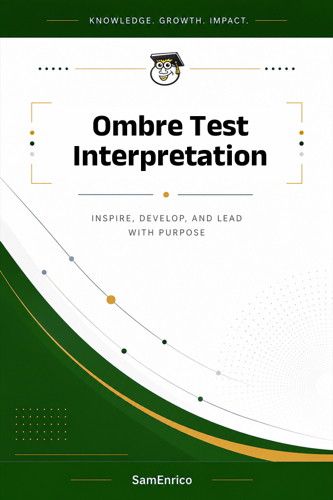
Ombre Test Interpretation eBook
Analyzes this affordable sequencing kit.
Analyzes this affordable sequencing kit.
Formats
Free sample
Chapter 1: The Genetic Mirror...--We are living through the strangest revolution in medical history. You can now sequence the bacteria in your gut for less than the cost of a nice dinner out. You can do it without a doctor's prescription, without leaving your home, and without understanding a single word of the molecular biology behind it. That last part is the problem.The Ombre test arrived like so many health innovations—wrapped in promise, marketed with simplicity, and handed to consumers without an instruction manual that actually explains what the results mean. The company gives you a dashboard with scores and percentiles and colorful charts.
They tell you that you have a certain "Gut Health Score" and that you rank in some percentile compared to other users. What they don't tell you is that most of their users are already health-conscious people who take probiotics and eat kale. Being in the 50th percentile among that crowd might actually mean you are severely dysbiotic compared to the general population. They don't tell you that either.This book exists because the gap between taking the test and understanding the test is wider than most people realize. I have watched hundreds of Ombre users stare at their results with the same expression—a mixture of curiosity and confusion, holding a printout of their bacterial phyla like a treasure map written in a language they do not speak.The goal of this chapter is simple.
By the time you finish reading it, you will understand exactly what the Ombre test measures, what it cannot measure, and why that distinction matters more than anything else in this book. You will learn why 16S r RNA sequencing is both revolutionary and limited. You will understand the difference between knowing which bacteria are present and knowing what those bacteria are doing. And you will walk away with a clear protocol for making your test results as accurate and reproducible as possible—because without that, nothing else in this book matters.Let us begin with the science. Not the boring kind you slept through in high school.
The kind that will make you feel like you have X-ray vision into your own body.The Barcode That Changed Everything Every living thing on Earth carries genetic information. Humans have DNA coiled inside the nucleus of nearly every cell. Bacteria have DNA too, but they do not keep it in a nucleus. It floats freely in the cytoplasm, a single circular chromosome that contains everything the bacterium needs to survive and reproduce.But here is where it gets interesting for our purposes. All bacteria share a specific gene that is not found in human cells, not found in viruses, not found in fungi.
It is called the 16S ribosomal RNA gene. Think of it as a bacterial barcode—a piece of genetic code that is present in every bacterium on the planet, from the beneficial Lactobacillus in your yogurt to the pathogenic E. coli that causes food poisoning.The 16S gene has a beautiful property for scientists. It contains regions that are nearly identical across all bacteria—these are the "conserved" regions that allow us to recognize that we are looking at a bacterial gene at all. But it also contains regions that vary significantly from one species to another.
These are the "hypervariable" regions, and they act like unique fingerprints.When you send your stool sample to Ombre, their lab extracts all the DNA from your sample. Then they use a technique called polymerase chain reaction—PCR for short—to specifically amplify the 16S genes. They sequence those genes. Then they compare the sequences they find to a massive reference database of known bacteria. The result is a list of every bacterial genus present in your gut, along with how abundant each one is relative to the others.This is brilliant in its simplicity.
You do not need to culture the bacteria in a lab—which is slow, expensive, and often impossible because many gut bacteria cannot grow outside the human body. You do not need to know exactly what you are looking for in advance. You just sequence the barcodes and let the database do the identification.But there is a catch. Several catches, actually. And understanding them is the difference between using your Ombre test wisely and being misled by it.Genus Versus Species: Why the Difference Matters Here is the single most important concept in this entire chapter.
The Ombre test identifies bacteria primarily at the genus level, not the species level.Let me explain what that means. In biological classification, life is organized into a hierarchy. Domain, kingdom, phylum, class, order, family, genus, species. Think of it like addresses. The genus is like the street name.
The species is like the house number. Knowing the street name gets you to the right neighborhood. Knowing the house number gets you to the exact front door.Ombre reliably tells you the street name. It is much less reliable at telling you the house number.Why does this matter? Because different species within the same genus can have completely opposite effects on your health.
Consider the genus Escherichia. Most people have heard of E. coli and assume it is always bad. But within the Escherichia genus, there are hundreds of species and strains. E.
coli Nissle 1917 is a beneficial probiotic used to treat inflammatory bowel disease. E. coli O157:H7 is a deadly pathogen that causes kidney failure. Both are E. coli.
Both would show up in your Ombre report as Escherichia. The test cannot tell you which one you have.Consider Bacteroides. This genus is generally considered beneficial. Bacteroides thetaiotaomicron helps break down complex carbohydrates and supports a healthy gut barrier. But Bacteroides fragilis can cause abscesses and bloodstream infections if it escapes the gut.
Both appear as Bacteroides on your report.Consider Lactobacillus. Most people think of it as universally good. Lactobacillus acidophilus helps with digestion and immune function. Lactobacillus casei can produce histamine and trigger symptoms in people with histamine intolerance. Lactobacillus reuteri has mixed effects depending on the specific strain.
Your Ombre report will just say Lactobacillus.Here is the good news. For approximately ninety percent of the dietary and lifestyle interventions you might make based on your Ombre results, the genus level is sufficient. You do not need to know exactly which species of Akkermansia you have to know that feeding it with polyphenols is beneficial. You do not need to distinguish between different Bifidobacterium species to know that increasing your intake of prebiotic fiber will help the entire genus.But for that remaining ten percent, the genus level can be actively misleading. This is especially true for the histamine issue we will explore in Chapter 8, where high Lactobacillus might be a problem rather than a solution.
It is also true for anyone with a compromised immune system, where even generally beneficial genera can pose risks if certain species are present.Throughout this book, when I discuss specific bacteria, I will be clear about whether I am referring to a genus or a species. When I say Akkermansia, I mean the genus. When I say Akkermansia muciniphila, I am discussing the specific species…
This is the end of the free sample. Get the eBook to keep going. Buy now
About this book
Details
- Author
- Brandon Lisette
- Publisher
- SamEnrico
- Language
- English
- Genre
- Non-Fiction, Health & Wellness, Affordable Testing
- Released
- 2026-06-07
- Pages (approx.)
- 145
- Available as
- eBook, Audiobook

Read better in the ZLOADR app
Your eBooks on your phone or tablet. Sign in with your SamEnrico account and start reading.
More by Brandon Lisette
 Surgery Recovery Sleep AidBrandon Lisette$11.99
 Morocco Remote Tax GuideBrandon Lisette$11.99
 Mindfulness Meditation for JealousyBrandon Lisette$11.99
 Breakup Insomnia GuideBrandon Lisette$11.99
 TM for ProcrastinationBrandon Lisette$11.99
 Sleep Apnea Erectile DysfunctionBrandon Lisette$11.99
 Nolan InceptionBrandon Lisette$11.99
 Pomodoro For DeclutteringBrandon Lisette$11.99
 Silent Payoffs: The Secret Tapes That Toppled a MayorBrandon Lisette$11.99
 Sergei Diaghilev and the Birth of the Ballets Russes: A Revolution in MotionBrandon Lisette$11.99
 The Fire and Fury of Beethoven: Music as Earth-Shaking ForceBrandon Lisette$11.99
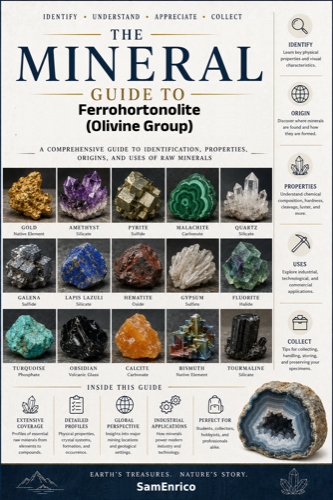 The Mineral Guide to Ferrohortonolite (Olivine Group)Brandon Lisette$11.99