
Non-FictionSelf-HelpPower Naps
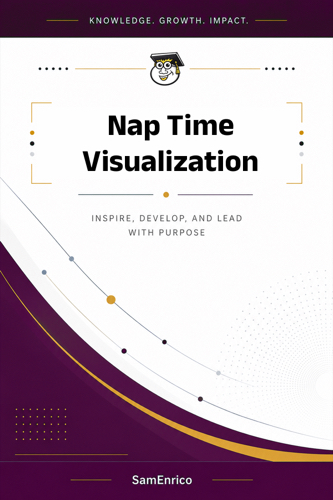
Nap Time Visualization eBook
Use short imagery sequences to drift into restorat
Use short imagery sequences to drift into restorative daytime rest.
Formats
Free sample
Chapter 1: The 2 PM Monster--–- You are reading this because you know exactly what I am about to describe. You have felt it hundreds of times. Perhaps you are feeling it right now, at this very moment, as your eyes struggle to focus on these words and your third cup of coffee sits lukewarm and useless beside your keyboard.It arrives like a thief. Sometime between 1:30 and 3:00 in the afternoon, the world loses its sharp edges. Your thoughts become sticky, slow, as if wading through shallow water.
A sentence you could have written in thirty seconds this morning now requires two minutes of staring at a blinking cursor. Your eyelids develop a gravity of their own, pulling downward with each blink. You tell yourself you just need to push through. You tell yourself that everyone feels this way. You tell yourself that stopping would be weak, lazy, unprofessional.And so you push.
You open a fourth browser tab. You stand up and stretch. You pour that third cup of coffee. You promise yourself you will make it to 5 PM, and then you will collapse on the couch and feel guilty about the takeout you will inevitably order because you are too exhausted to cook.This is the 2 PM Monster. And it is not your fault.The Most Expensive Hour of Your Day Before we go any further, I want you to perform a small calculation.
Think about your hourly rate at work. If you are salaried, divide your annual pay by two thousand (roughly the number of working hours in a year). If you are hourly, use your actual rate. Now multiply that number by one hour. That is what the 2 PM Monster costs you every single day.But that is only the direct cost.
The hidden costs are far larger. The emails sent during the 2 PM fog that contain typos, misunderstandings, or accidentally curt tones that require damage control later. The creative problem that went unsolved because your brain simply could not find the connection it needed. The conversation with your partner or child that evening that was shorter and sharper than it should have been because you were still recovering from the afternoon crash. The workout you skipped.
The book you did not read. The thirty minutes you spent scrolling your phone because you were too drained to do anything else.The 2 PM Monster does not just steal an hour. It steals your evening. It steals your presence. It steals your patience.And here is the most infuriating part: you have been told your entire life that this is normal, that this is just what it means to be a productive adult, that the solution is more caffeine, more willpower, more discipline.
But what if the opposite were true? What if the 2 PM crash is not a sign that you are weak, but a sign that your body is working exactly as it evolved to work? What if the solution is not more effort, but less? What if the most productive thing you could do right now is close your eyes?The Circadian Secret Your Boss Doesn't Want You to Know Every living creature on this planet operates on a roughly twenty-four-hour internal clock called the circadian rhythm. It is not a metaphor.
It is a biological reality, encoded in every cell of your body, governed by a master clock in your brain called the suprachiasmatic nucleus. This clock tells you when to feel awake and when to feel sleepy. It controls your body temperature, your hormone release, your digestion, even the way your cells repair themselves.For most of human history, this was not a problem. Our ancestors woke with the sun, worked through the morning, rested during the hottest part of the afternoon (the siesta is not a cultural accident; it is a biological adaptation), worked again in the late afternoon and evening, and slept when the sun went down. The circadian rhythm and the workday were roughly aligned.Then the Industrial Revolution happened.
We invented artificial light. We invented the eight-hour workday, then the nine-hour workday, then the ten-hour workday. We decided that rest was weakness and that the ideal employee was a machine that could operate continuously from 9 AM to 5 PM without interruption. We forgot that we are not machines. We are animals.
And every animal on this planet has a built-in rest cycle.Here is the secret your boss (and perhaps your own internal critic) does not want you to know: the 2 PM crash is not a bug. It is a feature. It is your body's natural, healthy, evolutionarily programmed signal that it is time to rest. Every human being on the planet experiences a dip in alertness between 1 PM and 4 PM. This has been measured in every culture, every age group, every profession.
Pilots experience it. Surgeons experience it. Air traffic controllers experience it. The only difference between those professionals and you is that they are required by law to take breaks, while you are expected to push through.The physicist Richard Feynman understood this. He famously took a nap every afternoon in his office at Caltech, with a sign on his door that read "Not available.
In conference with myself." Winston Churchill credited his afternoon naps with winning World War II (his exact words: "Nature has not intended mankind to work from eight in the morning until midnight without that refreshment of blessed oblivion"). Thomas Edison, Leonardo da Vinci, Albert Einstein, Margaret Thatcher, John F. Kennedy, Eleanor Roosevelt—all of them were nappers. Not despite their productivity, but because of it.The Three Lies You Have Been Told About Napping If the 2 PM crash is natural and healthy, why do most of us fight it instead of honoring it? Because we have been told three lies.
Let me dismantle each one.Lie #1: "Napping makes it harder to sleep at night."This is true only if you nap for too long. Sleep science distinguishes between sleep cycles (ninety minutes of full sleep architecture including deep slow-wave sleep) and rest cycles (five to twenty minutes of lighter, restorative rest). A ninety-minute nap absolutely can disrupt your nighttime sleep, because your body will have partially completed a full sleep cycle and will be confused about when it is supposed to be awake.But a nap of twenty minutes or less—what sleep scientists call a "power nap"—operates in a completely different biological register. You never enter deep slow-wave sleep. You hover in the lighter stages of sleep, particularly the theta brainwave state, which is restorative without being disruptive.
A twenty-minute nap does not touch the deep sleep pressure that builds during the day and is released at night. It is like eating a small snack in the afternoon versus a full dinner. The snack does not ruin your appetite for dinner. It simply keeps you from collapsing from hunger before dinner arrives.The research is unambiguous. A 1995 NASA study found that a twenty-six-minute nap improved pilot performance by 34 percent and alertness by 54 percent, with no negative effects on nighttime sleep.
A 2002 study in the journal Sleep found that a ten-minute nap produced immediate improvements in alertness and cognitive performance lasting up to…
This is the end of the free sample. Get the eBook to keep going. Buy now
About this book
Details
- Author
- Sorrell Denisha
- Publisher
- SamEnrico
- Language
- English
- Genre
- Non-Fiction, Self-Help, Power Naps
- Released
- 2026-06-09
- Pages (approx.)
- 158
- Available as
- eBook, Audiobook

Read better in the ZLOADR app
Your eBooks on your phone or tablet. Sign in with your SamEnrico account and start reading.
More by Sorrell Denisha
 The Breath Counting ExtendedSorrell Denisha$11.99
 Governing Law Jurisdiction ExtractionSorrell Denisha$11.99
 Coroner Medical Examiner StressSorrell Denisha$11.99
 Egyptian Sports GuideSorrell Denisha$11.99
 Wisdom Keepers Indigenous Spiritual GuideSorrell Denisha$11.99
 Pregnancy Hormone RegulationSorrell Denisha$11.99
 Family Cult EscapeSorrell Denisha$11.99
 Affirmations For Pet LossSorrell Denisha$11.99
 The Pirate King's Last Stand: The Siege of Chittagong (1666)Sorrell Denisha$11.99
 The Billionaire's Gambit: How a Hedge Fund Titan Bet Against the WorldSorrell Denisha$11.99
 Love in the Ruins: The Secret Diaries of the Silk Road ExcavatorsSorrell Denisha$11.99
 How to Become a Dental-laboratory-technician ApprenticeSorrell Denisha$11.99
You may also like
 Hong Kong Handover 1997Dunn Johnnie$11.99
 Zumba For Postnatal Recovery CourseNeal Christian$11.99
 Zumba for BeginnersLadner Nikia$11.99
 YouTube Comment Mining GuideHumes Pandora$12.99
 Worry Box MeditationCarlin Rudy$11.99
 Workplace Stress MeditationNguyen Lynn$11.99
 Workplace Stress and Sleep RepairHawley Ivory$11.99
 Workplace Perfectionism CureDelaney Jeffry$11.99
 Workplace Injustice Anger GuideWallen Isabelle$11.99
 Work Addiction and Burnout LinkGreenwood Ester$11.99
 Women in Yoga and WellnessBeattie Galina$11.99
 Women in Stand Up ComedyChun Evangeline$11.99