
Non-FictionSelf-HelpNarcotics Anonymous
NA Step Working Guide eBook
Applies twelve steps specifically to narcotics add
Applies twelve steps specifically to narcotics addiction recovery.
Formats
Free sample
Chapter 1: The Last Illusion...--You are reading this sentence for one of two reasons. Either you are still using, and some part of you—some small, exhausted, nearly dead part—wants to stop but doesn't believe it's possible. Or you are newly clean, counting hours or days, and you are terrified because you have tried this before and it didn't stick. Either way, you share one belief with every other addict who has ever walked into a meeting, sat in a jail cell, or cried on a bathroom floor: the belief that you are in control. Not in control of everything.
You know your life is a disaster. But in control of the using. You believe that when you really, really want to stop—when the consequences are finally bad enough—you will be able to. That belief is the last illusion. And this chapter is going to destroy it.Not to hurt you.
To free you.The Lie You Have Been Living Let’s be honest about what brought you here. You didn’t pick up this book because life was going well. You didn’t find it on a bestseller list and think, “That looks like a pleasant weekend read.” You are here because something happened. Maybe you overdosed and woke up in an emergency room with a nurse who looked at you with tired pity. Maybe you got arrested and the judge said “Ninety days or NA” and you’re trying to figure out which is worse.
Maybe you lost something you can never get back—a child, a marriage, a job, a friend who died while you were in the other room getting high. Maybe you just looked in the mirror and didn’t recognize the person staring back.Whatever it was, it cracked something open. And in that crack, you felt a tiny, flickering possibility: maybe this doesn’t have to be the rest of your life.But here’s the problem. Even as you read this, even as you hope, another part of you is already planning the next use. Not consciously.
You’re not a cartoon villain twirling a mustache. But the addiction is already whispering. This book won’t work for someone like you. You’re different. You’ve done worse things.
You’ve been using longer. You don’t have the willpower. That whisper is the last illusion wearing a mask. The illusion says: I could stop if I really wanted to. I just don’t want to enough yet.Step One of Narcotics Anonymous says: “We admitted we were powerless over our addiction, that our lives had become unmanageable.”You have probably said those words before.
Maybe at a meeting. Maybe to a judge. Maybe to a parent while crying. But saying words and admitting them are two different things. You can say “I’m powerless” while mentally calculating how to get your next fix.
You can say “my life is unmanageable” while convincing yourself that this time will be different. This chapter is not about reciting. It is about seeing. And what you are about to see will change the way you understand every relapse, every failed promise, and every morning you woke up swearing “never again” only to be using by noon.The Allergy of the Body Let’s start with the body, because that’s where the trap begins. In NA literature, you will sometimes hear the phrase “the allergy of the body.” This does not mean you break out in hives when you use.
It means something more specific and more terrifying: once you put a drug into your system, you have a reaction that normal people do not have. That reaction is the complete loss of control over how much you use and what happens after.A normal person—a “normie,” as we call them in the rooms—can have a drink or take a painkiller after surgery and stop. Not because they have better morals or stronger willpower. Because their body does not have the allergy. They get the effect, the effect wears off, and they go back to their lives.
You are not a normal person. When you use, something different happens. The first hit triggers a phenomenon of craving that is unlike anything a non-addict can understand. It is not a desire. It is not a want.
It is a biological command. Your brain, rewired by repeated exposure to narcotics, now interprets the drug as necessary for survival—like water, like air, like food when you haven’t eaten in three days.You know this is true because you have lived it. Think about the last time you used after a period of abstinence. Maybe you had thirty days clean. Maybe ninety.
Maybe you were in a treatment center and graduated with a plan and a sponsor and hope. Then something happened—a fight, a celebration, a moment of weakness—and you decided to use “just once.” You told yourself you would control it. You promised. And within hours, or days, you were right back where you started, using as much as you ever did, if not more. That was not a moral failure.
That was the allergy. Your body reacted to the drug the way it always reacts: by demanding more.The obsession of the mind is the partner to the allergy of the body. Even when you are not using, the mind is busy. It plans. It romanticizes.
It remembers the good times—the warmth, the relief, the escape—and conveniently forgets the vomiting, the shame, the withdrawal, the people you hurt, the things you sold, the places you slept. The obsession is the voice that says “you deserve a reward” or “you’ve had a hard day” or “one time won’t matter.” It is a liar, but it is a very, very good liar. It has had years of practice lying specifically to you.The Paradox of Powerlessness Before we go any further, we need to clear something up. You might be reading this and thinking: If I’m really powerless, then why am I reading this book? Why am I trying?
Why bother?That is a fair question. And it points to a paradox that confuses almost every addict in early recovery. Here it is, stated as clearly as possible: You are powerless over your addiction, but you are not powerless over your recovery.Powerlessness means you cannot safely use drugs. It means that once you start, you cannot reliably stop. It means that moderation is not available to you—not because you’re weak, but because your brain is wired differently.
That is the bad news. The good news is that powerlessness over using is not the same as powerlessness over taking actions that lead to recovery. You can pick up this book. You can go to a meeting. You can call a sponsor.
You can work the steps. These are actions that do not require willpower over drugs. They require willingness, honesty, and open-mindedness. You have those things, or you wouldn’t be reading this sentence.Let me say it again because this is the single most important concept in this entire book: You are powerless over…
This is the end of the free sample. Get the eBook to keep going. Buy now
About this book
Details
- Author
- Newby Towanda
- Publisher
- SamEnrico
- Language
- English
- Genre
- Non-Fiction, Self-Help, Narcotics Anonymous
- Released
- 2026-06-10
- Pages (approx.)
- 127
- Available as
- eBook, Audiobook

Read better in the ZLOADR app
Your eBooks on your phone or tablet. Sign in with your SamEnrico account and start reading.
More by Newby Towanda
 The Fjord Quiet GuideNewby Towanda$11.99
 PTSD Hyperarousal TriggersNewby Towanda$11.99
 The Buddha's Ordained DisciplesNewby Towanda$11.99
 Imposter Syndrome For Creative ProfessionalsNewby Towanda$11.99
 Fibromyalgia and Autoimmune OverlapNewby Towanda$11.99
 Pet Loss Jewelry GuideNewby Towanda$11.99
 Bone Marrow DonorNewby Towanda$11.99
 Online Rent Payment SetupNewby Towanda$11.99
 The Lion and the Lily: Eleanor of Aquitaine and the Birth of ChivalryNewby Towanda$11.99
 The Iron Titans: Carnegie, Morgan, and the Forging of Modern CapitalismNewby Towanda$11.99
 Pixel Perfect: The Rise and Fall of the Tamagotchi EmpireNewby Towanda$11.99
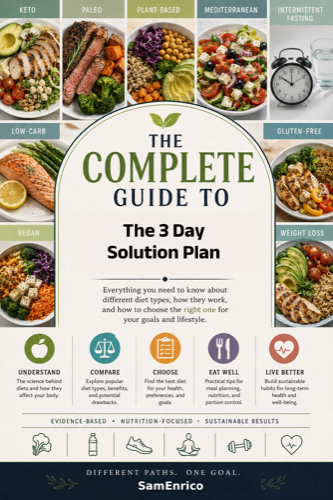 The Complete Guide to the 3 Day Solution PlanNewby Towanda$11.99
You may also like
 Hong Kong Handover 1997Dunn Johnnie$11.99
 Zumba For Postnatal Recovery CourseNeal Christian$11.99
 Zumba for BeginnersLadner Nikia$11.99
 YouTube Comment Mining GuideHumes Pandora$12.99
 Worry Box MeditationCarlin Rudy$11.99
 Workplace Stress MeditationNguyen Lynn$11.99
 Workplace Stress and Sleep RepairHawley Ivory$11.99
 Workplace Perfectionism CureDelaney Jeffry$11.99
 Workplace Injustice Anger GuideWallen Isabelle$11.99
 Work Addiction and Burnout LinkGreenwood Ester$11.99
 Women in Yoga and WellnessBeattie Galina$11.99
 Women in Stand Up ComedyChun Evangeline$11.99