
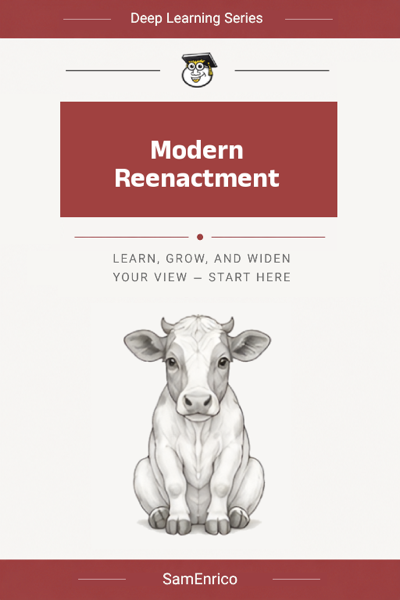
Non-FictionInformativeEducational
Modern Reenactment eBook
A Coursebook on Modern Reenactment
A Coursebook on Modern Reenactment
Formats
Free sample
Chapter 1: The Dead Lecturer--I once spent three days as a corpse.Not literally, of course. I did not die. But I stood in a field in Virginia, in July, wearing a wool uniform that had last been laundered in 1863, holding a reproduction musket that weighed exactly as much as the original, and I watched two hundred other men fall down around me as imaginary cannonballs tore through their imaginary bodies. When the battle ended, we lay in the grass for twenty minutes, sweating through our costumes, and a man next to me whispered, "That was beautiful." He meant it.I had come to this reenactment as a skeptic. I was a Ph D candidate in history at the time, training in archives, footnotes, and the careful distance that supposedly defines the professional historian.
My dissertation advisor had warned me about "going native." She meant losing my analytical edge, confusing participation with scholarship, mistaking the thrill of costume for the rigor of research. I had nodded, promised to remain objective, and then driven six hours to sleep in a canvas tent while men in grey uniforms shouted at men in blue uniforms.What I found changed my career. And it changed this book.Because here is the truth that my graduate seminars never prepared me for: the reenactors knew things that the archives could not hold. They knew what it felt like to march for eight hours in leather boots that did not fit. They knew the specific texture of hunger at 4 PM when the food wagon was late.
They knew the strange intimacy of sleeping next to strangers who might, in the morning's scripted battle, pretend to kill you. None of this was "real" in the archival sense. But it was real in a way that mattered.When I returned to my university, I tried to explain this to my advisor. She asked me what I had "found" – meaning documents, letters, diaries. I told her I had found a feeling.
She looked at me the way you might look at a student who has just announced they are dropping out to join the circus. That look, more than anything else, is why I wrote this book.The Crisis of the Textbook Let me begin with a confession that will make every traditional historian in the room uncomfortable: I do not remember most of the history I learned in school.I remember dates the way I remember phone numbers from childhood – vaguely, with effort, and only when prompted. I remember names that appeared on multiple-choice tests, then evaporated the moment I handed in my Scantron. I remember the textbook diagrams: arrows moving across maps, timelines that stretched like rulers across the bottom of the page, photographs of dead people arranged in neat rows.But I remember the reenactment. Every detail.
The smell of gunpowder. The way the sun burned the back of my neck. The sound of a man vomiting behind a tree after the "battle" because the heat had gotten to him, and the way the other reenactors did not mock him but simply handed him a canteen and waited. I remember that.This is not a failure of my memory. It is a failure of the textbook as a technology of transmission.The textbook was invented for efficiency, not for understanding.
It compresses complexity into summaries, transforms chaos into chronology, and replaces the messy, contradictory, sensory experience of living through history with a clean, linear, disembodied narrative. The textbook tells you that the Civil War happened from 1861 to 1865. The reenactment shows you why 1861 felt different from 1864 – why the first year was full of bravado and the fourth year was full of despair.I am not arguing that we should abandon text. That would be absurd and self-defeating; you are reading a text right now. But I am arguing that we have made a catastrophic error in assuming that text is sufficient.
For the past century, universities have operated on a simple, unspoken premise: if you read enough books about the past, you will understand it. This premise is false.Consider what reading cannot give you. It cannot give you the weight of a musket in your arms after four hours of carrying it. It cannot give you the specific terror of hearing hoofbeats approaching when you have no cover. It cannot give you the strange, almost erotic relief of surviving a battle that your friend did not.
These are not trivial sensations. They are central to what history actually was for the people who lived it.And yet the academy has spent decades training students to believe that these sensations are irrelevant – that real history happens in the archive, in the document, in the written trace of the past. The body, in this model, is a distraction. Emotion is a contaminant. The only clean knowledge is the knowledge that can be written down, footnoted, and debated in a seminar room.This book is an extended argument against that model.The Affective Turn: A Brief History The idea that emotion and embodiment might be legitimate ways of knowing is not new, but it has recently gained force under the banner of what scholars call the "affective turn." Affective theory, which emerged from the intersection of feminist theory, queer theory, and poststructuralism, argues that human experience cannot be reduced to cognition alone.
We feel before we think. Our bodies know things that our brains have not yet processed. The shudder of recognition, the flush of anger, the knot of grief – these are not obstacles to knowledge but forms of knowledge in their own right.The historians Iain Mc Calman and Paul Pickering were among the first to apply affective theory to reenactment. In their agenda-setting work, they asked a simple but devastating question: what happens to history when we take the body seriously? Their answer was that reenactment – dismissed for decades as a hobby for amateurs and eccentrics – suddenly looked like a laboratory for the affective dimensions of the past.
The reenactor does not simply read about hunger. The reenactor experiences a version of hunger. And that experience, however imperfect, however simulated, produces a kind of understanding that the archive cannot generate on its own.This is not to say that reenactment is superior to archival research. That would be a different kind of error. The archive gives us precision, context, and the ability to verify claims.
The reenactment gives us something else: the felt texture of possibility. It answers questions that the archive cannot answer, because no one thought to write them down. What did it feel like to button a uniform in the dark? What did it sound like when two armies camped within earshot of each other, singing competing songs into the night? These questions are not trivial.
They are the difference between knowing that something happened and understanding what it meant to the people who lived through it.Let me be precise about the claim I am making. I am not arguing that reenactment produces "better" truth than archival research. I am arguing that it produces a different kind of truth – a truth that is embodied, affective, and experiential rather than documentary, analytical, and distant. And I…
This is the end of the free sample. Get the eBook to keep going. Buy now
About this book
Details
- Author
- Tomlin Lizeth
- Publisher
- SamEnrico
- Language
- English
- Genre
- Non-Fiction, Informative, Educational
- Released
- 2026-06-02
- Pages (approx.)
- 114
- Available as
- eBook, Audiobook

Read better in the ZLOADR app
Your eBooks on your phone or tablet. Sign in with your SamEnrico account and start reading.
More by Tomlin Lizeth
 Validation For Medical TraumaTomlin Lizeth$11.99
 ED Myths DebunkedTomlin Lizeth$11.99
 The Parent Anger Medication GuideTomlin Lizeth$11.99
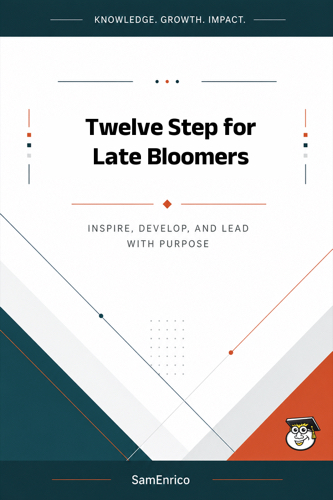 Twelve Step for Late BloomersTomlin Lizeth$11.99
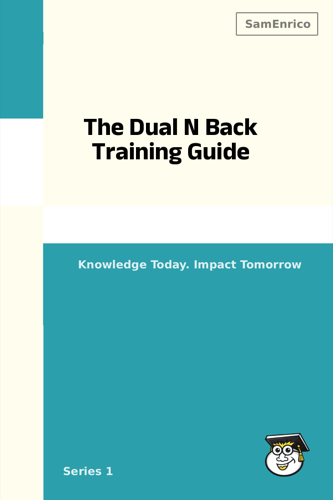 The Dual N Back Training GuideTomlin Lizeth$11.99
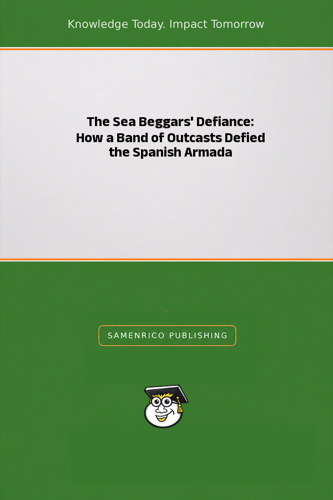 The Sea Beggars' Defiance: How a Band of Outcasts Defied the Spanish ArmadaTomlin Lizeth$11.99
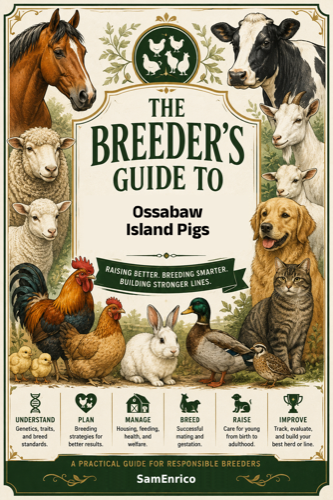 The Breeder's Guide to Ossabaw Island PigsTomlin Lizeth$11.99
 Week One Domain Name SearchTomlin Lizeth$12.99
 Local Media PR GuideTomlin Lizeth$12.99
 10 Ways to Use Food Colouring (Recipe Book)Tomlin Lizeth$11.99
You may also like
 Hong Kong Handover 1997Dunn Johnnie$11.99
 Zumba For Postnatal Recovery CourseNeal Christian$11.99
 Zumba for BeginnersLadner Nikia$11.99
 YouTube Comment Mining GuideHumes Pandora$12.99
 Worry Box MeditationCarlin Rudy$11.99
 Workplace Stress MeditationNguyen Lynn$11.99
 Workplace Stress and Sleep RepairHawley Ivory$11.99
 Workplace Perfectionism CureDelaney Jeffry$11.99
 Workplace Injustice Anger GuideWallen Isabelle$11.99
 Work Addiction and Burnout LinkGreenwood Ester$11.99
 Women in Yoga and WellnessBeattie Galina$11.99
 Women in Stand Up ComedyChun Evangeline$11.99