
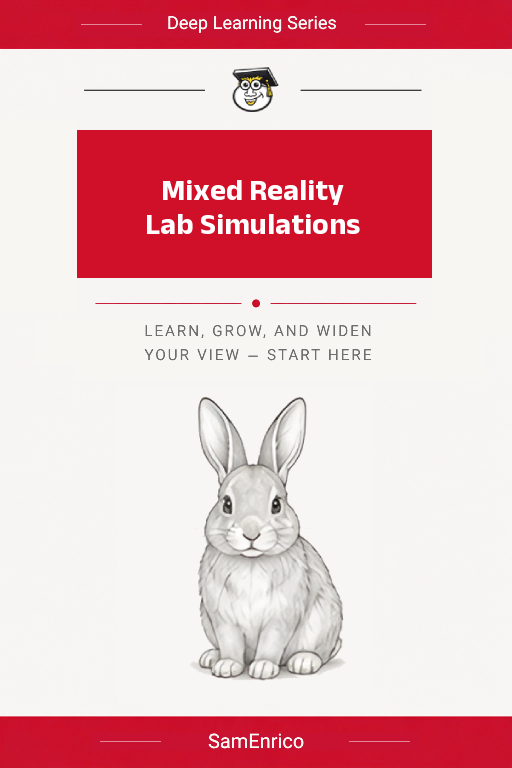
Non-FictionForecast & OutlookMR Labs
Mixed Reality Lab Simulations eBook
Discover dangerous or expensive experiments recrea
by Boss Chantel
Discover dangerous or expensive experiments recreated virtually for hands-on learning without risk.
Formats
Free sample
Chapter 1: The Explosion That Worked--–- The first mistake most educators make is believing that safety means the absence of failure. In the winter of 2018, a second-year chemistry student at a Midwestern university—let’s call her Maya—walked into a teaching lab for a routine organic chemistry exercise. The procedure was standard: a Grignard reaction, taught in hundreds of universities every day. Maya had read the manual, watched the safety video, and passed the online quiz with a 94 percent. By every measurable metric, she was prepared.She was not prepared.The accident report, later obtained through a public records request, described what happened in clinical language: “Student added water to a Grignard reagent prior to quenching, resulting in rapid exothermic decomposition and projection of glass fragments.” The translation: Maya reached for the wrong bottle.
Instead of adding dry solvent to her reaction flask, she added a few milliliters of deionized water. The Grignard reagent—a class of organometallic compounds so reactive that they ignite on contact with water—did what it was chemically obligated to do. It exploded.The flask shattered. A shard of borosilicate glass cut Maya’s left forearm, severing a superficial vein. Hot reagent splashed onto her lab coat, which had been left partially unbuttoned—a violation of protocol that no one had ever enforced.
She suffered second-degree chemical burns on her neck and chest. She spent three days in the hospital, underwent one surgery to remove embedded glass, and did not return to the chemistry program. She transferred to business school the following semester. The university quietly revised its lab safety protocols, added another mandatory training module, and moved on.Here is the question that no one asked at the time: What did Maya learn? Not what did the university learn.
Not what did the safety committee learn. What did Maya learn? She learned that chemistry was dangerous. She learned that her best efforts—reading the manual, passing the quiz, following the steps—were insufficient to protect her. She learned that a single moment of distraction could end a career.
These are true lessons. They are also the wrong lessons for a future scientist.The right lessons would have been: Grignard reagents are violently water-reactive because the carbon-metal bond is highly polarized. The exotherm from a quench failure can exceed 200 degrees Celsius per second. The correct response to a thermal runaway is not to freeze or flee but to activate the emergency shower and evacuate in a controlled manner. Maya learned none of these things because the explosion happened too fast for her to process, the pain overwhelmed her ability to analyze, and the trauma erased any possibility of reflective learning.This book argues that the greatest failure in science and technical education is not the existence of accidents like Maya’s.
It is the assumption that such accidents are necessary. For two centuries, the apprenticeship model of laboratory training has accepted a grim trade-off: novices will make mistakes, and some of those mistakes will cause real harm. We have called this “learning by doing” and treated it as a feature, not a bug. But what if the trade-off is false? What if we could preserve everything that makes hands-on learning powerful—the stress, the consequences, the physical intuition—while removing the risk of permanent injury or death?Mixed Reality (MR) laboratory simulation offers exactly that possibility.
In an MR environment, a student can add water to a Grignard reagent a hundred times. The virtual flask will explode a hundred times. The student will feel her heart race, hear the shatter of glass, see the red warning indicators flash across her field of view—and then she will reset the simulation and try again. On the fifth attempt, she will reach for the dry solvent. On the twentieth, she will reach without thinking.
On the fiftieth, she will be able to explain, under pressure, why the dry solvent is necessary and what the activation energy of the decomposition reaction actually is.This chapter introduces the central framework of this book: the DICE model, which identifies four categories of experiments that are not merely suitable for MR simulation but are pedagogically superior when simulated. These are Dangerous experiments that risk life or limb, Impossible experiments that cannot be performed on Earth at any scale, Counterproductive experiments that teach the wrong lessons when performed live, and Expensive experiments whose cost of failure exceeds any reasonable training budget. The argument of this book—and the argument of this chapter—is that the DICE framework should not be seen as a set of limitations but as a curriculum mandate. If an experiment falls into any of these categories, you should not be doing it live with novices. You should be simulating it.The evidence for this claim comes from three converging streams: the neuroscience of learning under stress, the economics of failure in high-stakes environments, and the proven track record of simulation in industries that cannot afford real-world mistakes.
We will examine each in turn.The DICE Framework: A New Vocabulary for Old Problems Before we can understand why MR simulation works, we need a language for describing the experiments that should never be performed live by trainees. The DICE framework provides that language. Each letter stands for a distinct category of experiment, and—critically—these categories are non-exclusive. An experiment can be Dangerous and Expensive. It can be Impossible and Counterproductive.
The framework is a diagnostic tool, not a set of boxes.Dangerous experiments pose an immediate, non-negligible risk of serious injury or death to the participant or bystanders. This is the most intuitive category. Working with high voltages, high pressures, toxic gases, radioactive materials, or volatile chemicals all fall under Dangerous. The key threshold is not zero risk—no experiment is truly zero risk—but rather the magnitude and immediacy of potential harm. A chemistry lab that uses dilute acetic acid is not Dangerous in the DICE sense.
A lab that uses anhydrous hydrofluoric acid, which can cause fatal cardiac arrest from a small skin exposure, is Dangerous.Impossible experiments cannot be performed in a standard teaching environment, either because the required conditions do not exist on Earth (zero gravity, deep-sea pressure, vacuum) or because the scale is prohibitive (a bridge collapse, a jet engine failure at full thrust, a planetary orbit). This category includes experiments that are physically possible in theory but practically impossible in any classroom. You cannot bring a class of thirty students into a working nuclear reactor to practice emergency shutdown. You cannot take them on a spacewalk to repair a solar panel. You can simulate these things.Counterproductive experiments are perhaps the least intuitive category.
These are experiments that, when performed live, teach the wrong lessons because the consequences of failure overwhelm the learning signal. A student who accidentally releases a pathogen in a BSL-4 lab does not learn better containment technique; she learns terror. A student who watches a classmate suffer a chemical burn does not learn safer handling; she learns that chemistry is unpredictable and dangerous. Counterproductive experiments are those where the emotional and psychological cost of a real mistake destroys the educational value of the mistake itself. The signal-to-noise…
This is the end of the free sample. Get the eBook to keep going. Buy now
About this book
Details
- Author
- Boss Chantel
- Publisher
- SamEnrico
- Language
- English
- Genre
- Non-Fiction, Forecast & Outlook, MR Labs
- Released
- 2026-06-01
- Pages (approx.)
- 141
- Available as
- eBook, Audiobook

Read better in the ZLOADR app
Your eBooks on your phone or tablet. Sign in with your SamEnrico account and start reading.
More by Boss Chantel
 OKRs for Financial IndependenceBoss Chantel$11.99
 Car Wash Operation Family StyleBoss Chantel$11.99
 Russian Energy Efficiency CreditsBoss Chantel$11.99
 Body Image In Romantic RelationshipBoss Chantel$11.99
 The Silk Road's Shadow War: The CIA's Secret Spies in the Mountains of AfghanistanBoss Chantel$11.99
 The Vanishing Act: The Last Days of the Great Library of AlexandriaBoss Chantel$11.99
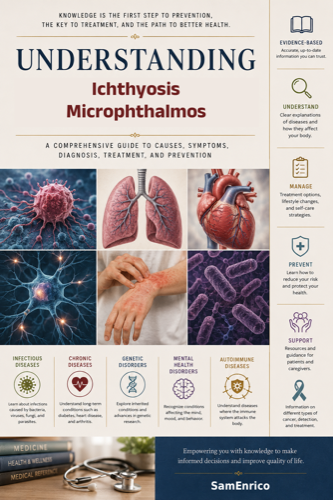 Understanding Ichthyosis MicrophthalmosBoss Chantel$17.99
 How to Become a JewelerBoss Chantel$11.99
 Employer Visa Compliance HandbookBoss Chantel$12.99
 Orange Juice TradingBoss Chantel$11.99
You may also like
 Hong Kong Handover 1997Dunn Johnnie$11.99
 Zumba For Postnatal Recovery CourseNeal Christian$11.99
 Zumba for BeginnersLadner Nikia$11.99
 YouTube Comment Mining GuideHumes Pandora$12.99
 Worry Box MeditationCarlin Rudy$11.99
 Workplace Stress MeditationNguyen Lynn$11.99
 Workplace Stress and Sleep RepairHawley Ivory$11.99
 Workplace Perfectionism CureDelaney Jeffry$11.99
 Workplace Injustice Anger GuideWallen Isabelle$11.99
 Work Addiction and Burnout LinkGreenwood Ester$11.99
 Women in Yoga and WellnessBeattie Galina$11.99
 Women in Stand Up ComedyChun Evangeline$11.99