
Non-FictionHealth & WellnessPlant-Based Nutrition
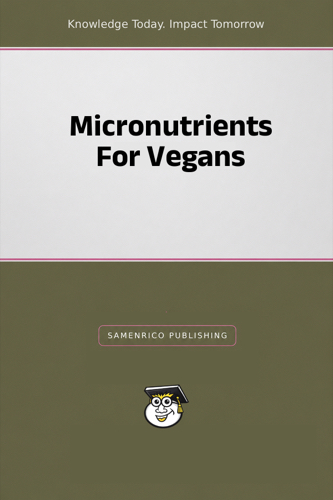
Micronutrients For Vegans
Targets B12, iron, zinc, calcium, and omega-3s for
by Vargas Emily
Targets B12, iron, zinc, calcium, and omega-3s for plant-based eaters with supplementation strategies.
Formats
About this book
Free sample
Chapter 1: The Empty Stomach Paradox--–- On a Tuesday morning in early spring, a 34-year-old software engineer named Maya sat across from her doctor, holding a printout of her blood work. She had been vegan for six years. She ate quinoa salads, lentil soups, roasted chickpeas, and dark leafy greens. She tracked her protein, her fiber, her carbohydrates. By every conventional measure, she was a model of plant-based virtue.
And yet, her ferritin was 12 ng/m L—well into iron deficiency. Her vitamin B12 was borderline. Her zinc was below the reference range. Her doctor, well-meaning but not plant-savvy, asked the question Maya had come to dread: "Are you sure you're eating enough?"Maya was eating enough. She was eating more than enough.
She was eating the way every vegan influencer, every cookbook, every well-intentioned blog had told her to eat. And her body was starving.This is the vegan paradox: you can eat a calorically adequate, macronutrient-complete, whole-food plant-based diet and still be deficient in the micronutrients that power your brain, your blood, your immune system, and your bones. The problem is not how much you eat. The problem is how well your body can access the nutrients inside what you eat. The problem is bioavailability.The Illusion of the Full Stomach Most people, vegans included, operate under a simple assumption: if a food contains a nutrient, eating that food delivers that nutrient to your body.
This assumption is wrong. It is wrong in ways that have profound consequences for long-term health.Consider this: one cup of cooked spinach contains approximately 3 milligrams of iron. The recommended daily intake for a premenopausal woman is 18 milligrams. On paper, six cups of spinach would meet her iron needs. But in reality, the oxalates in spinach bind to its iron, reducing absorption to as low as 2 percent.
To absorb the usable iron from that spinach, she would need to eat nearly two thousand calories of spinach alone—and she would likely develop digestive distress long before she corrected her ferritin levels.This is not a failure of spinach. Spinach is a wonderful food, rich in…
This is the end of the free sample. Get the eBook to keep going. Buy now
Contents
- Chapter 1
- Chapter 2
- Chapter 3
- Chapter 4
- Chapter 5
- Chapter 6
- Chapter 7
- Chapter 8
- Chapter 9
- Chapter 10
- Chapter 11
- Chapter 12
Details
- Author
- Vargas Emily
- Publisher
- SamEnrico
- Language
- English
- Genre
- Non-Fiction, Health & Wellness, Plant-Based Nutrition
- Released
- 2026-06-11
- Pages (approx.)
- 138
- Available as
- eBook, Audiobook

Read better in the ZLOADR app
Your eBooks on your phone or tablet. Sign in with your SamEnrico account and start reading.
More by Vargas Emily
 Job Loss Identity Recovery GuideVargas Emily$11.99
 Remote Return to Office GuideVargas Emily$11.99
 Body Image Resilience WorkbookVargas Emily$11.99
 Insecure Attachment Healing GuideVargas Emily$11.99
 The Silk Road of Science: How a Russian Chemist Unlocked the Secrets of Fermentation in Central AsiaVargas Emily$11.99
 The Silk Road's Shadow: What If Marco Polo Never Returned?Vargas Emily$11.99
 Understanding Erdheim–chester DiseaseVargas Emily$17.99
 Licensed MechanicVargas Emily$11.99
 Remote Cross Cultural MentoringVargas Emily$12.99
 ATS Friendly CV Writing GuideVargas Emily$12.99
 Ultimate Handbook Guide to Seoul : (South Korea) Travel GuideVargas Emily$11.99
You may also like
 Hong Kong Handover 1997Dunn Johnnie$11.99
 Zumba For Postnatal Recovery CourseNeal Christian$11.99
 Zumba for BeginnersLadner Nikia$11.99
 YouTube Comment Mining GuideHumes Pandora$12.99
 Worry Box MeditationCarlin Rudy$11.99
 Workplace Stress MeditationNguyen Lynn$11.99
 Workplace Stress and Sleep RepairHawley Ivory$11.99
 Workplace Perfectionism CureDelaney Jeffry$11.99
 Workplace Injustice Anger GuideWallen Isabelle$11.99
 Work Addiction and Burnout LinkGreenwood Ester$11.99
 Women in Yoga and WellnessBeattie Galina$11.99
 Women in Stand Up ComedyChun Evangeline$11.99