

Non-FictionAnnual CheckupEdtechMicro Credential
Micro Credential Regulation eBook
Navigate state regulations for micro credentials i
by Held Lavinia
Navigate state regulations for micro credentials including accreditation and consumer disclosure requirements.
Formats
Free sample
Chapter 1: The Badge Lie--–- In the spring of 2023, a 34-year-old nurse named Maria Reyes completed a 1,200micro−credentialin"Advanced Telehealth Procedures"offeredthroughawell−knownonlineplatform.Thedigitalbadgearrivedinheremailwithinhours—asleek,shareablegraphicembeddedwithmetadataabouther"mastery"ofremotepatientassessment.Shepostedittoher Linked Inprofile,addedittoheremailsignature,andsubmittedittoherhospital′sprofessionaldevelopmentcommitteeasevidencefora1,200 micro-credential in "Advanced Telehealth Procedures" offered through a well-known online platform. The digital badge arrived in her email within hours—a sleek, shareable graphic embedded with metadata about her "mastery" of remote patient assessment. She posted it to her Linked In profile, added it to her email signature, and submitted it to her hospital's professional development committee as evidence for a 1,200micro−credentialin"Advanced Telehealth Procedures"offeredthroughawell−knownonlineplatform.Thedigitalbadgearrivedinheremailwithinhours—asleek,shareablegraphicembeddedwithmetadataabouther"mastery"ofremotepatientassessment.Shepostedittoher Linked Inprofile,addedittoheremailsignature,andsubmittedittoherhospital′sprofessionaldevelopmentcommitteeasevidencefora4,000 annual salary advancement. Six weeks later, the committee rejected her application. The reason, spelled out in a terse memo: "This badge does not meet the definition of a regulated credential under state law.
It is not recognized for license renewal or salary advancement purposes." Maria had done everything right—except understand the single most important distinction in the alternative credentialing space. She had confused a badge with a credential. That confusion is costing learners, employers, and institutions millions of dollars annually. And until regulators catch up, the burden of truth falls on you.The Fundamental Distinction That Changes Everything Let us begin with a deceptively simple statement that will determine every compliance decision you make as an institutional leader, policymaker, or accreditation professional: A digital badge is not a micro-credential. These terms are not interchangeable.
Treating them as such is the primary source of legal exposure, consumer fraud claims, and regulatory enforcement actions in this space.A digital badge is a visual artifact—an image file, typically in PNG or SVG format, embedded with machine-readable metadata. That metadata can contain claims about the earner's achievements, the issuer's identity, assessment criteria, and expiration dates. But the badge itself is merely the container. It is the envelope, not the letter. It is the frame, not the painting.A micro-credential, by contrast, is the underlying legal entity—the verified assertion of competency that carries regulatory weight.
It represents a demonstrable skill or competency, assessed against a transparent rubric, issued by an accredited or authorized provider, and subject to quality assurance standards. When a state board approves a micro-credential for license renewal, it is approving the underlying competency verification system, not the digital image. When a court hears a fraud claim about a "worthless badge," the question is whether the underlying micro-credential met its stated claims.This distinction is not academic hair-splitting. It has real-world consequences for institutional liability, consumer protection, and regulatory compliance. Consider the Ohio Administrative Code Rule 3362-5-44, which provides one of the most precise legal definitions available in U.S.
regulations. The rule defines a micro-credential as "an authenticated indication of learning or accomplishment issued by the university" and explicitly describes a digital badge as merely "the visual symbol containing verifiable data." Ohio's drafters understood that the credential is the substantive achievement; the badge is the marketing tool. Institutions that blur this line do so at their peril.Why Regulators Are Suddenly Paying Attention For the first five years of the micro-credential movement—roughly 2018 to 2023—regulators largely ignored this space. Micro-credentials were seen as experimental, low-stakes, and outside the core mission of accredited higher education. That era is over.
Three converging forces have pulled micro-credentials onto the regulatory radar, and each force creates distinct compliance obligations.Force One: Title IV Financial Aid Risk The first regulatory flashpoint involves federal student aid. As micro-credentials gain credibility, learners increasingly assume they qualify for Title IV funding—Pell Grants, Direct Loans, and work-study programs. This assumption is almost always incorrect. Under current Department of Education rules, only programs that lead to a recognized academic credential (degree, certificate, or diploma) and meet minimum length requirements (usually 600 clock hours or 15 semester credits) are Title IV eligible. Most micro-credentials fall far below these thresholds.The risk for institutions is twofold.
First, misleading marketing that implies Title IV eligibility—phrases like "financial aid available" or "federally funded"—can trigger False Claims Act liability. Second, if a learner mistakenly applies for and receives federal aid for a non-eligible micro-credential, the institution may be required to repay those funds plus penalties. Several state attorneys general have signaled interest in pursuing such cases as consumer protection violations.Force Two: Gainful Employment Scrutiny The second regulatory pressure point involves gainful employment (GE) rules. While the current GE regulations apply primarily to certificate programs at for-profit institutions and non-degree programs at public and non-profit institutions, the Department of Education has repeatedly signaled its intent to expand coverage to all non-degree credentials that receive any form of federal funding or are marketed as direct pathways to employment.The proposed framework would require programs to meet debt-to-earnings ratios: graduates' annual loan payments cannot exceed 8 percent of total earnings or 20 percent of discretionary income. Programs failing these metrics for multiple consecutive years would lose Title IV eligibility.
While few micro-credentials currently trigger GE reporting, any institution marketing a micro-credential as leading to "high-demand jobs" or "career readiness" should prepare for the likelihood of future coverage.Force Three: Fraud Litigation Explosion The third and most immediate regulatory risk is private litigation. Class action lawsuits against badge issuers have increased 340 percent since 2021, according to a review of federal court dockets. The typical complaint alleges deceptive trade practices, false advertising, and unjust enrichment—claims that a micro-credential was marketed as having value it did not possess.The most closely watched case involves a now-defunct technology bootcamp that issued over 50,000 "mastery badges" in data science. Plaintiffs alleged that the badges represented completion of a 10-hour online module with automated multiple-choice quizzes, not the "rigorous, project-based assessment" promised in marketing materials. The case settled for $4.7 million.
The key legal finding: the court held that a badge alone, without evidence of competency-based assessment, constituted a deceptive practice. The Virginia legislature subsequently codified this principle into what this chapter will call the Virginia Standard, discussed in detail in Chapter 6.The Three Faces of Micro-Credentials: A Typology for Compliance Before we proceed further, we must establish a common language. Much of the confusion in this field stems from using the same word—"stackability," "accreditation," "recognition"—to describe fundamentally different regulatory mechanisms. This chapter introduces a typology that will govern the remainder of this book. Every micro-credential falls into one of three categories, and each category carries distinct compliance obligations.Vertical Stacking: The Academic Pipeline Vertical stacking refers to micro-credentials designed to articulate into academic degree programs.
A learner earns a micro-credential in introductory statistics, for example, and later applies that credential toward course credit in a bachelor's degree program. This pathway requires formal articulation agreements between the credential issuer and the degree-granting institution. Those agreements must specify credit equivalencies, transfer policies, and grade or competency thresholds.The compliance obligations for vertical stacking are primarily accreditation-based. Regional accreditors expect institutions to demonstrate that credit-bearing experiences—including those earned via micro-credentials—meet rigor and learning outcome standards comparable to traditional courses. Chapter 3 addresses how to satisfy these expectations without relying on credit hour metrics.Lateral Stacking: The Industry Certification Pathway Lateral stacking refers to micro-credentials that combine to meet industry certification or licensure…
This is the end of the free sample. Get the eBook to keep going. Buy now
About this book
Details
- Author
- Held Lavinia
- Publisher
- SamEnrico
- Language
- English
- Genre
- Non-Fiction, Annual Checkup, Edtech, Micro Credential
- Released
- 2026-06-01
- Pages (approx.)
- 151
- Available as
- eBook, Audiobook

Read better in the ZLOADR app
Your eBooks on your phone or tablet. Sign in with your SamEnrico account and start reading.
More by Held Lavinia
 Affirmations for Political AnxietyHeld Lavinia$11.99
 Loving Kindness for Low Self Esteem HandbookHeld Lavinia$11.99
 Mindfulness for Beginner Recovering AddictsHeld Lavinia$11.99
 Perinatal Mood Disorder Couples GuideHeld Lavinia$11.99
 30 Day Beginner Fitness ChallengeHeld Lavinia$11.99
 Pacific Odyssey: The Underwater Robots Mapping Earth's Final FrontierHeld Lavinia$11.99
 Gavel & Glory: The Untold Story of Ruth Bader Ginsburg's First TrialHeld Lavinia$11.99
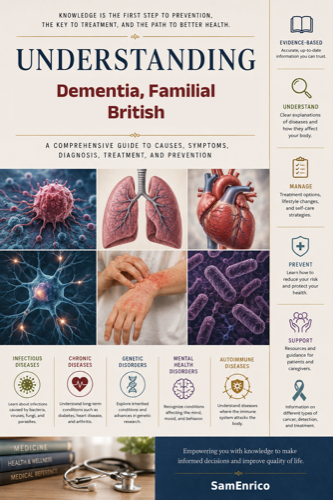 Understanding Dementia, Familial BritishHeld Lavinia$17.99
 Operations Team LeaderHeld Lavinia$11.99
 METU Ankara GuideHeld Lavinia$12.99
 How to Become a ChauffeurHeld Lavinia$11.99
You may also like
 Hong Kong Handover 1997Dunn Johnnie$11.99
 Zumba For Postnatal Recovery CourseNeal Christian$11.99
 Zumba for BeginnersLadner Nikia$11.99
 YouTube Comment Mining GuideHumes Pandora$12.99
 Worry Box MeditationCarlin Rudy$11.99
 Workplace Stress MeditationNguyen Lynn$11.99
 Workplace Stress and Sleep RepairHawley Ivory$11.99
 Workplace Perfectionism CureDelaney Jeffry$11.99
 Workplace Injustice Anger GuideWallen Isabelle$11.99
 Work Addiction and Burnout LinkGreenwood Ester$11.99
 Women in Yoga and WellnessBeattie Galina$11.99
 Women in Stand Up ComedyChun Evangeline$11.99