
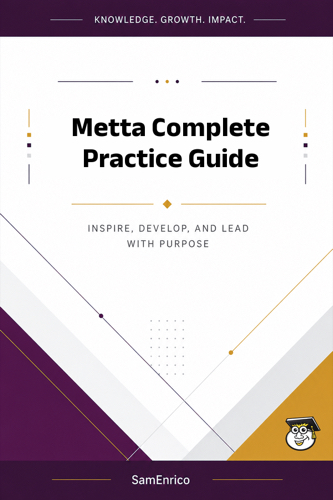
Metta Complete Practice Guide eBook
Comprehensive loving-kindness manual for all level
by Wilson Rose
Comprehensive loving-kindness manual for all levels.
Formats
Free sample
Chapter 1: The Radiant Heart--When someone first hears the word "loving-kindness," the mind often drifts toward soft focus images: a mother cradling an infant, a monk smiling beneath a bodhi tree, a greeting card sunset inscribed with the word "compassion." These images are not wrong, but they are incomplete. They suggest that loving-kindness is a passive, gentle, even slightly weak state—something you feel when life is easy and nothing threatens you. This chapter will dismantle that assumption entirely. Loving-kindness, as taught in the two-thousand-six-hundred-year-old tradition of Metta Bhavana, is not a retreat from difficulty. It is a weapon against despair.
It is not a sentimental wish for everything to be nice. It is a radical, unconditional, and fiercely active stance of goodwill toward all beings—including, and perhaps especially, the ones you would rather forget.The Pāli word metta derives from a root meaning "to soften" or "to friend." But this softening is not weakness. Consider the difference between a blade that has been hardened by fire and one that has been left brittle. One shatters under pressure; the other bends and survives. Metta is the heart's annealing—a deliberate, disciplined softening that makes it unbreakable.
The Buddha described Metta as the "liberation of the heart" (ceto-vimutti), a state so powerful that it can dismantle the deepest habits of fear, hatred, and isolation. In the Karaniya Metta Sutta, the discourse on loving-kindness, he instructs monks to radiate Metta toward all beings with the same unwavering, non-selective, and protective energy as a mother guarding her only child. That mother does not feel sentimental when her child is threatened. She becomes fierce. Metta is that fierce.This chapter will establish the foundational understanding required for every practice that follows.
You will learn what Metta is and—equally important—what it is not. You will learn why Metta is not romantic love, not attachment, not passivity, and not spiritual bypass. You will learn the three levels of practice that will guide you through the entire book: the verbal level (repeating phrases that train the mind's intention), the mental level (visualizing beings receiving kindness), and the felt level (cultivating the raw, embodied sensation of goodwill in your chest, belly, or hands). You will learn the benefits of Metta, both as promised by the ancient texts and as validated by modern neuroscience. And you will take your first small, concrete step into the practice itself.What Metta Is Not: Clearing the Ground Before we can build anything lasting, we must clear away the debris of common misunderstandings.
The single most frequent mistake new practitioners make is confusing Metta with ordinary emotional states that feel similar but function very differently. This confusion is not trivial. Mistaking attachment for loving-kindness leads to suffering. Mistaking sentimental tolerance for loving-kindness leads to spiritual bypass. Mistaking romantic love for loving-kindness leads to heartbreak when the object of that love inevitably fails to meet your expectations.Metta is not romantic love.
Romantic love, in its ordinary human expression, is conditional. It says, "I love you because you make me happy, because you are attractive, because you validate me, because you complete me." When those conditions change—when the beloved disappoints, ages, or leaves—romantic love often curdles into grief, jealousy, or hatred. This is not a moral failing; it is the nature of conditional love. Metta, by contrast, asks nothing in return. You do not radiate loving-kindness toward someone because they deserve it, or because they have earned it, or because they will reciprocate.
You radiate Metta simply because they exist. This is why the Buddha’s instruction in the Sutta Nipata is so radical: "Even as a mother protects her only child with her own life, so let one cultivate a boundless heart toward all beings." The mother does not ask whether her child is good or bad, deserving or undeserving. The mother simply protects. Metta simply loves.Metta is not attachment. Attachment—what the Buddha called tanha or "craving"—is a reaching toward something with the expectation that it will fill a lack.
Attachment says, "I need you to be happy." Metta says, "I wish you to be happy, whether I am involved or not." This distinction is subtle but crucial. A parent attached to a child's success will suffer when the child fails. A parent practicing Metta will continue to wish the child well even through failure, disappointment, or estrangement. In Chapter 2, we will explore this as the "near enemy" of Metta—a state that looks like loving-kindness but is actually a corrupted form of clinging.Metta is not passivity. In the modern Western imagination, kindness is often associated with weakness, with turning the other cheek, with allowing oneself to be exploited in the name of compassion.
This is a profound distortion. Metta is the opposite of passivity. It requires enormous discipline, courage, and energy to maintain goodwill toward someone who has harmed you. It is far easier to hate than to love without conditions. Metta is not saying "yes" to abuse; it is not erasing boundaries; it is not pretending that harm did not occur.
As we will see in Chapter 6, Metta can coexist perfectly with strong boundaries, legal action, or permanent separation from an abuser. Forgiveness and reconciliation are not the same thing. Metta is the internal stance of goodwill; boundaries are the external expression of self-care. You can wish someone well from a thousand miles away, having never spoken to them again.Metta is not spiritual bypass. Spiritual bypass is the tendency to use spiritual practices to avoid uncomfortable emotions, unfinished psychological business, or legitimate anger.
A practitioner engaging in bypass might say, "I should just love everyone," while secretly suppressing their rage, grief, or fear. This is not Metta. Metta requires that you first acknowledge what is actually present in your heart—including hatred, resentment, and fear. The practice does not skip over these emotions. It works directly with them, transforming them from the inside.
As the Zen teacher Norman Fischer has said, "You cannot send Metta to someone you are pretending not to hate. You can only send Metta to someone you honestly acknowledge hating, and then choose to wish well anyway." That honesty is the opposite of bypass.What Metta Is: The Three Characteristics Having cleared away what Metta is not, we can now define what it is with precision. Metta has three defining characteristics, drawn from the commentarial tradition of the Visuddhimagga (The Path of Purification), a fifth-century masterwork of Buddhist psychology.First, Metta is unconditional. It is not based on the qualities of the recipient. You do not offer Metta to someone because they are virtuous, attractive, or useful.
You offer Metta because, like you, they want to be happy and free from suffering. This is the great equalizer: every being, from the most saintly to the most violent, shares this one fundamental wish. The Metta practitioner learns to see past behavior, past reputation, past history, and rest attention on this shared existential desire. When you can look at your worst enemy and say, "That person wants to be happy, just as I do," the foundation for Metta has been laid.Second, Metta is non-selective. The classical practice, as we…
This is the end of the free sample. Get the eBook to keep going. Buy now
About this book
Details
- Author
- Wilson Rose
- Publisher
- SamEnrico
- Language
- English
- Genre
- Non-Fiction, Self-Help, Complete
- Released
- 2026-06-09
- Pages (approx.)
- 146
- Available as
- eBook, Audiobook

Read better in the ZLOADR app
Your eBooks on your phone or tablet. Sign in with your SamEnrico account and start reading.
More by Wilson Rose
 Immigrant Cannabis Industry EntrepreneurWilson Rose$11.99
 Sponsoring High Potential EmployeesWilson Rose$11.99
 Kahneman Tversky SummaryWilson Rose$11.99
 Wrist Fracture Return to SportWilson Rose$11.99
 Information Exchange FinesWilson Rose$11.99
 Mitochondrial DNA Hair AnalysisWilson Rose$11.99
 The Boy Who FlinchedWilson Rose$11.99
 Immigrant Parent Self EsteemWilson Rose$11.99
 The Fox’s Whisper: The 1000-Year Mentorship of the KitsuneWilson Rose$11.99
 The Royal Albert Hall: A Symphony of StoriesWilson Rose$11.99
 The Great Barbie Boycott: How a Toy Sparked a Cultural WarWilson Rose$11.99
 How to Start a Hobby in GamesWilson Rose$11.99
You may also like
 Self Hypnosis Complete Sleep GuideZeller Evelin$11.99
 Road Rage Complete Management GuideDumas Ciera$11.99
 TM Complete Beginners GuideAhern Jimmie$11.99
 MBSR Complete Home CoursePannell Garret$11.99
 Remote Communication Complete GuideTerrell Tandra$11.99
 Loneliness Complete Self Help GuidePinto Mavis$11.99
 Public Speaking Complete GuideHollingsworth Sherwood$11.99
 Personal Ing For Success Success CompleteSpriggs Mika$11.99
 High Pressure Professions CompleteFernandes Jong$11.99
 Complicated Grief Complete GuideFrame Emil$11.99
 Meditation For Better Sleep CompleteCollado Zelda$11.99
 Anger De escalation Complete GuideYamamoto Larue$11.99