
Non-FictionSelf-HelpAntipsychotics
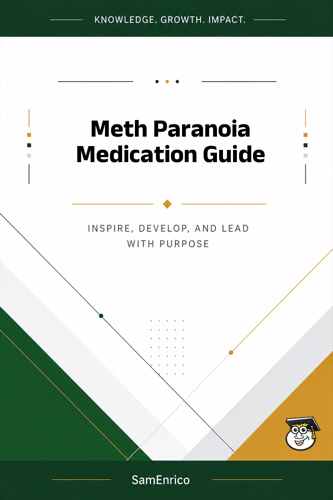
Meth Paranoia Medication Guide eBook
Uses antipsychotic medications to treat persistent
by Mccarty Hans
Uses antipsychotic medications to treat persistent meth-induced paranoia.
Formats
Free sample
Chapter 1: The Thing Nobody Talks About--–- The first time Carol realized something was terribly wrong, she was standing in her own kitchen, holding a glass of orange juice that her son had just accused her of poisoning. He was twenty-eight years old, a former high school valedictorian with a mechanical engineering degree, and he was backing away from her with genuine terror in his eyes. "I saw you," he whispered. "In the garage. You were pouring something into the bottle when you thought I wasn't looking." Carol set the juice down slowly, her hands trembling, and tried to remember when her son had become a stranger.
That was the moment she started searching for answers—and discovered that she was far from alone.The Quiet Epidemic In the popular imagination, methamphetamine is a drug of the rural poor, a scourge of trailer parks and deserted highway towns, something that happens to "other people" in places most Americans never see. That image is dangerously outdated. Methamphetamine has been undergoing a silent renaissance over the past decade, and with it, a specific and terrifying psychiatric complication has exploded: methamphetamine-induced paranoia that persists long after the drug itself has left the body. This is not the jittery, hypervigilant state of a user coming down from a binge. This is a clinical psychosis—fixed false beliefs, auditory hallucinations, and a profound loss of contact with reality—that can last for months or even years, devastating families and overwhelming emergency rooms across the country.The statistics are staggering.
In urban centers across the Western United States, methamphetamine now accounts for nearly half of all psychiatric emergency visits. A 2024 analysis of emergency department data from San Francisco General Hospital found that meth-related psychosis was the primary diagnosis in 47% of all psychiatric crisis presentations—surpassing schizophrenia, bipolar disorder, and alcohol withdrawal combined. In Portland, Oregon, the figure was 41%. In Denver, 38%. In rural counties where psychiatric resources are already stretched thin, the proportion is often higher because there are fewer alternatives for crisis care.But these numbers, alarming as they are, tell only part of the story.
The patients arriving in these emergency rooms are not the stereotypical "tweakers" of television dramas—emaciated, toothless, twitching. Many are employed. Many have families. Many have never been diagnosed with a mental illness before. And they are arriving in a state of profound terror, convinced that the FBI is in their walls, that their spouse is trying to kill them, that their coworkers have implanted tracking devices in their teeth.
This is not exaggeration. This is the daily reality of emergency medicine in 2026.From "Tweaking" to True Psychosis To understand the crisis, we must first understand what methamphetamine does to the brain—and why the distinction between simple intoxication and true psychosis matters more than most people realize.The drug produces its characteristic effects by flooding the brain with dopamine, the neurotransmitter associated with reward, motivation, and salience. At low to moderate doses, this produces euphoria, increased energy, heightened focus, and a sense of confidence. The user feels alert, capable, sometimes invincible. This is the state that recreational users seek.
At higher doses or with repeated use, however, the dopamine flood becomes a dopamine tsunami. The brain's salience circuitry—the system that decides what is important enough to pay attention to—becomes hyperactive. Ordinary stimuli take on extraordinary meaning. A car backfiring becomes a gunshot. A neighbor closing a door becomes a conspiracy.
A stranger's glance becomes a threat.This is the state commonly known as "tweaking"—agitated, hypervigilant, suspicious, but still grounded in a recognizable reality. The tweaking individual may be paranoid, but they can usually be redirected, reassured, or talked down. Their paranoia is reactive to the environment, and it will subside as the drug wears off, typically within twenty-four to seventy-two hours.True clinical psychosis is something else entirely. In psychotic individuals, the paranoia is no longer reactive but fixed. It persists even in the absence of any external trigger.
The delusions—false beliefs held with absolute conviction despite overwhelming contradictory evidence—do not respond to reassurance. The person cannot be talked out of them because they are not reasoning; they are experiencing. Their brain has crossed a threshold from exaggerated salience to frank psychosis, and that threshold may not be easily recrossed.This is the distinction that families need to understand. If your loved one is tweaking, the solution is time, sleep, hydration, and possibly a benzodiazepine to calm the agitation. If your loved one is psychotic, the solution is antipsychotic medication—and the sooner it is started, the better the outcome.The P2P Factor: Why Today's Meth Is Different One of the most critical insights to emerge from recent research is that not all methamphetamine is created equal.
The drug that flooded American communities in the 1990s and early 2000s was primarily manufactured from ephedrine or pseudoephedrine, decongestants found in over-the-counter cold medications. That manufacturing method produced a relatively pure isomer of methamphetamine called d-methamphetamine, which is highly potent but also relatively predictable in its effects.Today's methamphetamine is different. Following federal restrictions on pseudoephedrine sales, domestic producers shifted to a different manufacturing method using a chemical called phenyl-2-propanone—known in the trade as P2P. This method produces a mixture of two chemical isomers: d-methamphetamine and l-methamphetamine. The l-isomer is not only less euphoric, but appears to be significantly more neurotoxic.
It hangs around in the brain longer, causes more oxidative stress, and produces more inflammation. Users report that P2P meth feels "dirtier" than the old formula—more paranoia, more anxiety, less pleasure.The data supports these anecdotal reports. A 2023 forensic toxicology study of seized methamphetamine samples found that P2P-manufactured meth contained an average of 15% l-methamphetamine, compared to less than 2% in ephedrine-manufactured meth. That seemingly small difference translates into a dramatically different psychiatric risk profile. Researchers estimate that the switch to P2P manufacturing may have increased the psychosis risk of methamphetamine use by 300-500%.This is not speculation.
The timeline matches the epidemiology. The surge in meth-related psychiatric hospitalizations began around 2015-2016, precisely when P2P meth was displacing ephedrine meth in the US market. The drug itself changed, and the psychiatric consequences changed with it. Families whose loved ones used meth ten or fifteen years ago and survived without psychosis may be lulled into a false sense of security. The drug their loved one is using today is not the same drug they used then.
It is more dangerous, more neurotoxic, and more likely to produce lasting psychosis.The Hidden Epidemic Behind Bars and on the Streets The psychiatric emergency room is only the tip of the iceberg. Beneath the surface, there is a vast hidden population of individuals with untreated meth-induced paranoia who never make it to a hospital.In jails, the numbers are staggering. A 2024 study of county jails in three western states found that 32% of inmates with a methamphetamine use disorder met criteria for current psychotic disorder—compared to just 4% of inmates without meth use. These individuals are not receiving antipsychotic medication in most cases. Jail medical formularies often restrict antipsychotics due to cost or security concerns, and even when medications are available, many inmates…
This is the end of the free sample. Get the eBook to keep going. Buy now
About this book
Details
- Author
- Mccarty Hans
- Publisher
- SamEnrico
- Language
- English
- Genre
- Non-Fiction, Self-Help, Antipsychotics
- Released
- 2026-06-06
- Pages (approx.)
- 127
- Available as
- eBook, Audiobook

Read better in the ZLOADR app
Your eBooks on your phone or tablet. Sign in with your SamEnrico account and start reading.
More by Mccarty Hans
 Nova A.I. Voiceover Sync GuideMccarty Hans$11.99
 Dental Phobia Self HelpMccarty Hans$11.99
 Operation Car Wash Cross Border RaidsMccarty Hans$11.99
 The Sobriety Recovery Skills HandbookMccarty Hans$11.99
 Enki’s Great Deception: The God Who Tricked the SkyMccarty Hans$11.99
 Acquisition AnalysisMccarty Hans$11.99
 India Rising Consumer Class GuideMccarty Hans$12.99
 Termination Meeting Script GuideMccarty Hans$12.99
 Understanding Inborn Error of MetabolismMccarty Hans$17.99
 Ultimate Handbook Guide to Tripoli : (Libya) Travel GuideMccarty Hans$11.99
You may also like
 Hong Kong Handover 1997Dunn Johnnie$11.99
 Zumba For Postnatal Recovery CourseNeal Christian$11.99
 Zumba for BeginnersLadner Nikia$11.99
 YouTube Comment Mining GuideHumes Pandora$12.99
 Worry Box MeditationCarlin Rudy$11.99
 Workplace Stress MeditationNguyen Lynn$11.99
 Workplace Stress and Sleep RepairHawley Ivory$11.99
 Workplace Perfectionism CureDelaney Jeffry$11.99
 Workplace Injustice Anger GuideWallen Isabelle$11.99
 Work Addiction and Burnout LinkGreenwood Ester$11.99
 Women in Yoga and WellnessBeattie Galina$11.99
 Women in Stand Up ComedyChun Evangeline$11.99