
Non-FictionHealth & WellnessDepression
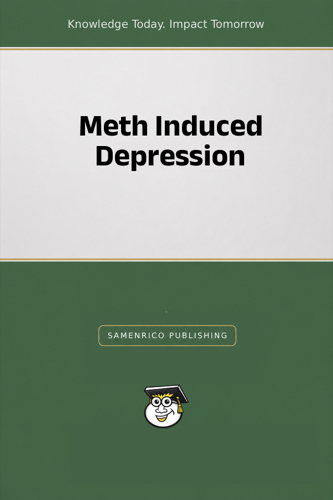
Meth Induced Depression eBook
Explains post acute withdrawal depression from dop
Explains post acute withdrawal depression from dopamine depletion.
Formats
Free sample
Chapter 1: The Burst Pipe--–- The first time Jenna tried to explain what quitting meth felt like, she sat across from her sponsor in a church basement and said, "I think I broke my brain." She was 47 days sober, which meant she had survived the crash, the cravings, the sleepless nights, and the violent nightmares. But she had not survived the thing that came next. She had walked into that basement hoping to feel proud, or relieved, or even just tired. Instead, she felt nothing. Her sponsor asked how she was doing.
Jenna stared at the fluorescent lights buzzing overhead. She realized she could not remember the last time she had laughed. Not a polite chuckle. A real laugh. She searched back through the calendar of her recovery: day 30, day 21, day 14.
Nothing. She tried to remember if she had laughed during the last month of using. That was worse. She had laughed then—hollow, manic, chemically forced laughter with people she would never speak to again. Now she sat in a room full of people who were also trying to get well, and she felt like a ghost watching her own life from across the street."What you're describing," her sponsor said, "is just depression.
It'll pass."But Jenna had been depressed before she ever touched meth. She knew what that felt like. Depression, for her, had been a heavy blanket—damp, suffocating, full of sad songs and crying in the shower and the sharp ache of wanting to disappear. This was different. This was not a blanket.
This was an empty room. No sadness. No crying. No ache. Just the complete, total absence of anything that resembled feeling.
She had stopped using meth because she wanted her life back. Now she was sober and she did not want her life. She did not want anything. And that, she would later learn, was the difference between regular depression and meth-induced anhedonia. One feels like drowning.
The other feels like already being dead.The Paradox No One Warns You About Every year, hundreds of thousands of people stop using methamphetamine. They go to detox, they flush their stashes, they delete their dealers' numbers, they show up to twelve-step meetings, they buy the vitamins, they drink the water, they do everything right. And then something terrible happens. They feel worse than they did when they were using.This is the paradox at the heart of meth recovery. Almost every other substance follows a predictable emotional arc: you stop using, you suffer acutely for a week or two, and then you slowly begin to feel better.
Alcohol withdrawal peaks at seventy-two hours. Heroin withdrawal peaks at day three or four. By day ten, most people emerging from opioid or alcohol dependence can feel the ground firming beneath their feet. They are still sick, still struggling, but they can see the direction of travel. Upward.Meth does the opposite.The first week of meth withdrawal is physically brutal but emotionally numbing.
You sleep fourteen, sixteen, twenty hours a day. You eat everything in sight. Your body, starved of both nutrients and dopamine, enters a kind of metabolic triage. You are too exhausted to feel much of anything. Then, around day ten or fourteen, the fog lifts.
Your cognition returns. You can hold a conversation, drive a car, maybe even return to work. And that is when the real hell begins. Because now you are awake, alert, and completely unable to feel pleasure.This is not an exaggeration for rhetorical effect. It is a literal description of the neurochemical state of the meth-depleted brain.
The reward system that should fire when you eat good food, hear a favorite song, hug a loved one, or achieve a goal—that system goes silent. Not quiet. Silent. Music sounds like organized noise. Food tastes like texture.
Sex feels like mechanics. The people you love become furniture. Your hobbies become chores. Your future becomes a gray hallway with no door at the end.This experience has a name, though most people in recovery have never heard it. It is called anhedonia—from the Greek roots *an-* (without) and hedone (pleasure).
And it is the single most common reason people relapse after thirty, sixty, or ninety days of sobriety. Not craving. Not withdrawal pain. Not social pressure. Anhedonia.
The inability to feel joy.The 2020 National Institute on Drug Abuse study on stimulant relapse triggers found that 67 percent of meth users who relapsed in the first ninety days cited "lack of pleasure in sobriety" as their primary reason. Not "I wanted to get high." Not "I couldn't resist the craving." But "sobriety felt so empty that using seemed better than feeling nothing at all."This is the paradox. Getting sober from meth does not feel like climbing out of a hole. It feels like falling into a deeper one. And if no one has warned you about that, the logical conclusion is terrifying: I must be broken forever.
I must have destroyed my brain beyond repair. I might as well use again.This book exists to tell you that this conclusion is wrong. Devastatingly, dangerously wrong. You are not broken forever. But you are injured.
And a brain injury requires a different recovery map than a moral failing, a character defect, or even a standard depressive episode.What This Chapter Will Teach You Before we go any further, let me tell you exactly what you will learn in the next few pages. This chapter is the foundation of everything that follows. If you understand what happens inside your brain when you use meth—and, more importantly, what happens when you stop—the rest of this book will make sense. If you skip this chapter, or skim it, the protocols in later chapters will feel arbitrary and frustrating.By the end of this chapter, you will understand:Why meth is different from every other drug of abuse – not morally different, not legally different, but neurochemically different. Meth does something to your dopamine system that cocaine, alcohol, and opioids simply cannot do.The difference between a dopamine crash and a dopamine injury – one is short-term and survivable; the other is long-term and requires active rehabilitation.
Most people confuse the two, which leads to despair at exactly the wrong moment.Why your antidepressant probably isn't working – and why your doctor isn't wrong to have prescribed it, but may be wrong to keep you on it. (We will spend a full chapter on medications later. Here, we just plant the seed.)The single most important analogy for understanding meth-induced depression – the Burst Pipe. You will hear this analogy again throughout the book. It is the map that will help you navigate the months ahead.Why feeling nothing is not the same as being broken – the most important psychological reframe in early recovery.
You are not losing your mind. You are experiencing a predictable, documented, survivable neurochemical event.Let us begin.The Molecule That Changed Everything To understand meth-induced depression, you have to understand dopamine. Not because dopamine is the only molecule involved—it isn't. Meth also affects serotonin, norepinephrine, and even glutamate. But dopamine is the star of this particular tragedy.
And like any tragedy, it helps to know the characters before the plot unfolds.Dopamine is often called the "pleasure molecule"…
This is the end of the free sample. Get the eBook to keep going. Buy now
About this book
Details
- Author
- Boone Beatrice
- Publisher
- SamEnrico
- Language
- English
- Genre
- Non-Fiction, Health & Wellness, Depression
- Released
- 2026-06-10
- Pages (approx.)
- 155
- Available as
- eBook, Audiobook

Read better in the ZLOADR app
Your eBooks on your phone or tablet. Sign in with your SamEnrico account and start reading.
More by Boone Beatrice
 Voice Actor Burnout RecoveryBoone Beatrice$11.99
 CRNA Stress GuideBoone Beatrice$11.99
 Estate Planning Essential DocumentsBoone Beatrice$11.99
 Teen Friendship Conflict GuideBoone Beatrice$11.99
 Pool HIIT Aqua GuideBoone Beatrice$11.99
 Parenting After Pregnancy LossBoone Beatrice$11.99
 Alcohol Fueled Rage ControlBoone Beatrice$11.99
 Wayfinders of the Void: The Navigators Who Rode the StarsBoone Beatrice$11.99
 The Forgotten Botanists of the Congo: Unveiling Africa's Green PioneersBoone Beatrice$11.99
 A Collector's Handbook to the Reliant KittenBoone Beatrice$11.99
 How to Produce Mole RepellentBoone Beatrice$11.99
 Growing Artemisia (Mugwort, Sagebrush, Wormwood)Boone Beatrice$11.99
You may also like
 Hong Kong Handover 1997Dunn Johnnie$11.99
 Zumba For Postnatal Recovery CourseNeal Christian$11.99
 Zumba for BeginnersLadner Nikia$11.99
 YouTube Comment Mining GuideHumes Pandora$12.99
 Worry Box MeditationCarlin Rudy$11.99
 Workplace Stress MeditationNguyen Lynn$11.99
 Workplace Stress and Sleep RepairHawley Ivory$11.99
 Workplace Perfectionism CureDelaney Jeffry$11.99
 Workplace Injustice Anger GuideWallen Isabelle$11.99
 Work Addiction and Burnout LinkGreenwood Ester$11.99
 Women in Yoga and WellnessBeattie Galina$11.99
 Women in Stand Up ComedyChun Evangeline$11.99