
Non-FictionBusiness BriefTechnical
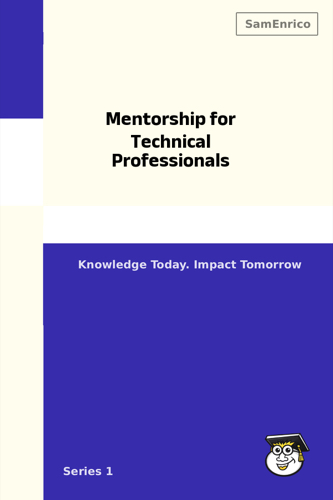
Mentorship for Technical Professionals
Teaches finding guides for hard skills, certificat
Teaches finding guides for hard skills, certifications, and engineering career paths.
Formats
About this book
Free sample
Chapter 1: The Lonely Coder’s Trap--–- Every failed promotion starts with a silent keystroke. Not a mistake in code, not a missed deadline, but a private, unspoken certainty that you should figure it out alone. You close your laptop at 11 p.m., proud of the bug you finally squashed, yet haunted by a quiet question: Why does everyone else seem to have a map while I am still drawing my own?If you are a technical professional—whether a software engineer, data scientist, Dev Ops specialist, or systems architect—you have likely felt this isolation. The industry tells you to “find a mentor” as casually as it tells you to “write clean code.” But no one explains how. The senior engineers are too busy.
Your manager is too stressed. The company’s official mentorship program pairs you with someone who cancels three times and then vanishes. So you do what most engineers do: you double down on technical work. You grind Leet Code. You chase certifications.
You tell yourself that being the smartest person in the room will eventually pay off.It will not. And this book exists to prove why.The Million-Dollar Myth Let us name the enemy. The Lone Genius Myth is the belief that great technical professionals succeed primarily through individual brilliance, late-night coding sessions, and raw intellectual firepower. It is the image of the hoodie-wearing prodigy who emerges from a dark room with a world-changing algorithm. This myth is not merely inaccurate; it is destructive.In reality, every significant technical achievement in history is a story of dependency.
Linus Torvalds did not write Linux alone; he inherited UNIX and incorporated patches from thousands of contributors. Margaret Hamilton’s Apollo guidance software succeeded because she built a team obsessed with failure recovery. Even the mythical “10x engineer” is almost always someone who learned from a brutal code review, a patient senior, or a failed deployment that became a shared post-mortem.The Lone Genius Myth persists for three reasons. First, it flatters our ego—we want to believe our success is self-made. Second, it simplifies storytelling—biographies compress years of collaboration…
This is the end of the free sample. Get the eBook to keep going. Buy now
Contents
- Chapter 1
- Chapter 2
- Chapter 3
- Chapter 4
- Chapter 5
- Chapter 6
- Chapter 7
- Chapter 8
- Chapter 9
- Chapter 10
- Chapter 11
- Chapter 12
Details
- Author
- Fleming Wilma
- Publisher
- SamEnrico
- Language
- English
- Genre
- Non-Fiction, Business Brief, Technical
- Released
- 2026-06-10
- Pages (approx.)
- 144
- Available as
- eBook, Audiobook

Read better in the ZLOADR app
Your eBooks on your phone or tablet. Sign in with your SamEnrico account and start reading.
More by Fleming Wilma
 Thaler Nudge SummaryFleming Wilma$11.99
 German Bundeskartellamt CasesFleming Wilma$11.99
 Overcoming Imposter Syndrome GuideFleming Wilma$11.99
 Clavicle Fracture RecoveryFleming Wilma$11.99
 Anger Is a LeashFleming Wilma$11.99
 Immigrant Digital Agency Success StoriesFleming Wilma$11.99
 Assertiveness For EntrepreneursFleming Wilma$11.99
 Forensic Animal Hair GuideFleming Wilma$11.99
 The Icebound Chronicles: Viking Explorers and the Lost Arctic OutpostsFleming Wilma$11.99
 Neutrino Whispers: The Ghost Particles That Almost Solved the SunFleming Wilma$11.99
 The Mineral Guide to RiebeckiteFleming Wilma$11.99
 Growing Lychnis (Campion)Fleming Wilma$11.99
You may also like
 Hong Kong Handover 1997Dunn Johnnie$11.99
 Zumba For Postnatal Recovery CourseNeal Christian$11.99
 Zumba for BeginnersLadner Nikia$11.99
 YouTube Comment Mining GuideHumes Pandora$12.99
 Worry Box MeditationCarlin Rudy$11.99
 Workplace Stress MeditationNguyen Lynn$11.99
 Workplace Stress and Sleep RepairHawley Ivory$11.99
 Workplace Perfectionism CureDelaney Jeffry$11.99
 Workplace Injustice Anger GuideWallen Isabelle$11.99
 Work Addiction and Burnout LinkGreenwood Ester$11.99
 Women in Yoga and WellnessBeattie Galina$11.99
 Women in Stand Up ComedyChun Evangeline$11.99