
Mentor Tracking Spreadsheet Guide eBook
Creates a simple tracker for mentor prospects with
Creates a simple tracker for mentor prospects with connection dates, outreach status, and follow-up reminders.
Formats
Free sample
Chapter 1: The Waiting Trap--–- It was 11:47 on a Tuesday night, and Sarah had just sent her forty-seventh "Will you be my mentor?" Linked In message in eighteen months.She knew the number because she had counted. Forty-seven. Three replies. Two polite "I'm flattered but too busy" responses. One actual coffee meeting that ended with the executive saying, "Keep in touch," which turned out to mean "never contact me again." Zero mentors.Sarah was not lazy.
She was not unlikeable. She had a degree from a respectable university, five years of steadily increasing responsibility at a mid-sized marketing firm, and a genuine hunger to learn. She read leadership books on the subway. She went to networking events even though they made her anxious. She volunteered for projects nobody else wanted.
By every conventional measure, she was doing everything right.And yet, when she looked at the colleagues who had zoomed past her—the ones who got the promotions, the stretch assignments, the mysterious "tap on the shoulder" for exciting new roles—they all had one thing she did not. Someone in their corner. A guide. A mentor. Not a formal, HR-approved mentoring program mentor (those existed, but they were often performative and useless).
A real one. Someone who answered when they called. Someone who said, "Here's how this place really works" over lunch. Someone who had fought for them in rooms Sarah would never even know existed.She had spent eighteen months hoping for that person to appear. She had spent eighteen months asking the wrong way.
And she had spent eighteen months watching her career drift while others accelerated.This book exists because Sarah is everywhere. She is you, or someone you work with, or someone you will become if you keep doing what most people do: waiting for a mentor to magically find you.The good news is that Sarah's story has an ending she never expected. Eight months after that forty-seventh message, she had a spreadsheet with one hundred and twenty-three prospects, seventeen active conversations, and four committed mentors who met with her regularly. She got the promotion. She got the stretch assignment.
She became the person other people asked for advice. And she did it not by becoming more charismatic or working harder, but by installing a system that turned the messy, anxiety-ridden process of "finding a mentor" into a calm, metric-driven funnel.This chapter is about why that system is necessary. It is about the three myths that keep smart people stuck. It is about the cost of waiting. And it is about the single mental shift that changes everything: the realization that you are the CEO of your career, and your spreadsheet is your board meeting agenda.The Three Myths That Keep You Stuck Before we build anything, we have to tear down the beliefs that have been quietly sabotaging you.
These myths are not innocent. They are expensive. They have cost people millions of dollars in forgone promotions, stalled career trajectories, and years of quiet frustration.Myth #1: "The right mentor will notice me eventually"This is the most seductive lie in professional development. It feels humble and patient. It feels like you are respecting the natural order of things, not being pushy, letting relationships develop organically.
But here is what it actually is: magical thinking.Scott Jeffrey Miller, in his research for The Ultimate Guide to Great Mentorship, analyzed hundreds of mentoring relationships and found that the vast majority of successful ones began not through chance encounters, but through deliberate, structured outreach initiated by the mentee. The mentor did not "notice" the mentee in a hallway or a conference session. The mentee made themselves noticeable through specific, value-driven communication.Think about it from the mentor's perspective. A senior executive at a typical company has hundreds of people in their orbit: direct reports, skip-level reports, cross-functional collaborators, former colleagues, industry acquaintances. They are bombarded with requests for time, attention, and approval.
The idea that they will somehow single you out from that crowd, recognize your unspoken potential, and voluntarily offer their guidance is not just unlikely. It is statistically absurd.The people who get mentors are not the ones who wait. They are the ones who ask. But—and this is crucial—they ask the right way. Sarah's forty-seven messages failed not because she asked, but because she asked badly.
She led with "Will you be my mentor?" which is the professional equivalent of proposing marriage on a first date. She asked for a long-term commitment before establishing any trust. She asked for something vague and open-ended, which feels like a burden to a busy person. And she asked without offering anything in return.The myth of being noticed is comforting because it removes agency. If mentors are supposed to find you, then your lack of a mentor is not your fault.
You just haven't been lucky yet. But that comfort comes at a devastating price: you never build the muscle of proactive outreach, and you stay stuck indefinitely.Myth #2: "Mentorship happens naturally if you're good enough"This myth is particularly common among high achievers. It says: if I just do excellent work, if I just hit my numbers, if I just become indispensable, the mentorship will follow. Senior people will see my talent and invest in me.There is a grain of truth here. Being good at your job helps.
No one wants to mentor a low performer. But being good is not sufficient, and it is not even the primary variable. The primary variable is visibility.Consider two employees at the same company. Both are strong performers. Employee A quietly does excellent work, meets deadlines, and assumes that their results speak for themselves.
Employee B does excellent work and makes sure the right people know about it. Employee B sends a weekly update to their manager summarizing wins. Employee B asks thoughtful questions in all-hands meetings. Employee B volunteers to present findings to senior leadership. Employee B follows up after presentations with a one-paragraph thank-you and a relevant article.Who gets the mentor?
Employee B, every time. Not because they are better at their job, but because they are better at being seen.Mentorship is not a reward for competence. It is an investment decision made by busy people who have limited time. They invest in people they know, like, and trust. "Know" comes first.
And they cannot know you if you are invisible.The painful truth is that many people who believe they are "letting their work speak for itself" are actually hiding. They are avoiding the vulnerability of putting themselves forward. They are telling themselves a story about meritocracy that protects their ego but stalls their career. The spreadsheet system in this book is not about becoming a self-promoting jerk. It is about systematically becoming visible to the people who can help you grow.Myth #3: "Rejection means I'm not ready"This is the most damaging myth of all, because it turns a temporary condition into an identity.When Sarah got her forty-sixth rejection (a polite but firm "I don't have bandwidth right now"), she did not think, "That person is busy." She thought, "I am not worth mentoring." The rejection landed not on…
This is the end of the free sample. Get the eBook to keep going. Buy now
About this book
Details
- Author
- Calabrese Terisa
- Publisher
- SamEnrico
- Language
- English
- Genre
- Non-Fiction, First 30 Days, Tracking
- Released
- 2026-05-30
- Pages (approx.)
- 147
- Available as
- eBook, Audiobook

Read better in the ZLOADR app
Your eBooks on your phone or tablet. Sign in with your SamEnrico account and start reading.
More by Calabrese Terisa
 The Teaching Nonverbal GuideCalabrese Terisa$11.99
 Metta for the EarthCalabrese Terisa$11.99
 Uterine Anomaly Loss HandbookCalabrese Terisa$11.99
 The Oklahoma City Bombing IDCalabrese Terisa$11.99
 Social Media ESG ScorecardCalabrese Terisa$11.99
 The Last Oracle of Delphi: Cassandra's Unheeded ProphecyCalabrese Terisa$11.99
 Understanding Schimke SyndromeCalabrese Terisa$17.99
 PlinkingCalabrese Terisa$11.99
 CJ Dropshipping Ghana GuideCalabrese Terisa$12.99
 How to Become a Ordnance Truck Installation MechanicCalabrese Terisa$11.99
You may also like
 VAT Application Status UKChun Yulanda$12.99
 Mailchimp Link Tracking and UTMDelarosa Lavina$12.99
 Facebook Pixel Setup Action GuideHouston Bradford$12.99
 Facebook Pixel Installation GuideCrist Mohammad$12.99
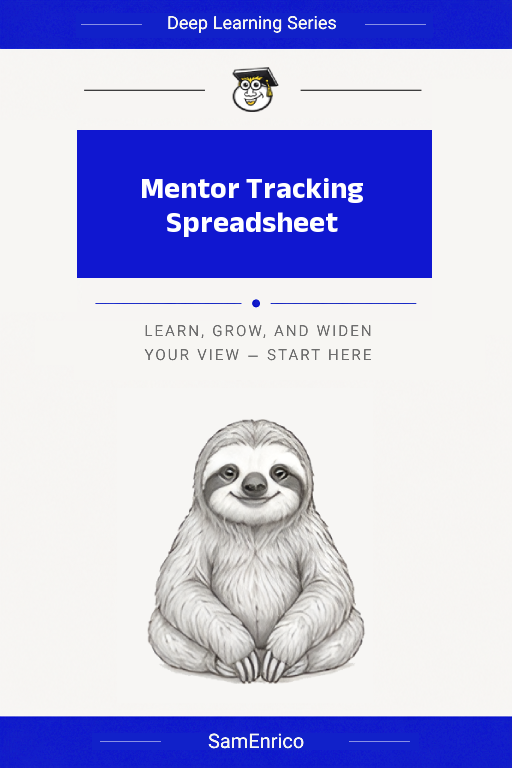 Mentor Tracking SpreadsheetBillingsley Fe$12.99
 GST Registration Status TrackGrigsby Simona$12.99
 Mailchimp Link Tracking GuideChambers Sharon$12.99