
Meadow Visualization Calm Guide eBook
Lie in tall grass watching clouds, feeling sun on
Lie in tall grass watching clouds, feeling sun on skin, listening to insects.
Formats
Free sample
Chapter 1: The Attention Leak--–- You are not lazy. You are not broken. You are not addicted to your phone because you lack willpower. You are exhausted in a way that human beings have never been exhausted before, and the name for that exhaustion is Directed Attention Fatigue. It has a cure, and the cure is not another app, another productivity system, or another morning routine that requires waking up at 4 a.m.
The cure is lying down in imaginary grass and doing absolutely nothing that matters. This is the most radical, rebellious, and scientifically sound thing you can do for your brain in the twenty-first century, and every instinct you have to scroll, check, respond, or "just quickly look something up" is the symptom, not the solution.Let me prove it to you.The Thousand Paper Cuts of Modern Attention Close your eyes for three seconds. Just three. I'll wait.You couldn't do it, could you? Or if you did, you felt a small, almost imperceptible tug toward your phone, your email, your to-do list, or the voice in your head that said "this is silly, I should be doing something productive." That tug is not a character flaw.
It is the result of a neurological system that has been pushed past its breaking point by a world that never, ever stops demanding your focus.Here is what your average hour looks like in the modern world, whether you know it or not:You check your phone within five minutes of waking. You read three headlines about disaster, one message from a colleague that could have been an email, and a text from a friend that requires a response. You put the phone down. You pick it up again forty-seven seconds later because a notification vibrated. You answer an email.
You switch to a different email. You remember you meant to buy toothpaste. You open a shopping app. You get distracted by an ad for shoes. You close the app.
You cannot remember whether you bought the toothpaste. You open the shopping app again. You buy the toothpaste. You return to email. You have lost seven minutes and gained nothing except a vague sense of failure.This is not an exaggeration.
This is the average morning of the average knowledge worker, documented in multiple studies on task-switching and attentional residue. And here is what those studies found: every single time you switch tasks, you leave a piece of your attention behind. It takes an average of twenty-three minutes to fully return to a task after an interruption. Most people are interrupted every three to five minutes. Do the math.
You never fully return. You live in a permanent state of partial attention, like a computer running forty-seven background processes until the fan screams and the battery dies by noon.That battery is your directed attention system. It is a finite resource, and you are spending it on things that do not matter.The Science You Were Never Supposed to Know Directed Attention Fatigue, or DAF, was first identified by environmental psychologist Stephen Kaplan in the 1980s, though human beings have experienced it for as long as there have been cities, markets, and screaming children. Kaplan noticed something strange: people who spent time in nature didn't just feel better. They performed better on cognitive tests afterward.
They made fewer errors. They solved problems more creatively. They had longer tempers and shorter recovery times from stress.Kaplan's insight was that attention comes in two flavors, and we have been using the wrong one almost exclusively for the past twenty years.Directed attention is what you use when you force yourself to focus. Reading a contract. Doing your taxes.
Driving in heavy rain. Listening to a boring meeting. Resisting the urge to check your phone. It is effortful. It is exhausting.
It runs on glucose and willpower, and it depletes like a muscle that has been worked too hard. When directed attention runs out, you become irritable, impulsive, and stupid. You make decisions you regret. You snap at people you love. You scroll mindlessly because you no longer have the energy to choose otherwise.Soft fascination is the opposite.
It is attention that requires no effort. Watching flames in a fireplace. Staring at clouds. Listening to rain on a roof. Watching tall grass sway in the wind.
These activities hold your attention gently, without demanding anything from you. They allow your directed attention system to rest, recover, and rebuild. Soft fascination is not a luxury. It is a biological necessity, as essential to brain function as sleep is.Here is the problem: modern life has almost no soft fascination built into it. Everything competes for your directed attention.
Social media is designed to hijack it with variable rewards. Email is an infinite to-do list. News is a fire hose of emergency. Even entertainment—movies, video games, thrillers—uses hard fascination, which demands constant processing and leaves you more tired than when you started.You are not lazy. You are running a marathon every day and wondering why you cannot sprint at the end.The Difference Between Resting and Fascinated Resting Most people believe they are resting when they are actually just lowering the intensity of their directed attention demands.
Scrolling Tik Tok while lying on the couch is not rest. It is a different kind of work. Your brain is still processing, evaluating, predicting, and switching tasks every fifteen seconds. Your heart rate does not drop. Your cortisol does not decline.
Your muscles do not release their chronic low-level tension.I want you to distinguish between three states, because this distinction will be the foundation of everything that follows.State One: Directed Attention Active. You are working. You are reading this book with effort, underlining sentences, taking notes. Your brain is burning calories. This is necessary and good, but it cannot last all day.State Two: Noisy Rest.
You are not working, but you are not recovering either. Scrolling. Watching television you don't really care about. Checking the same three apps in a loop. Eating without tasting.
Your directed attention system is still engaged, just at a lower level. This is like idling your car in traffic. You are not moving forward, but you are still burning gas.State Three: Fascinated Rest. You are doing nothing that requires effort, but your attention is gently held by something that does not demand a response. Watching clouds.
Feeling sun on your skin. Listening to insects. Your directed attention system is offline, recharging like a phone on a wireless pad. This is where healing happens.Here is what most people discover when they first experience fascinated rest: it is terrifying. The absence of input feels like a void.
The mind, accustomed to constant stimulation, rebels. It manufactures worries. It replays old conversations. It invents emergencies. This is not a sign that fascinated rest doesn't work.
It is a sign that your brain is addicted to noise, and the first few minutes of withdrawal will be uncomfortable. Push through. The other side is quiet.Why the Meadow? A Note on Safety and Stakes You might be wondering: why a meadow? Why not a beach, a forest, a…
This is the end of the free sample. Get the eBook to keep going. Buy now
About this book
Details
- Author
- Clemmons Jamika
- Publisher
- SamEnrico
- Language
- English
- Genre
- Non-Fiction, Self-Help, Open Sky
- Released
- 2026-06-07
- Pages (approx.)
- 145
- Available as
- eBook, Audiobook

Read better in the ZLOADR app
Your eBooks on your phone or tablet. Sign in with your SamEnrico account and start reading.
More by Clemmons Jamika
 Lane Courtesy Anger PreventionClemmons Jamika$11.99
 Work Email Evenings BoundaryClemmons Jamika$11.99
 PCOS Magnesium GlycinateClemmons Jamika$11.99
 The Peter Higgs Boson DiscoveryClemmons Jamika$11.99
 The Battle of Ravenna: The Last Triumph of the Old WorldClemmons Jamika$11.99
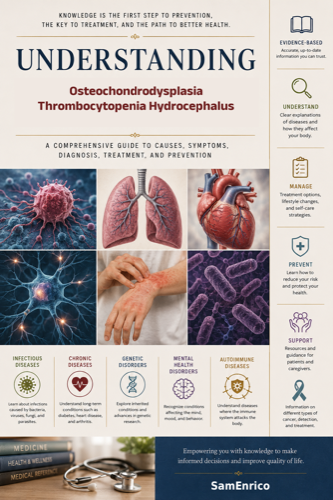 Understanding Osteochondrodysplasia Thrombocytopenia HydrocephalusClemmons Jamika$17.99
 Canadian Graduate Police CertificateClemmons Jamika$12.99
 Block Inc SWOT LibraryClemmons Jamika$12.99
 Signature Capture System OperationClemmons Jamika$11.99
 A Beginners Guide to Freestyle Footbag (Volume 1)Clemmons Jamika$11.99
You may also like
 Hong Kong Handover 1997Dunn Johnnie$11.99
 Zumba For Postnatal Recovery CourseNeal Christian$11.99
 Zumba for BeginnersLadner Nikia$11.99
 YouTube Comment Mining GuideHumes Pandora$12.99
 Worry Box MeditationCarlin Rudy$11.99
 Workplace Stress MeditationNguyen Lynn$11.99
 Workplace Stress and Sleep RepairHawley Ivory$11.99
 Workplace Perfectionism CureDelaney Jeffry$11.99
 Workplace Injustice Anger GuideWallen Isabelle$11.99
 Work Addiction and Burnout LinkGreenwood Ester$11.99
 Women in Yoga and WellnessBeattie Galina$11.99
 Women in Stand Up ComedyChun Evangeline$11.99