
Non-FictionHealth & WellnessChildPediatric
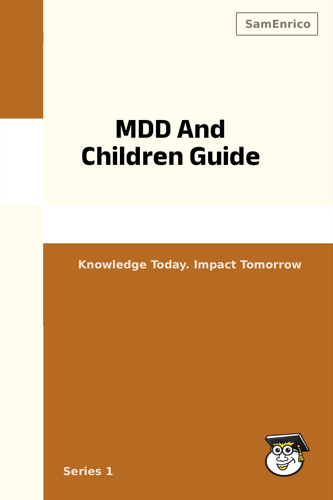
MDD And Children Guide
Recognize childhood depression often presenting as
by Stack Chae
Recognize childhood depression often presenting as irritability not sadness.
Formats
About this book
Free sample
Chapter 1: The Explosion That Wasn’t Tantrum–- The first time Sarah called me, her voice was a whisper, even though her son was at school. “He tried to punch a hole through the wall last night,” she said. “He’s seven. He doesn’t cry. He doesn’t say he’s sad.
He just… explodes. Then he collapses into my arms and says he’s ‘tired of being angry.’ The pediatrician said it’s a phase. The school wants an ADHD evaluation. His father thinks he’s spoiled. But I swear to you — something else is going on.”Sarah was right.
And she was also describing the single most misunderstood presentation of childhood depression in existence.We have been taught to look for sadness in children. We watch for tearfulness, withdrawal, a sudden loss of interest in toys or friends. We are told to worry when a child says “I feel empty” or “nothing is fun anymore.” And those symptoms do occur — in some children, at certain ages, during specific phases of depression.But for a very large, very silent group of depressed children, the primary symptom is not sadness at all.It is rage.It is chronic irritability that lasts all day, every day, for years. It is explosive outbursts that seem to come from nowhere and end with the child sobbing in confusion. It is a pervasive boredom that the child calls “being annoyed” and the parent calls “being impossible to please.” It is a child who is perfectly behaved at school — polite, compliant, even eager to please — who walks through the front door and within thirty minutes has screamed at a sibling, thrown a homework folder, and collapsed in a heap of what looks like defiance but is actually despair.This chapter will dismantle everything you thought you knew about childhood depression.
You will learn why your child’s anger may be the truest signal of their suffering. You will understand the neurological reasons that children express depression through irritability rather than tears. And you will begin to see your child not as a problem to be…
This is the end of the free sample. Get the eBook to keep going. Buy now
Contents
- Chapter 1
- Chapter 2
- Chapter 3
- Chapter 4
- Chapter 5
- Chapter 6
- Chapter 7
- Chapter 8
- Chapter 9
- Chapter 10
- Chapter 11
- Chapter 12
Details
- Author
- Stack Chae
- Publisher
- SamEnrico
- Language
- English
- Genre
- Non-Fiction, Health & Wellness, Child, Pediatric
- Released
- 2026-06-09
- Pages (approx.)
- 137
- Available as
- eBook, Audiobook

Read better in the ZLOADR app
Your eBooks on your phone or tablet. Sign in with your SamEnrico account and start reading.
More by Stack Chae
 Comedy Country MemoirStack Chae$11.99
 Teen Medication AcceptanceStack Chae$11.99
 Foster Care And The LibraryStack Chae$11.99
 The Evening Darkness Melatonin GuideStack Chae$11.99
 The Last Pharaoh's HeistStack Chae$11.99
 The Breeder's Guide to White Holland TurkeysStack Chae$11.99
 Domain Name Abuse PreventionStack Chae$12.99
 Startup QBO Setup GuideStack Chae$12.99
 Retail Inventory Control and Replenishment AssociateStack Chae$11.99
 How to Become a Log ScalerStack Chae$11.99
You may also like
 Hong Kong Handover 1997Dunn Johnnie$11.99
 Zumba For Postnatal Recovery CourseNeal Christian$11.99
 Zumba for BeginnersLadner Nikia$11.99
 YouTube Comment Mining GuideHumes Pandora$12.99
 Worry Box MeditationCarlin Rudy$11.99
 Workplace Stress MeditationNguyen Lynn$11.99
 Workplace Stress and Sleep RepairHawley Ivory$11.99
 Workplace Perfectionism CureDelaney Jeffry$11.99
 Workplace Injustice Anger GuideWallen Isabelle$11.99
 Work Addiction and Burnout LinkGreenwood Ester$11.99
 Women in Yoga and WellnessBeattie Galina$11.99
 Women in Stand Up ComedyChun Evangeline$11.99