
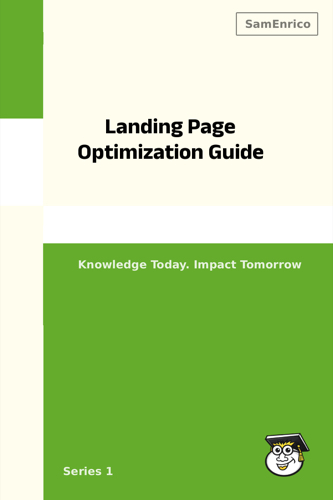
Landing Page Optimization Guide eBook
Convert traffic into leads with high-performing, t
Convert traffic into leads with high-performing, testable landing pages.
Formats
Free sample
Chapter 1: The 90/10 Flip--Most marketers are building castles on sand. They spend weeks crafting the perfect Facebook ad, agonize over Google keyword bids, and obsess about organic reach on Linked In. Then, when a visitor finally clicks—sacrificing their attention and a sliver of their day—the marketer delivers them to a page that hasn't been updated since the Obama administration. The result? A 2-5% conversion rate.
Ninety-five to ninety-eight percent of the money spent on driving traffic evaporates the moment the landing page loads.This is the 90/10 Flip. Most organizations allocate 90% of their time, budget, and creative energy to getting traffic and only 10% to converting that traffic once it arrives. The data suggests this ratio is exactly backward. A 10% improvement in conversion efficiency often generates more incremental revenue than doubling your traffic—at a fraction of the cost. Yet month after month, marketing teams pour fuel on the acquisition fire while leaving the conversion engine rusting in the garage.This chapter exists to rewire that instinct.
Before we talk about button colors, headline formulas, or A/B testing tools, we need to establish a foundational truth: traffic is a commodity, but attention is scarce. Landing Page Optimization (LPO) is the discipline of honoring the click—of treating every visitor as a guest who deserves a clear, compelling, and frictionless path to action. This is not about manipulation or dark patterns. It is about alignment: aligning what you promised in the ad with what you deliver on the page, aligning your visitor's goal with your business goal, and aligning your team's efforts with the simple arithmetic of conversion lift.By the end of this chapter, you will understand why LPO is the highest-leverage activity in digital marketing. You will learn the Acquisition, Conversion, Retention model that separates sustainable businesses from traffic-dependent zombies.
You will debunk the myth of the perfect landing page. You will discover the power of micro-conversions—the small commitments that lead to big sales. And you will walk away with a concrete ROI formula to justify your first test to any boss, client, or stakeholder. Let us begin.The Three Engines of Online Business Imagine a car with three engines. The first engine (acquisition) pushes the car forward.
The second engine (conversion) steers the wheels. The third engine (retention) keeps the fuel tank full. Most businesses pour all their horsepower into the first engine and then wonder why they are not arriving at their destination.Acquisition is everything you do to bring people to your digital property: search engine optimization, pay-per-click advertising, social media marketing, email campaigns, affiliate partnerships, and organic content. Acquisition answers the question, "How do I get more people in the door?" It is visible, measurable, and addictive. Pull the lever on a Facebook ad campaign and traffic goes up tomorrow.
That immediate feedback loop makes acquisition seductive.Conversion is what happens after someone walks through the door. It is the landing page, the form, the checkout flow, the pricing page, and the call-to-action button. Conversion answers the question, "How do I turn this visitor into a lead, a trial user, or a customer?" It is less glamorous than acquisition and often neglected because improvements take longer to manifest. But here is the secret: conversion improvements compound. Every dollar you spend on acquisition after a conversion lift becomes more valuable automatically.Retention is what keeps customers coming back: onboarding emails, customer support, product updates, loyalty programs, and community building.
Retention answers the question, "How do I turn one purchase into ten?" Retention is the longest-term engine, but it depends entirely on conversion. If you cannot convert a visitor into a first-time buyer, you have no one to retain.Here is why the 90/10 Flip matters. Most organizations spend 90 cents of every marketing dollar on acquisition. They obsess over cost-per-click, cost-per-mille, and cost-per-acquisition. Then they spend the remaining dimes on conversion and retention combined.
The mathematically optimal business, by contrast, invests heavily in conversion because the returns are so efficient. Improving conversion from 2% to 3% on 10,000 monthly visitors adds 100 new leads with zero additional ad spend. To get 100 new leads through acquisition alone, you would need to increase traffic by 50%—far more expensive and far less predictable.The most sophisticated companies in the world understand this. Amazon, Netflix, and The Trade Desk all run continuous conversion experiments. They know that a 1% lift in conversion on their existing traffic is worth hundreds of millions of dollars.
They also know that acquisition costs rise over time (competition bids up keywords, platforms become saturated), while conversion expertise compounds. Once you learn how to build a high-converting landing page, you can reuse that knowledge across every campaign forever.The Myth of the Perfect Landing Page There is a dangerous fantasy that circulates in marketing departments. It goes something like this: somewhere out there exists the perfect landing page. It has the perfect headline, the perfect image, the perfect button color. If we could only find that page, our conversion problems would be solved forever.
We could stop testing, stop iterating, and just collect leads while we sleep.This fantasy is destructive because it encourages paralysis. Teams spend weeks debating whether the button should be green or orange because they believe the "right" choice will unlock magical conversion gains. They delay launching new campaigns until the page is "perfect." They treat optimization as a one-time project rather than a continuous discipline.Let us look at the data. According to aggregated benchmarks from Unbounce, Word Stream, and marketing experimentation platforms, the average landing page conversion rate across all industries is approximately 2.35%. The top 25% of pages convert at 5.31% or higher.
The top 10% convert at 11.45% or higher. Notice what this tells us: even the very best pages in the world—pages that have been tested, tuned, and optimized for years—still leave nearly 90% of their visitors without converting.Amazon is arguably the most conversion-obsessed company in human history. They have run hundreds of thousands of A/B tests. They employ economists, behavioral scientists, and user experience researchers. And after two decades of relentless optimization, Amazon's checkout pages still convert only a fraction of visitors.
They continue testing because they know that perfection is asymptote, not destination.The goal of LPO is not to build the perfect landing page. The goal is to build a page that is measurably better than it was last month. It is to create a culture of continuous improvement where every test, whether it wins or loses, teaches you something about your audience. The companies that win at LPO are not the ones with the prettiest pages or the cleverest copy. They are the ones that run the most tests, learn the fastest, and compound their knowledge over time.Consider this reframe: every landing page is a hypothesis.
Your headline is a hypothesis about what will grab attention. Your call-to-action is a hypothesis about what will motivate action. Your form length is a hypothesis about how much information visitors will trade for value. When you treat your page as a hypothesis, you stop defending it emotionally. You stop arguing about opinions.
You start designing experiments to discover what actually works.The myth of perfect conversion also ignores a deeper truth: different visitors want…
This is the end of the free sample. Get the eBook to keep going. Buy now
About this book
Details
- Author
- Spinks Tierra
- Publisher
- SamEnrico
- Language
- English
- Genre
- Non-Fiction, Business Brief, CRO
- Released
- 2026-06-08
- Pages (approx.)
- 139
- Available as
- eBook, Audiobook

Read better in the ZLOADR app
Your eBooks on your phone or tablet. Sign in with your SamEnrico account and start reading.
More by Spinks Tierra
 Burnout Sleep Repair GuideSpinks Tierra$11.99
 Collaborative Scenario Planning GuideSpinks Tierra$11.99
 Jack Nicklaus Major Wins MemoirSpinks Tierra$11.99
 Noise Sensitivity Anger PatternsSpinks Tierra$11.99
 The Last Mile: The Untold Story of the First Woman to Run Across AmericaSpinks Tierra$11.99
 The Frozen Frontier: Antarctica's First Explorers and the Birth of Polar ScienceSpinks Tierra$11.99
 WarrantsSpinks Tierra$11.99
 Plane Jira Alternative GuideSpinks Tierra$12.99
 Licensing to Acquisition BuyersSpinks Tierra$12.99
 Understanding Chromosome 9, Partial Monosomy 9pSpinks Tierra$17.99
 How to Start a Hobby in Reading To The ElderlySpinks Tierra$11.99
You may also like
 Hong Kong Handover 1997Dunn Johnnie$11.99
 Zumba For Postnatal Recovery CourseNeal Christian$11.99
 Zumba for BeginnersLadner Nikia$11.99
 YouTube Comment Mining GuideHumes Pandora$12.99
 Worry Box MeditationCarlin Rudy$11.99
 Workplace Stress MeditationNguyen Lynn$11.99
 Workplace Stress and Sleep RepairHawley Ivory$11.99
 Workplace Perfectionism CureDelaney Jeffry$11.99
 Workplace Injustice Anger GuideWallen Isabelle$11.99
 Work Addiction and Burnout LinkGreenwood Ester$11.99
 Women in Yoga and WellnessBeattie Galina$11.99
 Women in Stand Up ComedyChun Evangeline$11.99