
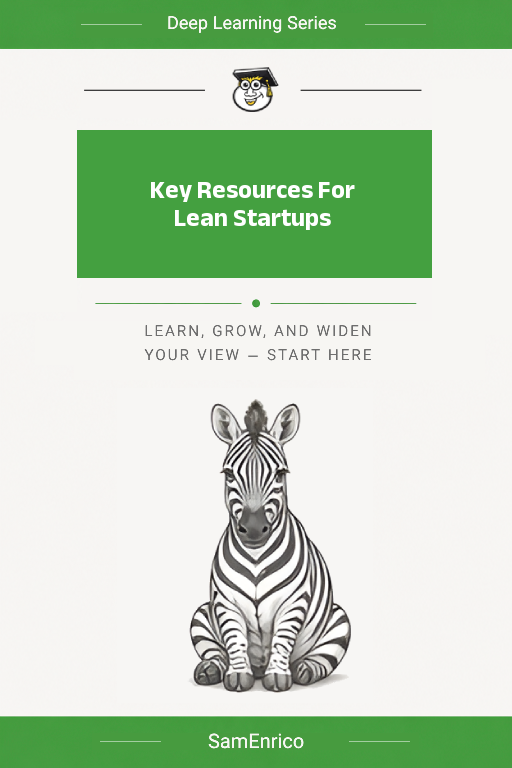
Key Resources For Lean Startups eBook
Identify physical intellectual human and financial
by Ware Santina
Identify physical intellectual human and financial capital needed to operate your business.
Formats
Free sample
Chapter 1: The Abundance Trap–- It was the kind of story that made headlines and sold magazines. A twenty-four-year-old founder raised twelve million dollars for a food delivery startup before writing a single line of code. The term sheet arrived forty-eight hours after the pitch deck hit investors' inboxes. Three months later, the company had sixty employees, a sprawling downtown office with a keg in the kitchen, and a fleet of branded scooters. Eight months after that, it was dead.
Not slowly dying, the way startups often fade into irrelevance, but spectacularly dead—bankrupt, asset-less, and subject to a lawsuit from the landlord who never received a single rent payment after month two.The founder, interviewed a year later at a coffee shop where he was now the barista, said something that stuck with the journalist who wrote the post-mortem. "I thought the money was the solution," he said, stirring an oat milk latte that cost more than his hourly wage. "Turns out, the money was the problem."He was right. And he was not alone.Every year, thousands of startups raise millions of dollars only to collapse under the weight of their own abundance. They hire too fast, build too much, and commit to physical assets they cannot unload, all before answering the only question that matters: Does anyone actually want what I am building?
The tragic irony is that the very resource founders believe will save them—capital in all its forms—is often the thing that kills them.This is the Abundance Trap.And the first step out of it is understanding that you are probably already standing in it.The Paradox No One Talks About Let us begin with a provocation that will sound like heresy to anyone who has ever sat through a "Raising Capital 101" seminar: Having too many resources is more dangerous than having too few.Consider the evidence. A startup with fifty thousand dollars cannot afford to hire fifteen engineers, lease a warehouse, or run a Super Bowl ad. That founder is forced to do something profoundly useful: ask customers what they actually need. A startup with five million dollars, by contrast, can afford to be wrong at scale. They can build the wrong product beautifully.
They can hire the wrong team impressively. They can market to the wrong audience expensively. And because they have the money to keep going long after the evidence says stop, they do. They burn. They crash.
They fail faster than the bootstrapper who never had the luxury of waste.This is not speculation. It is arithmetic.Let us run the numbers. A bootstrapped founder with fifty thousand dollars in savings knows she has approximately six to twelve months to achieve product-market fit before she runs out of money. Every expense is scrutinized. Every hire is agonized over.
Every feature is debated. She speaks to customers constantly because she cannot afford to build anything they do not explicitly request. Her survival depends on learning.Now consider the venture-backed founder who raises five million dollars. His runway is thirty months. He can hire a team of ten before ever talking to a customer.
He can build a full-featured product based on internal assumptions. He can launch a marketing campaign before anyone has validated the value proposition. And because he has the money, he does not feel the urgency to test his hypotheses quickly. He builds. He hires.
He spends. And only when the money is half gone does he realize he never answered the basic question: Is anyone willing to pay for this?The bootstrapper validates or dies. The well-funded founder just dies slower—but often more spectacularly.This is the Abundance Trap. It is the single greatest predictor of startup failure that no one measures. And the only way out is to treat every resource as a hypothesis to be tested, not an asset to be acquired.The Four Capitals of Lean Resource Management Before we can diagnose the Abundance Trap in your own startup, we need a shared language for talking about resources.
Through decades of research on entrepreneurial success and failure—synthesized from the Business Model Canvas literature, lean startup methodology, and contemporary studies of resource-based strategy—a clear framework has emerged. Every startup relies on four fundamental types of capital.Physical Capital is the most visible and therefore the most dangerous. It includes equipment, inventory, office space, raw materials, and any tangible asset you can touch, store, or depreciate. Physical capital is seductive because it feels like progress. A new warehouse feels more real than a customer interview.
A fleet of scooters feels more impressive than a spreadsheet of user feedback. But physical capital is also the most illiquid. Once you sign a lease, buy a server, or order inventory, that money is gone. You cannot return a year-long lease. You cannot resell customized equipment at cost.
Physical capital commits you to a path before you know if the path leads anywhere.Intellectual Capital is the least understood and therefore the most underleveraged. It includes patents, trade secrets, customer data, brand identity, proprietary processes, and—most critically for lean startups—the documented learning from every experiment you run. Intellectual capital does not depreciate like physical assets. It appreciates. A customer list worth ten thousand dollars today might be worth a hundred thousand next year as the relationships deepen.
A learning log filled with failed experiments might be the most valuable asset you own when a larger company acquires you for your insights, not your infrastructure.Human Capital is the most dynamic and therefore the most difficult to manage. It includes the skills, attitudes, team culture, professional networks, and raw cognitive capacity of everyone involved in the startup. Human capital is unique because it can substitute for other capitals—a creative founder can use her own time and expertise in place of expensive software or equipment—but it is also the hardest to scale. Hiring the wrong person is worse than not hiring at all, not just because of the financial cost but because of the cultural debt they leave behind.Financial Capital is the most obvious and therefore the most fetishized. It includes cash, equity, debt, grants, and any other store of value that can be converted into the other three capitals.
Financial capital is unique because it is the only resource that is completely fungible. You can turn cash into a server, a patent filing, or a salary. But that fungibility is also a trap. The easier it is to spend, the less disciplined founders become about validating whether the spending is necessary.Every decision you make as a founder—every hire, every purchase, every pivot—is a decision about how to allocate these four capitals. And the single biggest mistake is allocating any of them before you have tested the hypothesis that justifies the allocation.The Minimum Viable Resource Base: A New Unit of Measurement If the Abundance Trap is the disease, the Minimum Viable Resource Base (MVRB) is the cure.
But like any powerful tool, it requires precise definition. Throughout this book, we will use three distinct but related concepts, and it is essential to keep them separate from the start.First, the…
This is the end of the free sample. Get the eBook to keep going. Buy now
About this book
Details
- Author
- Ware Santina
- Publisher
- SamEnrico
- Language
- English
- Genre
- Non-Fiction, First 30 Days
- Released
- 2026-06-01
- Pages (approx.)
- 160
- Available as
- eBook, Audiobook

Read better in the ZLOADR app
Your eBooks on your phone or tablet. Sign in with your SamEnrico account and start reading.
More by Ware Santina
 The Anxiety Ladder MeditationWare Santina$11.99
 Mother Child Border Separation StoryWare Santina$11.99
 Cybersex Addiction Treatment PlanWare Santina$11.99
 Cryptocurrency Gambling AddictionWare Santina$11.99
 The Train Derailment HostageWare Santina$11.99
 Trading Floor Stress ManagementWare Santina$11.99
 Second Act Career ChangeWare Santina$11.99
 Learning Disability Academic StressWare Santina$11.99
 When Hospitals Became TargetsWare Santina$11.99
 The Star Keepers of the Nile: Egypt's Celestial GuardiansWare Santina$11.99
 The Siege of Azov: Cossack Defiance Against the TsarWare Santina$11.99
 How to Start a Advertising Contractor Business (Beginners Guide)Ware Santina$11.99
You may also like
 Hong Kong Handover 1997Dunn Johnnie$11.99
 Zumba For Postnatal Recovery CourseNeal Christian$11.99
 Zumba for BeginnersLadner Nikia$11.99
 YouTube Comment Mining GuideHumes Pandora$12.99
 Worry Box MeditationCarlin Rudy$11.99
 Workplace Stress MeditationNguyen Lynn$11.99
 Workplace Stress and Sleep RepairHawley Ivory$11.99
 Workplace Perfectionism CureDelaney Jeffry$11.99
 Workplace Injustice Anger GuideWallen Isabelle$11.99
 Work Addiction and Burnout LinkGreenwood Ester$11.99
 Women in Yoga and WellnessBeattie Galina$11.99
 Women in Stand Up ComedyChun Evangeline$11.99