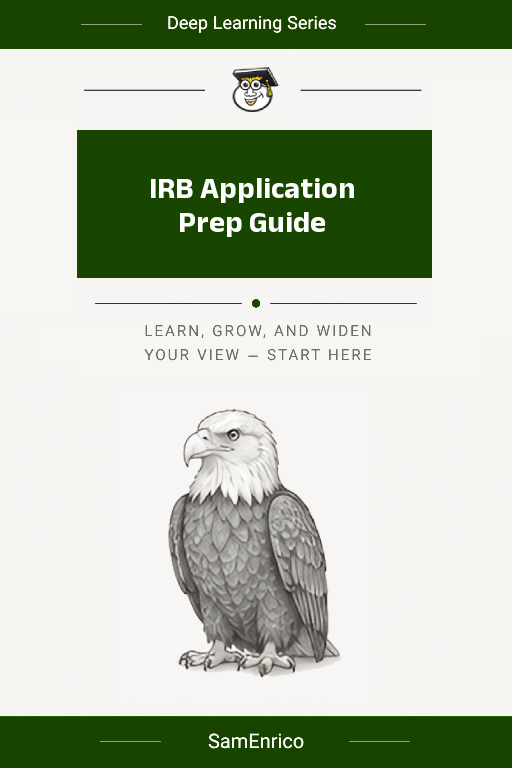
IRB Application Prep Guide Audiobook
Navigate Institutional Review Board approval for g
by Mann Andy
Navigate Institutional Review Board approval for grad research proposals. Write consent forms, address ethical concerns, and anticipate common committee questions.
Formats
Free sample
Chapter 1: Beyond Bureaucracy...--–- The email arrived at 11:47 on a Tuesday night. Sarah, a third-year doctoral candidate in sociology, had spent eighteen months designing her dissertation on food insecurity among college students. She had pilot-tested her survey, secured letters of support from three campus food pantries, and received enthusiastic feedback from her advisor. The IRB’s subject line read: “Determination of Exempt Status – Modifications Required.” Inside, a single sentence stopped her cold: “Your recruitment method constitutes coercion of a vulnerable population. Please revise and resubmit.” Sarah had no idea what she had done wrong.
She had copied the recruitment language from a published study. She had completed her CITI training with a 98% score. And now, her defense timeline was slipping by weeks, maybe months. She closed her laptop and cried.This book exists because Sarah’s story is not unusual. It is, in fact, the norm.
Every semester, thousands of graduate students face the same moment of panic: an IRB decision that seems arbitrary, a requested revision that makes no sense, a delay that threatens graduation. The problem is rarely bad intentions or sloppy science. The problem is a fundamental mismatch between how students learn about research ethics and how IRBs actually evaluate applications. Students memorize the Belmont Report for their qualifying exams. They click through CITI modules about hypothetical scenarios involving hypothetical researchers.
But no one teaches them to think like an IRB member. No one explains why a seemingly innocent recruitment flyer triggers a coercion warning. No one translates the dense language of federal regulations into the practical, daily decisions of designing a study.This chapter changes that. Before you write a single word of your application, before you draft a consent form or calculate your sample size, you need to understand three things: why the IRB exists beyond the textbook version, what the committee is actually looking for when they read your proposal, and how to reframe your relationship with the IRB from adversary to collaborator. Most students approach the IRB like a defensive driver approaching a speed trap—eyes narrowed, foot hovering over the brake, hoping to avoid detection.
That mindset guarantees a painful process. The students who sail through IRB review are not smarter or luckier. They have learned to speak the IRB’s language, anticipate its questions, and embed ethical reasoning into every corner of their research design. By the end of this chapter…
This is the end of the free sample. Get the Audiobook to keep going. Buy now
About this book
Details
- Author
- Mann Andy
- Publisher
- SamEnrico
- Language
- English
- Genre
- Non-Fiction, Student's Shortcut, Research Ethics
- Released
- 2026-05-27
- Pages (approx.)
- 155
- Available as
- eBook, Audiobook

Listen in the VoxFlicks app
Audiobooks and audio dramas wherever you go. Sign in with your SamEnrico account and press play.
More by Mann Andy
 Dahlia and The Werewolf TheoryMann Andy$11.99
 European Nonverbal GuideMann Andy$11.99
 The Cleaning Product GuideMann Andy$11.99
 Burnout and Vacation PlanningMann Andy$11.99
 The Alchemists of Light: Galileo, Kepler, and the Dawn of Modern ScienceMann Andy$11.99
 Powder MetallurgyMann Andy$11.99
 How to Start a Disc Jockeys - Independent BusinessMann Andy$11.99
 How to Produce Bicycle Brake SetsMann Andy$11.99