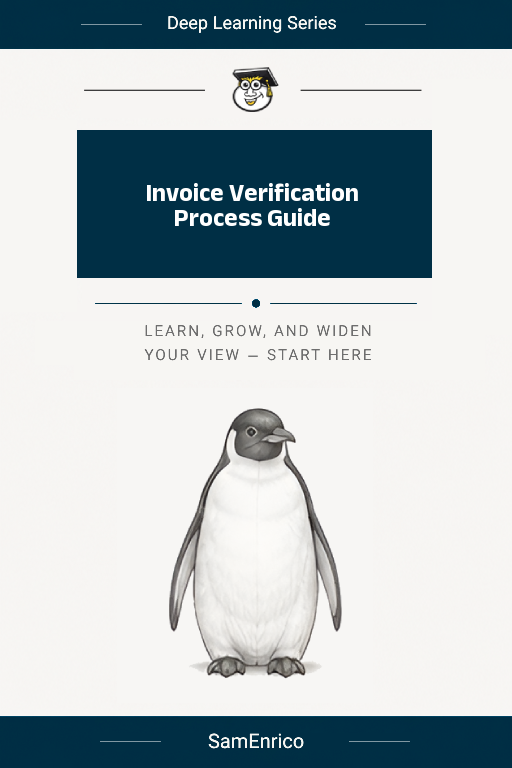
Invoice Verification Process Guide eBook
Submit proof of delivery and purchase order for fa
by Hales Bao
Submit proof of delivery and purchase order for factor verification. Emerging market factors require original documents before funding eligible invoices.
Formats
Free sample
Chapter 1: The $10 Million Typo--–- The first time Maria Chen saw a 1.2millionreceivabledisappear,shewassittinginawindowlessconferenceroomin Ho Chi Minh City,holdingapieceofpaperthatshouldhavebeenworthmorethanherhouse.Thepaperwasa Proofof Delivery—asimpledeliverynotestampedandsignedbyabuyerwhohadsincedisappearedintothedigitalether.Thefactorhadrejecteditbecausethestampwas2millimeterssmallerthanthebuyer’sauthorizedspecification.Mariahadneverheardofsuchathing.Neitherhadher CFO.Butthefactorwasadamant:“Novalid POD,nofunding.”Withinninetydays,Maria’semployer,amid−sizedfurnitureexporter,wasbankrupt.The1.2 million receivable disappear, she was sitting in a windowless conference room in Ho Chi Minh City, holding a piece of paper that should have been worth more than her house. The paper was a Proof of Delivery — a simple delivery note stamped and signed by a buyer who had since disappeared into the digital ether. The factor had rejected it because the stamp was 2 millimeters smaller than the buyer’s authorized specification. Maria had never heard of such a thing. Neither had her CFO.
But the factor was adamant: “No valid POD, no funding.” Within ninety days, Maria’s employer, a mid-sized furniture exporter, was bankrupt. The 1.2millionreceivabledisappear,shewassittinginawindowlessconferenceroomin Ho Chi Minh City,holdingapieceofpaperthatshouldhavebeenworthmorethanherhouse.Thepaperwasa Proofof Delivery—asimpledeliverynotestampedandsignedbyabuyerwhohadsincedisappearedintothedigitalether.Thefactorhadrejecteditbecausethestampwas2millimeterssmallerthanthebuyer’sauthorizedspecification.Mariahadneverheardofsuchathing.Neitherhadher CFO.Butthefactorwasadamant:“Novalid POD,nofunding.”Withinninetydays,Maria’semployer,amid−sizedfurnitureexporter,wasbankrupt.The1.2 million represented 70% of their quarterly revenue. They could not cover payroll. They could not buy raw materials. They could not survive the gap.
And all because of a stamp.This is not an isolated horror story. It is the new reality of invoice verification in emerging markets. Factors — the financial institutions that buy your accounts receivable — have been burned so many times by fraud that they have become document terrorists. They reject invoices for reasons that seem absurd to the uninitiated: a missing comma in the legal name, a date format that uses slashes instead of dashes, a POD stamp that is blurry, a signature that does not exactly match the buyer’s authorized list. These are not clerical nitpicks.
They are the front lines of a war against a $300 billion global trade finance fraud problem. And if you are selling goods into markets like Vietnam, Nigeria, Brazil, India, or Indonesia, you are fighting that war whether you know it or not.This book is your battle manual. It will teach you exactly how to build an invoice verification system that factors trust — and fraudsters fear. By the time you finish this chapter, you will understand why traditional accounts payable thinking will get you killed, what the “Three-Second Murder” is, and why a single typo can cost you millions. More importantly, you will learn the first actionable steps to protect your cash flow starting tomorrow morning.The Failure of Standard Verification In a perfect world, invoice verification is straightforward.
You send goods. The buyer receives them. You send an invoice. The buyer pays. The factor, if you use one, advances you 80–90% of the invoice value within 48 hours.
The factor then collects from the buyer and pays you the remaining 10–20%, minus their fee. This is the theory. It works beautifully in mature markets like the United States, Germany, and Japan, where legal systems are predictable, digital signatures are widely accepted, and fraud is relatively rare.Emerging markets are not mature markets. They are high-growth, high-fraud environments where the rules are different. Consider the following realities:In Brazil, an estimated 12% of all trade finance applications contain some form of documentary fraud, according to a 2023 study by the International Chamber of Commerce.
In Nigeria, ghost shipments — invoices for goods that were never actually shipped — account for nearly $2 billion in annual losses. In Vietnam, the rapid industrialization of the past decade has been accompanied by an equally rapid rise in fake Proofs of Delivery, many of them created with nothing more than Adobe Photoshop and a scanner.Factors operating in these markets have learned the hard way that digital copies and soft approvals lead to catastrophic losses. A textile factor in Bangladesh accepted twelve e-signed PODs from a supplier it had worked with for three years. The PODs looked perfect: timestamps, digital signatures, matching quantities. The factor funded $800,000 in invoices.
Six months later, the buyer informed the factor that they had never received the goods. The e-signed PODs were forgeries. The supplier had disappeared. The factor’s bank debooked them — removed them from their portfolio — and the factor went out of business.This is not a cautionary tale. It is the new normal.The UNIDROIT Model Law: A Game Changer You Cannot Ignore In response to this crisis, the international community created the UNIDROIT Model Law on Factoring.
Adopted by over twenty countries — including most of the major emerging economies — this model law establishes a legal framework for factoring that includes a critical requirement: factors must perform “diligent verification” before accepting an invoice. And what does diligent verification mean in practice? It means original documents. Not scanned copies. Not email attachments.
Not Whats App images. Original, stamped, signed, physical Proofs of Delivery that can be produced in a court of law.The UNIDROIT Model Law is not a suggestion. In countries that have adopted it — including India, Turkey, and several African nations — it carries the force of law. If a factor accepts a digital POD that later turns out to be fraudulent, the factor is legally liable. If the factor rejects an invoice because the POD does not meet the “original document” standard, the supplier has no legal recourse.
The law is on the factor’s side.This is why factors have become so strict. They are not being petty. They are complying with the law. And the law says that if they accept a questionable document, they eat the loss. So they reject first and ask questions never.The Cost of Soft Verification The phrase “soft verification” refers to any verification process that does not require original, physical documents.
Email confirmation from the buyer? Soft. A photo of a delivery note? Soft. A digital signature from a carrier’s app?
Soft — unless that app uses blockchain-secured authentication, which we will cover in Chapter 9.Soft verification is the enemy of cash flow. Consider the following real-world examples, gathered from interviews with factors, suppliers, and trade finance lawyers across four continents:Case Study 1: The Bangladesh Textile Factor. A factor in Dhaka accepted twelve e-signed PODs from a supplier of ready-made garments. The factor funded $800,000. The buyer, a European retailer, denied ever receiving the goods.
The supplier had forged the PODs using a stolen digital certificate. The factor’s bank debooked them. The factor collapsed. The factor’s CEO now faces criminal charges for “invoice discounting without title” — a fancy way of saying he advanced money against fake receivables.Case Study 2: The Nigerian Food Exporter. A Nigerian supplier of processed cassava submitted 47 invoices to a factor in Lagos.
Each invoice was accompanied by a PDF POD — a scanned copy of a delivery note signed by the buyer. The factor funded $1.1 million. Three months later, the buyer informed the factor that the delivery notes were forgeries. The supplier had never shipped the goods. The factor is now in litigation, and the supplier’s owner has fled to Dubai.Case Study 3: The Vietnamese Furniture Exporter.
This is Maria Chen’s story. The furniture exporter submitted a package of 53 invoices to a factor in Singapore. The factor rejected all 53 because the POD stamp was not exactly the right size. The supplier appealed, arguing…
This is the end of the free sample. Get the eBook to keep going. Buy now
About this book
Details
- Author
- Hales Bao
- Publisher
- SamEnrico
- Language
- English
- Genre
- Non-Fiction, Business Brief, Verification
- Released
- 2026-06-01
- Pages (approx.)
- 145
- Available as
- eBook, Audiobook

Read better in the ZLOADR app
Your eBooks on your phone or tablet. Sign in with your SamEnrico account and start reading.
More by Hales Bao
 Bahadur Shah Zafar Final EmperorHales Bao$11.99
 Slovak Battery ManufacturingHales Bao$11.99
 FSMA Recall Requirement GuideHales Bao$11.99
 Emotional Tone Dream TrackingHales Bao$11.99
 Strength Training For TriathlonHales Bao$11.99
 LGBTQ Body Image GuideHales Bao$11.99
 AI Slide Resizing GuideHales Bao$11.99
 Katie Porter WhiteboardHales Bao$11.99
 Sugar Addiction Insulin LinkHales Bao$11.99
 Soul Stirrings: The Untold Backstage Battles of Motown’s HitmakersHales Bao$11.99
 The Iron Trail: Sandford Fleming and the Birth of Canada’s Railway EmpireHales Bao$11.99
 Frozen Shadows: The Lost Expedition of the Pamir MountainsHales Bao$11.99