

Non-FictionStudent's ShortcutInvitation TrackerRound Analysis
Invitation Round Analysis Guide eBook
Track SkillSelect invitation rounds by occupation
by Grace Daniel
Track SkillSelect invitation rounds by occupation and points score to predict when you will receive invite.
Formats
Free sample
Chapter 1: The 65-Point Massacre--For the past three years, Priya had done everything right. She had scored 90 points as an Accountant – well above the published minimum of 65. She had lodged her Expression of Interest on time, updated it promptly when she gained additional work experience, and checked the Department of Home Affairs website every single month when invitation rounds were released. She had spent over $15,000 AUD on skills assessments, English tests, and migration agent fees. She had done everything the forums and Facebook groups had told her to do.And she had received exactly zero invitations.Not one.Priya is not a cautionary tale about fraud or bad luck.
She is not someone who made an obvious mistake or who failed to meet basic requirements. Priya is the rule, not the exception. She is one of the approximately eighty-five percent of applicants who will never receive a Skill Select invitation, not because they lack points, but because they fundamentally misunderstand how the queue actually works.This chapter exists to ensure you do not become Priya.The Great Misunderstanding Every single day, thousands of prospective migrants log into the Skill Select system, check their Expression of Interest, and wonder why they have not yet received an invitation. They see the number sixty-five printed on Department of Home Affairs websites. They read that sixty-five points is the "minimum pass mark." They calculate their points – perhaps seventy, perhaps eighty, perhaps even ninety – and they assume they are competitive.They are wrong.The sixty-five point minimum is not a target.
It is not a benchmark. It is not even a realistic threshold for ninety percent of occupations. Sixty-five points is a quarantine line – a filter that separates the applications the Department is willing to look at from the applications it will never consider. To understand why, you must first understand the brutal mathematics of the Skill Select system.The Mathematics of Invisibility In the most recent financial year for which complete data is available, the Department of Home Affairs received over three hundred thousand Expressions of Interest across all occupation categories. Of those, approximately forty thousand resulted in invitations.
That is an invitation rate of roughly thirteen percent.But those raw numbers hide an even more brutal reality. When you break down invitations by occupation tier – a framework we will explore in detail in Chapter 3 – the numbers become truly staggering. For Tier 4 occupations like Accounting, Information Technology, and Legal professions, the invitation rate drops below five percent. For Accountants specifically, the rate is closer to two percent.Here is what that means in practical terms: For every one hundred Accountants who lodge an Expression of Interest with sixty-five points or more, ninety-eight will never receive an invitation. Ever.Priya was one of the ninety-eight.The minimum score of sixty-five points is a trap because it creates a false sense of proximity.
An applicant with seventy points looks at the minimum of sixty-five and thinks, "I am five points above the minimum. I am safe." But the real cut-off – the actual score required to receive an invitation in a given round – is often twenty, thirty, or even thirty-five points higher. In the most recent invitation round for Accountants, the cut-off was ninety-five points. Thirty points above the minimum.The Quarantine Line, Not the Finish Line Think of the sixty-five point minimum the way a hospital thinks of its emergency room doors. The doors are open to everyone, but that does not mean everyone who walks through will receive treatment.
Triage happens inside. In Skill Select, the triage is brutal and entirely mathematical.The Department uses the sixty-five point threshold as a simple filter. If you score below sixty-five, the system rejects your Expression of Interest immediately. You do not enter the queue. You do not receive a Date of Effect.
You are simply discarded. But here is the cruel irony: For most occupations, scoring between sixty-five and seventy-nine points is functionally identical to scoring below sixty-five. You are in the queue, yes, but you are so far back that you will never reach the front.How far back? Let us examine the data from recent invitation rounds across different occupation categories.For General Practitioners – a Tier 1 occupation we will discuss in Chapter 3 – the cut-off in the most recent round was seventy-five points. That is ten points above the minimum.
A GP with sixty-five points has a theoretical chance, but in practice, the Department would need to invite every single applicant above seventy-five points before reaching the sixty-five point applicants. Given the number of applicants with seventy to seventy-four points, that would require multiple rounds with zero new higher-point applicants entering the pool. That never happens.For Software Engineers – a Tier 4 occupation – the cut-off was ninety points in the most recent round. Twenty-five points above the minimum. A Software Engineer with sixty-five points is not "twenty-five points behind." They are behind every single applicant with sixty-six points, sixty-seven points, and so on up to ninety points.
In a pool with thousands of applicants, being twenty-five points behind the cut-off means you are behind tens of thousands of other applicants. You are not in a queue. You are in a different postal code.The Twenty-Point Illusion One of the most persistent myths in the migration community is what I call the "Twenty-Point Illusion" – the belief that adding twenty points to your score will guarantee an invitation. This myth persists because it contains a kernel of truth: adding twenty points dramatically improves your chances. But the improvement is relative to your starting point, not absolute.Consider two applicants.
Applicant A is a Registered Nurse with sixty-five points. Applicant B is an Accountant with eighty-five points. Who has a better chance of receiving an invitation?The answer, which surprises many readers, is Applicant A. The Registered Nurse with sixty-five points is in Tier 1, where cut-offs historically range from seventy to seventy-five points. Applicant A needs to add ten points to become competitive.
The Accountant with eighty-five points is in Tier 4, where cut-offs historically range from ninety to one hundred points. Applicant B needs to add fifteen points – more than Applicant A – but also faces a pool that is ten times larger and a pro-rata ceiling that limits invitations per round.The Twenty-Point Illusion is dangerous because it encourages applicants to pursue difficult and expensive point-boosting strategies – new degrees, years of additional work experience, complex skills assessments – when a simpler strategy might be available. For the Registered Nurse, adding ten points via Superior English (see Chapter 7) is straightforward. For the Accountant, adding fifteen points might require a combination of English, a skilled partner, and NAATI accreditation, all while competing against thousands of other applicants doing the same thing.The lesson is brutal but necessary: Your starting occupation tier matters more than your points score. A Tier 1 applicant with seventy points will almost always receive an invitation before a Tier 4 applicant with ninety points.
The system prioritizes occupations, not ambition.The Real Cut-Offs: A Data-Driven Reality Check Let us examine actual cut-off data from recent invitation rounds. These numbers are derived from publicly available Department of Home Affairs FOI releases and round reports. They represent the lowest points score that received an invitation…
This is the end of the free sample. Get the eBook to keep going. Buy now
About this book
Details
- Author
- Grace Daniel
- Publisher
- SamEnrico
- Language
- English
- Genre
- Non-Fiction, Student's Shortcut, Invitation Tracker, Round Analysis
- Released
- 2026-05-29
- Pages (approx.)
- 159
- Available as
- eBook, Audiobook

Read better in the ZLOADR app
Your eBooks on your phone or tablet. Sign in with your SamEnrico account and start reading.
More by Grace Daniel
 Testosterone and Prostate CancerGrace Daniel$11.99
 Pain Grief Meditation GuideGrace Daniel$11.99
 The Veteran Body ScanGrace Daniel$11.99
 Kigali Drone Delivery Startup CourseGrace Daniel$11.99
 Lunch Break Restoration TechniquesGrace Daniel$11.99
 The Silent War: How the Cold War Was Won with a TelephoneGrace Daniel$11.99
 The Phantom Brain: John Macarthur's Pioneering Neuroscience in the Australian OutbackGrace Daniel$11.99
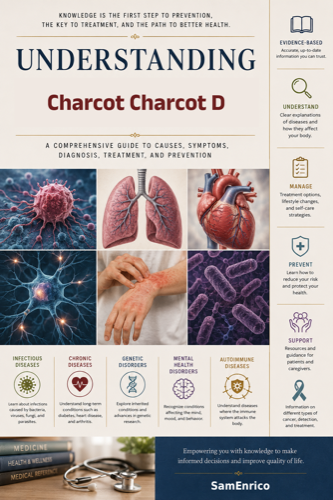 Understanding Charcot Charcot DGrace Daniel$17.99
 How to Start a Residential Mental Retardation Facilities BusinessGrace Daniel$11.99
 Digital Program ManagerGrace Daniel$11.99
 Proposal for International ResearchGrace Daniel$12.99
You may also like
 Hong Kong Handover 1997Dunn Johnnie$11.99
 Zumba For Postnatal Recovery CourseNeal Christian$11.99
 Zumba for BeginnersLadner Nikia$11.99
 YouTube Comment Mining GuideHumes Pandora$12.99
 Worry Box MeditationCarlin Rudy$11.99
 Workplace Stress MeditationNguyen Lynn$11.99
 Workplace Stress and Sleep RepairHawley Ivory$11.99
 Workplace Perfectionism CureDelaney Jeffry$11.99
 Workplace Injustice Anger GuideWallen Isabelle$11.99
 Work Addiction and Burnout LinkGreenwood Ester$11.99
 Women in Yoga and WellnessBeattie Galina$11.99
 Women in Stand Up ComedyChun Evangeline$11.99