
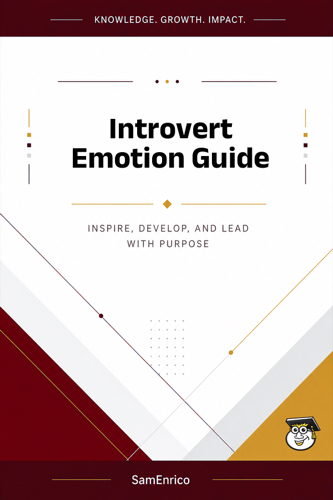
Introvert Emotion Guide Audiobook
undefined
undefined
Formats
Free sample
Chapter 1: The Quiet Architecture--Let me begin with a confession: For most of my life, I believed something was wrong with me.Not because I was sad or anxious in any clinical sense. Because I would leave parties feeling like I had run a marathon in wet clothes. Because I would sit in meetings with brilliant ideas fully formed in my head, watch the extroverts speak first, and then stay silent because the moment had passed. Because I would feel emotions—other people's emotions—so deeply that I would come home exhausted without having said more than ten words. I assumed this meant I was broken.
Too sensitive. Too slow. Too much and not enough at the same time.I was wrong. And if you are reading this book, you have probably been wrong about yourself, too.This chapter is not a collection of tips or a list of coping strategies. Before we can build anything useful, we have to clear the ground.
We have to look at the actual architecture of your brain and nervous system and understand why you process emotions the way you do. Because once you see the blueprint, everything else changes. The exhaustion makes sense. The depth makes sense. The silence makes sense.
And the question stops being "What is wrong with me?" and becomes "What have I been missing about how I work?"The Myth of the Emotional Deficit Western culture has a default setting for how a healthy person should express emotion. You should react quickly but not too quickly. You should show enthusiasm visibly. You should process feelings out loud, preferably in conversation with others. You should recover from upsets rapidly and move on without dwelling.
You should want to share your emotional state with the group. And you should definitely not need to disappear into a quiet room after a social gathering to feel like yourself again.This default setting describes one temperament. It describes approximately forty to fifty percent of the population. The rest of us have been measured against this standard and found wanting.The most damaging consequence of this mismatch is not the practical difficulties of living in an extrovert-designed world. It is the internal story we absorb.
When you consistently fail to perform emotion the way your culture expects, you do not blame the culture. You blame yourself. You tell yourself you are shy when you are simply…
This is the end of the free sample. Get the Audiobook to keep going. Buy now
About this book
Details
- Author
- Hutchens Cicely
- Publisher
- SamEnrico
- Language
- English
- Genre
- Non-Fiction, Self-Help
- Released
- 2026-06-10
- Pages (approx.)
- 136
- Available as
- eBook, Audiobook

Listen in the VoxFlicks app
Audiobooks and audio dramas wherever you go. Sign in with your SamEnrico account and press play.
More by Hutchens Cicely
 The Stress Reactivity WorkbookHutchens Cicely$11.99
 Elderly Parent Caregiver Stress GuideHutchens Cicely$11.99
 United Nations DecolonizationHutchens Cicely$11.99
 Empathy for VeteransHutchens Cicely$11.99
 Maulvi Ahmadullah ShahHutchens Cicely$11.99
 Finding the Right Mentor GuideHutchens Cicely$11.99
 Weber Fechner Law PricingHutchens Cicely$11.99
 Harvard Extension vs LSE Student SupportHutchens Cicely$12.99
 I Statement Communication GuideHutchens Cicely$11.99
 Quetzalcoatl's Celestial Spire: The Feathered Serpent's Skyward AscentHutchens Cicely$11.99
 Echoes of the Forgotten: The Lost Tapes of the Titanic’s Last BroadcastHutchens Cicely$11.99
 Growing Limonium (Sea Lavender)Hutchens Cicely$11.99
You may also like
 Hong Kong Handover 1997Dunn Johnnie$11.99
 Zumba For Postnatal Recovery CourseNeal Christian$11.99
 Zumba for BeginnersLadner Nikia$11.99
 YouTube Comment Mining GuideHumes Pandora$12.99
 Worry Box MeditationCarlin Rudy$11.99
 Workplace Stress MeditationNguyen Lynn$11.99
 Workplace Stress and Sleep RepairHawley Ivory$11.99
 Workplace Perfectionism CureDelaney Jeffry$11.99
 Workplace Injustice Anger GuideWallen Isabelle$11.99
 Work Addiction and Burnout LinkGreenwood Ester$11.99
 Women in Yoga and WellnessBeattie Galina$11.99
 Women in Stand Up ComedyChun Evangeline$11.99