
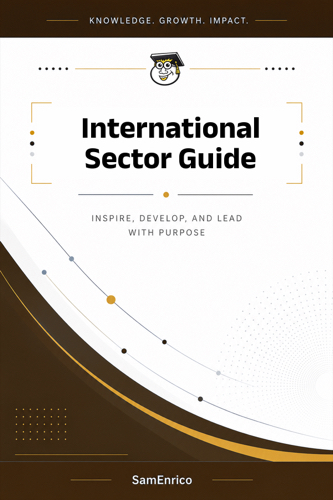
Non-FictionNon-Obvious CareerGlobal
International Sector Guide
Compare employment norms across countries.
by Beaty Danita
Compare employment norms across countries.
Formats
About this book
Free sample
Chapter 1: The Convergence Delusion--–- In 2010, a senior vice president of human resources for a Fortune 500 technology firm sat in a glass-walled conference room in San Jose, California, and confidently announced to his European leadership team that the company would be rolling out a unified global performance management system. “What works in San Jose will work in Stockholm,” he declared. Within eighteen months, the company had faced three labor lawsuits in Germany, a works council revolt in the Netherlands, and the resignation of its entire French leadership team. The system was not cancelled. It was simply ignored in every country outside North America.This story is not unusual.
It is, in fact, archetypal. For decades, multinational corporations have operated under what this chapter calls the convergence delusion—the assumption that as trade, technology, and management practices spread across borders, employment norms will inevitably become more alike, eventually settling on an “Anglo-Saxon” model of flexible hiring, weak unions, individual pay, and shareholder primacy. The convergence delusion is comforting because it promises simplicity. If all countries are moving toward the same destination, then a global executive needs only one playbook. But the convergence delusion is also wrong.
Empirically, theoretically, and practically, it fails to describe how employment actually works in most of the world.This chapter dismantles the convergence delusion. It begins by reviewing the academic debate between universalists who predict convergence and institutionalists who demonstrate persistent divergence. It then presents the empirical evidence from the OECD, the International Labour Organization, and Eurofound showing that national employment norms remain stubbornly local. It introduces the three goals of comparative analysis—better decision-making, spotting useful models, and updating our theories—which will guide the entire book. Finally, it establishes the book’s foundational framework: the Varieties of Capitalism distinction between Liberal Market Economies and Coordinated Market Economies, along with a clear definition of hybrid cases.
By the end of this chapter, the reader will understand why a single global playbook is a fantasy and why systematic comparison is the only reliable path to cross-border competence.The Universalist Fallacy The belief that employment practices are converging…
This is the end of the free sample. Get the eBook to keep going. Buy now
Contents
- Chapter 1
- Chapter 2
- Chapter 3
- Chapter 4
- Chapter 5
- Chapter 6
- Chapter 7
- Chapter 8
- Chapter 9
- Chapter 10
- Chapter 11
- Chapter 12
Details
- Author
- Beaty Danita
- Publisher
- SamEnrico
- Language
- English
- Genre
- Non-Fiction, Non-Obvious Career, Global
- Released
- 2026-06-09
- Pages (approx.)
- 151
- Available as
- eBook, Audiobook

Read better in the ZLOADR app
Your eBooks on your phone or tablet. Sign in with your SamEnrico account and start reading.
More by Beaty Danita
 Pregnancy Tokophobia BirthBeaty Danita$11.99
 Demand Elasticity ApplicationsBeaty Danita$11.99
 Research Proposal for Business StudiesBeaty Danita$11.99
 The Elder Abuse Prevention GuideBeaty Danita$11.99
 Perfectionism From ChildhoodBeaty Danita$11.99
 Marijuana Anonymous 12 StepsBeaty Danita$11.99
 Speed and Agility HypnosisBeaty Danita$11.99
 Whispers of the Copper Queen: The Lost Gold of BisbeeBeaty Danita$11.99
 The Silent Stalkers of Messines: The Tunnels That Shook the Western FrontBeaty Danita$11.99
 The Mineral Guide to BrassiteBeaty Danita$11.99
 Customer Experience in HospitalityBeaty Danita$11.99
 Multiple Regression Excel GuideBeaty Danita$12.99
You may also like
 Hong Kong Handover 1997Dunn Johnnie$11.99
 Zumba For Postnatal Recovery CourseNeal Christian$11.99
 Zumba for BeginnersLadner Nikia$11.99
 YouTube Comment Mining GuideHumes Pandora$12.99
 Worry Box MeditationCarlin Rudy$11.99
 Workplace Stress MeditationNguyen Lynn$11.99
 Workplace Stress and Sleep RepairHawley Ivory$11.99
 Workplace Perfectionism CureDelaney Jeffry$11.99
 Workplace Injustice Anger GuideWallen Isabelle$11.99
 Work Addiction and Burnout LinkGreenwood Ester$11.99
 Women in Yoga and WellnessBeattie Galina$11.99
 Women in Stand Up ComedyChun Evangeline$11.99