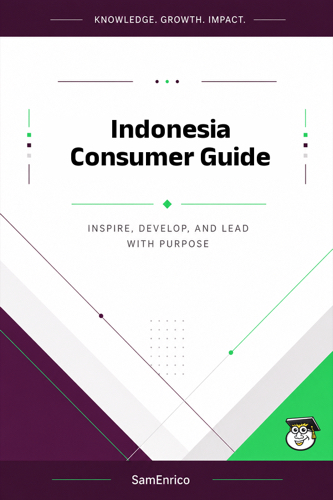
Indonesia Consumer Guide
Analyze spending in Southeast Asia's largest econo
Analyze spending in Southeast Asia's largest economy as infrastructure spending boosts growth.
Formats
About this book
Free sample
Chapter 1: The Infrastructure Paradox...--–- In the port city of Makassar, on the island of Sulawesi, a 24-year-old factory worker named Ahmad recently purchased a new smartphone. This was not remarkable—millions of Indonesians buy phones every month. What was remarkable was how he paid for it: through a buy-now-pay-later app on his phone, after watching a live-streaming review on Tik Tok, and the phone arrived in two days via a logistics route that did not exist three years ago. Two days. To an island that was once a three-week shipping nightmare from Jakarta.
Ahmad had never heard of Jokowi's toll road program. He did not know that a new nickel smelter 200 kilometers away had brought a thousand other workers with disposable income to his city. He did not know that a refrigerated warehouse built near the port now allowed his local warung to stock frozen chicken, which meant he saved money on food, which meant he had extra cash for the phone. He simply bought. And in that simple transaction lies the most misunderstood consumer story in Southeast Asia.This chapter establishes the core, non-negotiable thesis of the entire book: Indonesia is no longer merely a story of a "rising middle class" or "digital adoption," but rather a case study in how physical connectivity—roads, ports, bridges, and smelters—drives digital consumption.
We call this the Infrastructure Paradox: the most important force shaping Indonesian consumer behavior is not a new app or a marketing campaign, but concrete, steel, and asphalt. The conventional wisdom, repeated by dozens of analysts, is that Indonesia's consumer boom is a demographic dividend—a young population with smartphones. That is not wrong, but it is dangerously incomplete. The young population has existed for a decade. The smartphones have been in their hands for just as long.
What changed? The roads beneath their feet. The ports connecting their islands. The cold storage keeping their food fresh. The power lines keeping their phones charged.
This chapter dismantles the soft narrative of "rising affluence" and replaces it with a hard, engineering-driven analysis of how infrastructure spending is…
This is the end of the free sample. Get the eBook to keep going. Buy now
Contents
- Chapter 1
- Chapter 2
- Chapter 3
- Chapter 4
- Chapter 5
- Chapter 6
- Chapter 7
- Chapter 8
- Chapter 9
- Chapter 10
- Chapter 11
- Chapter 12
Details
- Author
- Buffington Cinda
- Publisher
- SamEnrico
- Language
- English
- Genre
- Non-Fiction, Forecast & Outlook, Indonesia
- Released
- 2026-06-11
- Pages (approx.)
- 143
- Available as
- eBook, Audiobook

Read better in the ZLOADR app
Your eBooks on your phone or tablet. Sign in with your SamEnrico account and start reading.
More by Buffington Cinda
 Estate Planning for Single ParentsBuffington Cinda$11.99
 Water Phobia RecoveryBuffington Cinda$11.99
 Affirmations For Depression GuideBuffington Cinda$11.99
 The Persuasive Classroom ManagementBuffington Cinda$11.99
 The Timbuktu Scholars: Masters of the Mathematical UniverseBuffington Cinda$11.99
 BioinformaticianBuffington Cinda$11.99
 How to Become a Driver-utility WorkerBuffington Cinda$11.99
 Video Ad First Campaign GuideBuffington Cinda$12.99
 Doug McMillon GuideBuffington Cinda$12.99
 Understanding Paget Disease ExtramammaryBuffington Cinda$17.99