
Non-FictionInformativeEducational
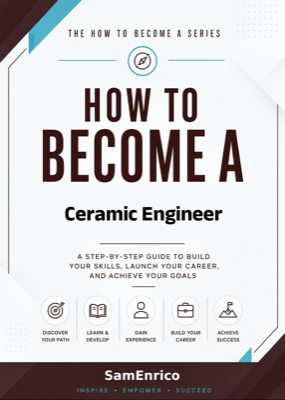
How to Become a Ceramic Engineer
How to Become a Ceramic Engineer
by Parry Curtis
How to Become a Ceramic Engineer
Formats
About this book
Free sample
Chapter 1: The Exploding Rotor...--–- The ceramic turbine rotor had been spinning flawlessly for eleven minutes. Fifty thousand revolutions per minute. Fifteen hundred degrees Celsius. Six inches from my face.I remember thinking, This is it. This is the run that works.The data stream on my laptop showed clean signals—temperature stable, vibration within tolerance, no acoustic emission spikes.
My graduate advisor, Dr. Varma, stood behind me with his arms crossed, the way he always did when something was about to go wrong. I didn't notice. I was too busy watching the numbers, too busy believing that I had finally solved the problem that had defeated three Ph D students before me.Then I heard it.Not a bang. Not a crash.
A chirp—high-pitched, brief, almost musical. The kind of sound a champagne flute makes when you flick it with your fingernail.The rotor disintegrated.I didn't see the pieces move. They were traveling too fast. What I saw was the aftermath: the ceramic containment housing suddenly starred with impact dents, the viewing port spiderwebbed with cracks, and a four-inch gash in the concrete wall behind the rig where a fragment had embedded itself.If the containment had failed, that fragment would have gone through my chest.Dr. Varma walked over to the control panel, killed the power, and said, "Well.
Let's find out why."That was the moment I became a ceramic engineer.The Misconception That Almost Killed My Career Before that night, I thought I understood ceramics. I had taken the classes. I had memorized the phase diagrams. I could recite Pauling's Rules in my sleep and calculate theoretical density faster than anyone in my cohort. I had even done an internship at a tile factory, where I watched tons of powder get pressed into floor tiles and fired in kilns the size of houses.I thought ceramic engineering was about making things that don't break.The rotor taught me otherwise.Ceramic engineering is actually about understanding exactly how and why things break—and designing around that brokenness.
Without cracking, ceramics would be the perfect material. They are harder than steel. They withstand temperatures that would turn most…
This is the end of the free sample. Get the eBook to keep going. Buy now
Contents
- Chapter 1
- Chapter 2
- Chapter 3
- Chapter 4
- Chapter 5
- Chapter 6
- Chapter 7
- Chapter 8
- Chapter 9
- Chapter 10
- Chapter 11
- Chapter 12
Details
- Author
- Parry Curtis
- Publisher
- SamEnrico
- Language
- English
- ISBN
- 9781505793680
- Genre
- Non-Fiction, Informative, Educational
- Released
- 2026-05-11
- Pages (approx.)
- 158
- Available as
- eBook, Paperback, Audiobook

Read better in the ZLOADR app
Your eBooks on your phone or tablet. Sign in with your SamEnrico account and start reading.
More by Parry Curtis
 Compulsive Spending Recovery Affirmations WorkbookParry Curtis$11.99
 Binge Eating in College StudentsParry Curtis$11.99
 Russian Organ TraffickingParry Curtis$11.99
 Dream Journal for Substance RecoveryParry Curtis$11.99
 The Beginner Science MindsetParry Curtis$11.99
 The Last Empress of India: A Love That Defied an EmpireParry Curtis$11.99
 Silk Roads and Secret Passages: Marco Polo’s Forgotten Journey Through the Middle EastParry Curtis$11.99
 Tsinghua University ScholarshipsParry Curtis$12.99
 BoP Customer Persona GuideParry Curtis$12.99
 Understanding Congenital Brain DisorderParry Curtis$17.99
 Maintenance Worker (industrial)Parry Curtis$11.99
You may also like
 Hong Kong Handover 1997Dunn Johnnie$11.99
 Zumba For Postnatal Recovery CourseNeal Christian$11.99
 Zumba for BeginnersLadner Nikia$11.99
 YouTube Comment Mining GuideHumes Pandora$12.99
 Worry Box MeditationCarlin Rudy$11.99
 Workplace Stress MeditationNguyen Lynn$11.99
 Workplace Stress and Sleep RepairHawley Ivory$11.99
 Workplace Perfectionism CureDelaney Jeffry$11.99
 Workplace Injustice Anger GuideWallen Isabelle$11.99
 Work Addiction and Burnout LinkGreenwood Ester$11.99
 Women in Yoga and WellnessBeattie Galina$11.99
 Women in Stand Up ComedyChun Evangeline$11.99