
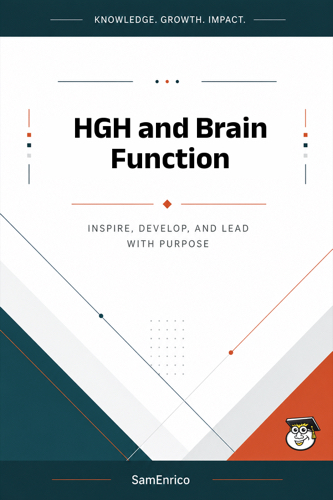
Non-FictionHealth & WellnessNeuroscience
HGH and Brain Function eBook
Discover how growth hormone affects cognition, mem
by Reddy Daryl
Discover how growth hormone affects cognition, memory, and neuroprotection in aging adults.
Formats
Free sample
Chapter 1: The Silent Epidemic...–- Margaret was sixty-two years old when she forgot how to drive home from the grocery store. Not the route—she had driven that same route for nineteen years. She forgot the concept of driving home. She sat in her car in the parking lot, hands at ten and two, staring at the steering wheel as if it were a control panel from a different decade. The humiliation was not that she had to call her daughter for directions.
The humiliation was that when her daughter asked, "Mom, where are you?", Margaret could not answer. The store had a name. She knew it had a name. But the name was gone.For three months, Margaret assumed she was developing Alzheimer's disease. Her mother had died from complications of dementia at seventy-eight, and Margaret had spent fifteen years watching the slow unraveling.
Every misplaced key, every forgotten appointment, every tip-of-the-tongue moment felt like the first domino falling. She went to a neurologist, who ordered an MRI, ran cognitive tests, and delivered surprising news: her brain showed no signs of Alzheimer's pathology. No amyloid plaques. No neurofibrillary tangles. What the MRI did show was something equally concerning but far less discussed: a hippocampus that had shrunk to the tenth percentile for her age and white matter that looked like frayed electrical wiring.The neurologist used a word Margaret had never heard before.
"Somatopause," he said. "Your growth hormone levels are those of an eighty-five-year-old."Margaret had thought growth hormone was for bodybuilders. She had seen the news exposés about athletes injecting illegal substances, the scandals, the oversized jaws and thickened brows of acromegaly. She had no idea that her own brain produced growth hormone. She had no idea that this hormone, produced in a pea-sized gland at the base of her skull, was responsible for repairing the myelin sheathing around her neurons, for stimulating the birth of new hippocampal cells, for clearing the metabolic debris that accumulates during waking hours.
She had no idea that her brain fog, her fatigue, her word-finding difficulties, and her creeping sense of cognitive inadequacy were not early dementia but something else entirely: a treatable hormonal deficiency.Margaret is not rare. She is the rule.The Great Misunderstanding Walk into any health food store, any gym, any anti-aging clinic, and ask about human growth hormone. You will hear about muscle mass, about wrinkles, about libido, about vitality. You will hear testimonials from middle-aged men who claim that injections gave them the bodies they had in college. You will hear warnings about black market suppliers and counterfeit pens.
You will hear arguments about whether HGH is a miracle or a menace. What you will almost never hear about is the brain.This silence is strange, because the brain is where HGH does some of its most important work. The pituitary gland, that tiny master controller nestled in the sella turcica at the base of the skull, does not secrete growth hormone for the benefit of your biceps. It secretes growth hormone because every cell in your body—including, and perhaps especially, your neurons—requires growth hormone signaling to maintain itself. Your brain is not a passive passenger in the aging process.
It is an active, demanding organ that consumes twenty percent of your body's energy while representing only two percent of its mass. And like every other organ, it depends on a cascade of hormonal signals to repair damage, clear waste, and build new connections.The somatopause—that gradual, age-related decline in growth hormone secretion—begins earlier than you think. The data are sobering: after age thirty, growth hormone secretion declines by approximately fourteen percent per decade. By age forty, your pituitary is producing roughly half the growth hormone it produced at twenty. By age sixty, the decline accelerates further, with some adults secreting less than a quarter of their youthful baseline.
This decline does not happen in a straight line. It happens in pulses, because growth hormone is not released steadily throughout the day. It is released in bursts, primarily at night during slow-wave sleep, and secondarily in response to exercise, fasting, and specific amino acid profiles.Here is what most people do not know: those pulses do not just decline. They fragment. A twenty-five-year-old will experience five to seven robust HGH pulses per night, each lasting sixty to ninety minutes.
A sixty-five-year-old may experience only one or two attenuated pulses, barely detectable in bloodwork. The difference is not subtle. It is the difference between a brain that repairs itself efficiently and a brain that slowly accumulates damage faster than it can fix it.The Architecture of a Thinking Organ To understand why this matters, you need to understand what your brain is up against every single day. The human brain contains approximately eighty-six billion neurons, each connected to thousands of others, forming something like one hundred trillion synaptic connections. Those connections are not static.
They are constantly being formed, strengthened, weakened, and pruned in response to your experiences. Every time you learn a new fact, a set of neurons fires together, and through a process called long-term potentiation, those synapses become more efficient. Every time you forget a phone number, a set of synapses has weakened.This plasticity is the basis of memory, learning, and adaptation. But it comes at a cost. The metabolic demands of maintaining eighty-six billion neurons are staggering.
Your brain requires a constant supply of glucose and oxygen. It produces reactive oxygen species—free radicals—as byproducts of normal metabolism. It generates metabolic waste products like beta-amyloid and tau protein, which must be cleared by the glymphatic system during sleep. It experiences micro-injuries from oxidative stress, inflammation, and mechanical wear. And it relies on a suite of repair mechanisms to keep everything running smoothly.Growth hormone is one of those repair mechanisms.The pathway works like this: your hypothalamus releases growth hormone-releasing hormone (GHRH), which signals your pituitary to release human growth hormone (HGH) into the bloodstream.
HGH travels to your liver, where it stimulates the production of insulin-like growth factor-1 (IGF-1). Some of that IGF-1 crosses the blood-brain barrier—a specialized filter that protects your brain from toxins and pathogens—and enters the brain parenchyma. Once inside, IGF-1 binds to receptors on neurons and glial cells, triggering a cascade of intracellular signals that promote survival, growth, and repair.But that is only half the story. More importantly, your brain cells produce their own IGF-1 in response to local HGH signals. This locally produced IGF-1 is responsible for the fine-grained regulation of synaptic plasticity, the protection of neurons from apoptosis (programmed cell death), and the stimulation of oligodendrocytes to produce myelin.
In other words, your brain has its own internal HGH-IGF-1 production line, independent of what is happening in your liver. This local system is the one that matters most for cognition, memory, and neuroprotection.When HGH levels fall, both systems suffer. The liver produces less systemic IGF-1, meaning less crosses the blood-brain barrier. The brain produces less local IGF-1, meaning neurons receive fewer survival signals, oligodendrocytes produce less myelin, and microglia become more prone to inflammatory activation. The result is a brain that repairs itself more slowly…
This is the end of the free sample. Get the eBook to keep going. Buy now
About this book
Details
- Author
- Reddy Daryl
- Publisher
- SamEnrico
- Language
- English
- Genre
- Non-Fiction, Health & Wellness, Neuroscience
- Released
- 2026-06-06
- Pages (approx.)
- 122
- Available as
- eBook, Audiobook

Read better in the ZLOADR app
Your eBooks on your phone or tablet. Sign in with your SamEnrico account and start reading.
More by Reddy Daryl
 Iranian Immigrant EntrepreneursReddy Daryl$11.99
 Suicide Attempt After Job Loss WorkbookReddy Daryl$11.99
 History Lesson Primary Source AIReddy Daryl$11.99
 ABC for Daily Task Ranking GuideReddy Daryl$11.99
 The Siege of Stanley: Britain's Last Stand in the FalklandsReddy Daryl$11.99
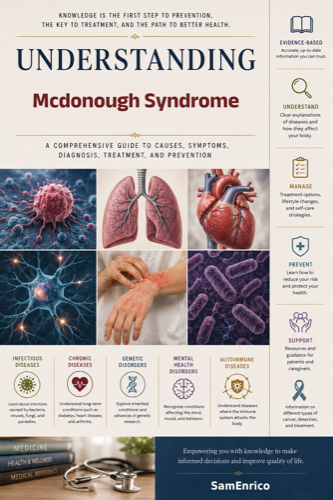 Understanding Mcdonough SyndromeReddy Daryl$17.99
 PlastererReddy Daryl$11.99
 Executive Learning and Development BlocksReddy Daryl$12.99
 India Raise Taboo TopicsReddy Daryl$12.99
 A Beginners Guide to Contract Bridge (Volume 1)Reddy Daryl$11.99
You may also like
 Hong Kong Handover 1997Dunn Johnnie$11.99
 Zumba For Postnatal Recovery CourseNeal Christian$11.99
 Zumba for BeginnersLadner Nikia$11.99
 YouTube Comment Mining GuideHumes Pandora$12.99
 Worry Box MeditationCarlin Rudy$11.99
 Workplace Stress MeditationNguyen Lynn$11.99
 Workplace Stress and Sleep RepairHawley Ivory$11.99
 Workplace Perfectionism CureDelaney Jeffry$11.99
 Workplace Injustice Anger GuideWallen Isabelle$11.99
 Work Addiction and Burnout LinkGreenwood Ester$11.99
 Women in Yoga and WellnessBeattie Galina$11.99
 Women in Stand Up ComedyChun Evangeline$11.99