
Non-FictionHealth & WellnessComplete
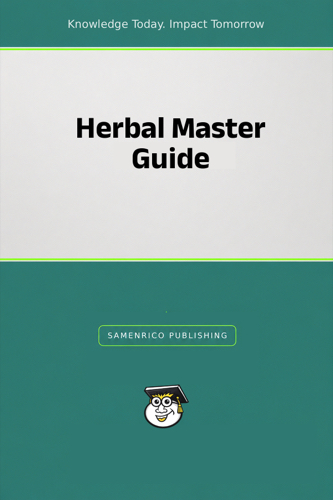
Herbal Master Guide eBook
Complete reference for adaptogens and botanicals.
by Jean Andrew
Complete reference for adaptogens and botanicals.
Formats
Free sample
Chapter 1: The Secret Origins--–- In 1947, deep inside the Soviet Union’s classified military research apparatus, a toxicologist named Dr. Nikolai Lazarev made a discovery that would never appear in Western medical journals for nearly five decades. He wasn’t looking for a new drug or a miracle cure. He was searching for something far more radical: a substance that could help the human body resist any form of stress—heat, cold, radiation, fatigue, infection, or psychological trauma—without causing side effects or dependency. The official term he coined was “adaptogen,” from the Latin adaptare (to adjust) and the Greek -gen (producing).
But unofficially, Soviet scientists called them “smart drugs for the entire organism.”Lazarev’s work was not born in a vacuum. It emerged from a brutal historical necessity. The Soviet Union had just survived the deadliest conflict in human history—World War II—with over 20 million casualties. Its military was exhausted, its infrastructure shattered, and its scientists were tasked with a seemingly impossible goal: rebuild human performance from the ground up. While Western nations turned to amphetamines (issued to pilots and soldiers as “pep pills”) and benzodiazepines (marketed to anxious housewives as “mother’s little helpers”), the Soviets took a different path.
They reasoned that stimulants borrowed energy from tomorrow, and sedatives suppressed the body’s natural warning systems. What they needed was a third category of substance—something that could normalize physiology regardless of the direction of the insult.Lazarev died before he could see his life’s work fully realized. But his protégé, Dr. Israel Brekhman, carried the torch into the Cold War. Brekhman refined the definition of an adaptogen into three ironclad criteria that remain the gold standard today.
First, an adaptogen must be non-toxic at therapeutic doses—it cannot harm the body or create dependency. Second, it must be non-specific in its action—it must increase resistance to a wide range of stressors, not just one. Third, it must have a normalizing effect—it must bring disturbed physiology back toward balance, whether the original problem was too much stress (hyper-reactivity) or too little (exhaustion).These three criteria are what separate true adaptogens from the vast army of impostors that crowd health food store shelves. Green tea? Not an adaptogen.
It is a stimulant. Chamomile? Not an adaptogen. It is a sedative. Vitamin C?
Not an adaptogen. It is a nutrient. True adaptogens—Ashwagandha, Rhodiola, Panax Ginseng, Eleuthero, Reishi, Schisandra, Cordyceps, Holy Basil, and a handful of others—meet all three criteria simultaneously. They are the only class of natural substances that can raise a flagging system and calm an overactive one, depending on what the body needs at that exact moment.This chapter establishes the historical and scientific lineage of adaptogens, beginning with the little-known Russian research that remained classified for generations. It then traces three parallel traditions that discovered adaptogenic plants independently, long before Lazarev gave them a name.
Finally, it resolves a critical inconsistency that has confused readers of other herbal guides: how to reconcile the “non-toxic” criterion with the fact that certain herbs—specifically Licorice root—can cause harm if used improperly. By the end of this chapter, you will understand not only what adaptogens are but also how to distinguish authentic, clinically useful herbs from marketing hype.The Three Lost Traditions: Adaptogens Before the Word Existed Long before Lazarev’s laboratory in Leningrad, traditional healers on three continents were using adaptogenic plants without knowing the biochemical mechanisms. They observed that certain herbs, taken daily over long periods, seemed to make people more resilient—not just to one disease but to illness in general. These traditions did not have a single word for “adaptogen,” but they had something more practical: thousands of years of human trial and error.Ayurveda’s Rasayanas: The Science of Rejuvenation In ancient India, the medical system of Ayurveda (which dates back at least 5,000 years) developed a category of herbs called Rasayanas. The Sanskrit word translates roughly to “path of essence” or “that which flows into the rasa (plasma).” Rasayanas were not ordinary medicines.
They were not prescribed for a specific fever or a specific pain. Instead, they were tonics—herbs taken daily to promote longevity, enhance mental clarity, and slow the aging process itself.The most famous Rasayana in modern herbalism is Ashwagandha (Withania somnifera). Its Sanskrit name means “smell of a horse,” referring both to its distinctive odor and its traditional reputation for bestowing the strength and vitality of a stallion. Ayurvedic texts prescribed Ashwagandha for wasting diseases, infertility, memory loss, and the general debility that comes with age. But unlike a stimulant, Ashwagandha was also given to anxious patients with racing hearts and insomnia.
One herb for two opposite conditions—that is the hallmark of a true adaptogen.Other Rasayanas include Amalaki (Indian gooseberry, rich in vitamin C and antioxidants), Shatavari (Asparagus racemosus, a female reproductive tonic), and Guduchi (Tinospora cordifolia, an immune modulator). Not all Rasayanas meet the strict Soviet criteria for adaptogens—some have specific mechanisms rather than non-specific actions—but the conceptual overlap is unmistakable. Ayurveda understood that certain herbs build “ojas,” the subtle essence of vitality and immunity, which modern science might interpret as a well-regulated HPA axis and a balanced neuroendocrine-immune network.Traditional Chinese Medicine’s Superior Tonics At roughly the same time that Ayurveda was developing in India, Traditional Chinese Medicine (TCM) was emerging along the Yellow River. TCM classifies herbs along several axes, but the most relevant for adaptogens is the distinction between superior, middle, and inferior herbs. This ranking, codified in the Shennong Bencao Jing (The Divine Farmer’s Materia Medica, circa 200 CE), is not based on efficacy but on safety and purpose.Superior herbs are those that can be taken daily for months or years without toxicity.
They are said to “nourish life” and “promote longevity.” Inferior herbs, by contrast, are for acute diseases—they are more potent but more toxic and are stopped when the illness resolves. Middle herbs fall somewhere in between.Most of the herbs we now call adaptogens—Reishi, Panax Ginseng, He Shou Wu, Schisandra, Codonopsis—are classified as superior tonics in TCM. The ancient texts describe Reishi (Lingzhi) as “bitter, neutral, and non-toxic… taken for a long time, it makes the body light, delays aging, and prolongs life.” Panax Ginseng (Ren Shen) is said to “greatly supplement the original Qi,” the vital energy that underlies all physiological functions.But TCM also contributed a critical refinement that Western science is only now catching up to: the distinction between yin and yang tonics. Yang tonics (Panax Ginseng, Eleuthero, Cordyceps) are warming, stimulating, and best for patients who are cold, lethargic, and exhausted. Yin tonics (Reishi, Schisandra, He Shou Wu) are cooling, calming, and best for patients who are hot, irritable, and depleted.
A skilled TCM practitioner would never give Panax Ginseng to a patient with night sweats and a red tongue (yin deficiency) because it would worsen the condition. Similarly, Reishi alone might be too sedating for a patient who can barely get out of bed (yang deficiency). This yin-yang framework, which we will explore in detail in Chapter 7, is far more sophisticated than the Western “one size fits all”…
This is the end of the free sample. Get the eBook to keep going. Buy now
About this book
Details
- Author
- Jean Andrew
- Publisher
- SamEnrico
- Language
- English
- Genre
- Non-Fiction, Health & Wellness, Complete
- Released
- 2026-06-06
- Pages (approx.)
- 144
- Available as
- eBook, Audiobook

Read better in the ZLOADR app
Your eBooks on your phone or tablet. Sign in with your SamEnrico account and start reading.
More by Jean Andrew
 Veterans Men DepressionJean Andrew$11.99
 Kinesthetic Self Trance GuideJean Andrew$11.99
 Fear Of Loud Noises GuideJean Andrew$11.99
 Menopause Hot Flash CoolJean Andrew$11.99
 The Empathy and Touch GuideJean Andrew$11.99
 REIT Management FeesJean Andrew$11.99
 Grandparent Caregiver StressJean Andrew$11.99
 The Ballad of the Fearless Writers: Uncovering Dictatorship Through Sports in Latin AmericaJean Andrew$11.99
 The Vanishing of the Caravan: A 19th-Century Middle Eastern MysteryJean Andrew$11.99
 How to Produce Fencing MasksJean Andrew$11.99
 Internet Law: Privacy, P2p & Platform LiabilityJean Andrew$11.99
 Virtual Office Cost Comparison WorkbookJean Andrew$12.99
You may also like
 Hong Kong Handover 1997Dunn Johnnie$11.99
 Zumba For Postnatal Recovery CourseNeal Christian$11.99
 Zumba for BeginnersLadner Nikia$11.99
 YouTube Comment Mining GuideHumes Pandora$12.99
 Worry Box MeditationCarlin Rudy$11.99
 Workplace Stress MeditationNguyen Lynn$11.99
 Workplace Stress and Sleep RepairHawley Ivory$11.99
 Workplace Perfectionism CureDelaney Jeffry$11.99
 Workplace Injustice Anger GuideWallen Isabelle$11.99
 Work Addiction and Burnout LinkGreenwood Ester$11.99
 Women in Yoga and WellnessBeattie Galina$11.99
 Women in Stand Up ComedyChun Evangeline$11.99