
Non-FictionSelf-HelpPositive Psychology
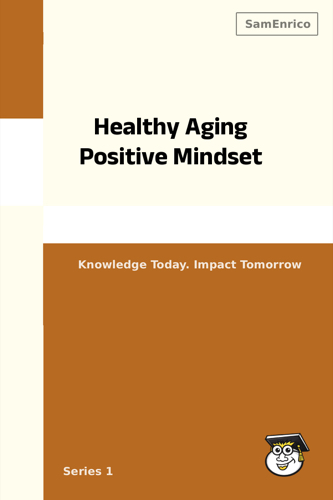
Healthy Aging Positive Mindset eBook
Reframes aging as growth rather than decline throu
Reframes aging as growth rather than decline through cognitive restructuring techniques.
Formats
Free sample
Chapter 1: The Mirror Lies...--You are about to discover something that most people will go to their graves never knowing. The story you have been told about aging—the one about inevitable decline, fading relevance, and the slow loss of everything that matters—is not a biological fact. It is a cultural fiction. And like all fictions we hear often enough, it has become a self-fulfilling prophecy.Look around you. Every advertisement, every movie, every birthday card, every offhand comment from a well-meaning friend reinforces the same message: aging is a problem to be solved, a disease to be treated, a thief to be resisted.
We dye our hair, inject our faces, hide our birthdays, and whisper the number as if it were a shameful secret. The multi-billion dollar anti-aging industry does not exist because aging is inherently terrible. It exists because we have been trained to believe it is terrible.But what if the opposite were true? What if the very years you have been taught to dread are actually the years when life becomes richer, freer, and more meaningful? What if the decline you fear is not an inevitable biological process but a predictable consequence of believing in decline in the first place?This book exists because the science now proves something extraordinary: your mindset about aging shapes your experience of aging more powerfully than your genetics, your diet, or your exercise routine.
The way you think about growing older does not just influence your mood. It influences your memory, your mobility, your immune system, and even your lifespan. People with positive self-perceptions of aging live, on average, seven and a half years longer than those with negative perceptions. That is a bigger longevity benefit than low cholesterol, normal blood pressure, or regular exercise.Seven and a half years. Not as a reward for hard work or clean living.
Simply for believing that growing older is not a catastrophe.This chapter is called "The Mirror Lies" because the reflection you see in the mirror each morning is filtered through a lifetime of conditioning that has taught you to see loss where there is actually gain, decline where there is actually growth, and endings where there are actually beginnings. The mirror does not show you objective reality. It shows you your expectations. And your expectations have been shaped by a culture that is terrified of aging.It is time to unlearn that terror. It is time to see clearly for the first time.The Narrative You Were Never Meant to Question Every culture tells its members a story about what it means to grow old.
In some cultures, that story is one of respect, wisdom, and earned authority. Elders are consulted, celebrated, and honored. Their gray hair is not a sign of decay but a badge of survival and knowledge.But not in our culture.The Western story of aging is one of loss. It goes something like this: You are born. You grow up.
You peak somewhere in your twenties or thirties. Then everything after that is a slow, sad slide toward invisibility, irrelevance, and death. Your body betrays you. Your mind slows down. Your social circle shrinks.
Your options disappear. The best years are behind you, and every birthday is a reminder of what you have lost.This narrative is so pervasive that most people never think to question it. It feels like common sense. It feels like biology. It feels like the way things simply are.But here is the question this chapter asks you to sit with: How do you know?How do you know that aging inevitably means decline?
Have you tested it? Have you looked at the actual data? Or have you simply absorbed the story that surrounds you, the way a fish absorbs water, never realizing there is another element to breathe?The truth is that the decline narrative is not supported by the weight of scientific evidence. It is supported by selective attention. We notice the people who fall apart as they age because their struggles confirm our expectations.
We ignore the millions who thrive, whose eighties and nineties are filled with creativity, connection, joy, and purpose, because their existence contradicts the story we have been told.This is called confirmation bias. Your brain actively seeks out evidence that supports what you already believe and ignores evidence that challenges it. If you believe aging is decline, you will notice every ache, every forgotten name, every gray hair as proof. You will overlook every moment of wisdom, every deep laugh, every unexpected burst of energy and insight.The mirror does not lie because it is malicious. The mirror lies because you have trained yourself to see only one side of the story.The Two Psychologies: Inevitability Versus Possibility There is a fundamental choice that every person makes about aging, whether consciously or unconsciously.
Psychologists call this the difference between two worldviews, but you can think of it simply as two different ways of moving through life.The first is the psychology of inevitability. This is the belief that your experience of aging is determined by forces outside your control—your genes, your luck, the simple passage of time. From this perspective, the best you can do is manage the decline, slow it down a little, and hope for the best. This worldview leads to passivity, resignation, and a gradual withdrawal from life. Why try something new if it is only going to get harder?
Why invest in the future if the future is just more loss?The second is the psychology of possibility. This is the belief that your experience of aging is shaped primarily by your mindset, your choices, and your interpretation of events. From this perspective, aging is not something that happens to you. It is something you participate in. This worldview leads to engagement, curiosity, and a willingness to take risks.
Why not try something new? Why not invest in the future? The future might be richer than anything that came before.Here is the critical insight: both perspectives are self-fulfilling prophecies.If you believe in inevitability, you stop trying. You stop exercising your mind and body. You stop seeking new connections.
You stop taking on challenges. And because you have stopped trying, you do indeed decline. The decline was not caused by aging. It was caused by your belief about aging.If you believe in possibility, you keep showing up. You keep learning, moving, connecting, growing.
And because you keep showing up, you maintain and even improve your capabilities well into late life. The vitality was not a gift of good genes. It was a product of your belief that vitality was possible.This is not positive thinking magic. This is behavioral psychology. Your beliefs shape your actions.
Your actions shape your outcomes. Your outcomes then confirm your beliefs. The cycle runs in either direction. You get to choose which direction.The U-Curve of Happiness: What the Data Actually Shows If the decline narrative were true, we would expect to see a straight line downward in life satisfaction as people age. The older you get, the less happy you should be.
Everything is getting worse, after all.But that is not what the research shows. Not even close.In study after study across…
This is the end of the free sample. Get the eBook to keep going. Buy now
About this book
Details
- Author
- Lincoln Denyse
- Publisher
- SamEnrico
- Language
- English
- Genre
- Non-Fiction, Self-Help, Positive Psychology
- Released
- 2026-06-09
- Pages (approx.)
- 143
- Available as
- eBook, Audiobook

Read better in the ZLOADR app
Your eBooks on your phone or tablet. Sign in with your SamEnrico account and start reading.
More by Lincoln Denyse
 The Loot Box Gambling LinkLincoln Denyse$11.99
 U Boat War Atlantic GuideLincoln Denyse$11.99
 The Nonverbal Listening Cues GuideLincoln Denyse$11.99
 Loving Kindness For Imposter SyndromeLincoln Denyse$11.99
 Steel and Samurai: The Naval Clash at TsushimaLincoln Denyse$11.99
 Understanding Spasmodic DysphoniaLincoln Denyse$17.99
 Price War Avoidance GuideLincoln Denyse$12.99
 HARO Data and Statistics TipsLincoln Denyse$12.99
 TiddlywinksLincoln Denyse$11.99
 How to Start a Acorn Gathering Business (Beginners Guide)Lincoln Denyse$11.99
You may also like
 Hong Kong Handover 1997Dunn Johnnie$11.99
 Zumba For Postnatal Recovery CourseNeal Christian$11.99
 Zumba for BeginnersLadner Nikia$11.99
 YouTube Comment Mining GuideHumes Pandora$12.99
 Worry Box MeditationCarlin Rudy$11.99
 Workplace Stress MeditationNguyen Lynn$11.99
 Workplace Stress and Sleep RepairHawley Ivory$11.99
 Workplace Perfectionism CureDelaney Jeffry$11.99
 Workplace Injustice Anger GuideWallen Isabelle$11.99
 Work Addiction and Burnout LinkGreenwood Ester$11.99
 Women in Yoga and WellnessBeattie Galina$11.99
 Women in Stand Up ComedyChun Evangeline$11.99