
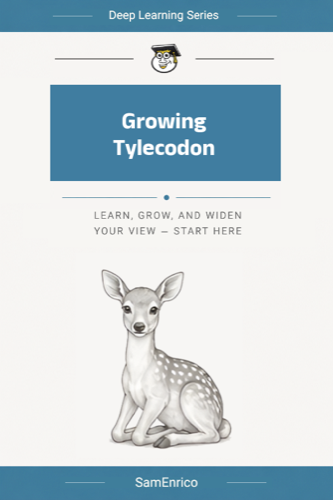
Growing Tylecodon
This publication, published by SamEnrico, covers G
by Wesley Sean
This publication, published by SamEnrico, covers Growing Tylecodon
Formats
About this book
Free sample
Chapter 1: The Sculptural Survivors...–- Before you ever wet a single grain of soil or position a pot on a windowsill, you must first understand what you are about to grow. Tylecodons are not houseplants in any conventional sense. They are not succulents that reward frequent attention or daily admiration. They are, instead, sculptural survivors—living artifacts shaped by one of the most unforgiving environments on Earth. To grow them well, you must abandon nearly everything you think you know about watering, seasons, and what it means for a plant to be “healthy.” This chapter introduces the genus Tylecodon: its defining features, its surprising taxonomic history, its dangerous chemistry, and why collectors around the world will pay extraordinary sums for a single specimen that looks, to the untrained eye, like a dead stick in a pot.
By the end of this chapter, you will understand not only what Tylecodons are, but why they demand a fundamentally different approach to cultivation—one that this entire book will guide you through.What Is a Tylecodon? Defining the Undefinable The genus Tylecodon belongs to the family Crassulaceae, which includes familiar garden plants like jade trees (Crassula ovata) and the ubiquitous hens-and-chicks (Sempervivum). But unlike those easygoing ornamentals, Tylecodons have evolved into something stranger and more specialized. They are, without exception, summer-deciduous succulents native almost entirely to the winter-rainfall regions of South Africa and Namibia. This single fact—winter growth, summer dormancy—reverses the rhythm of nearly every other common succulent and explains why beginners so often kill them with kindness.Visually, Tylecodons are defined by three characteristics that, taken together, separate them from their close relatives in the genus Cotyledon (from which they were split in 1978).
First, the leaves—when present—are arranged in distinctive spirals or whorls around the stem. This is not a trivial botanical detail; it is the primary visual cue that distinguishes Tylecodon from Cotyledon, which typically has opposite or alternate leaves. Second, Tylecodons are summer-deciduous. Unlike many succulents that retain leaves year-round or go dormant only in extreme cold, Tylecodons drop every single leaf when the heat of late spring…
This is the end of the free sample. Get the eBook to keep going. Buy now
Contents
- Chapter 1
- Chapter 2
- Chapter 3
- Chapter 4
- Chapter 5
- Chapter 6
- Chapter 7
- Chapter 8
- Chapter 9
- Chapter 10
- Chapter 11
- Chapter 12
Details
- Author
- Wesley Sean
- Publisher
- SamEnrico
- Language
- English
- Genre
- Non-Fiction, Informative, Educational
- Released
- 2026-06-02
- Pages (approx.)
- 146
- Available as
- eBook, Audiobook

Read better in the ZLOADR app
Your eBooks on your phone or tablet. Sign in with your SamEnrico account and start reading.
More by Wesley Sean
 Pet Loss For FarmersWesley Sean$11.99
 Reverse Mortgage Cash Flow GuideWesley Sean$11.99
 Radiofrequency Skin Tightening HandbookWesley Sean$11.99
 Fireplace and Wood Smoke GuideWesley Sean$11.99
 Trigger Anticipation PlanningWesley Sean$11.99
 CBT For IBS WorkbookWesley Sean$11.99
 Advanced Materials CapitalWesley Sean$11.99
 Meeting Time Blocking RulesWesley Sean$11.99
 Anger In FriendshipWesley Sean$11.99
 The Unseen Empire: How a Single Store Changed the WorldWesley Sean$11.99
 Echoes of the Red Dawn: The Untold Cyber War That Reshaped ElectionsWesley Sean$11.99
 The Silent Revolution: How Rachel Carson Unlocked the Secrets of the SeaWesley Sean$11.99