
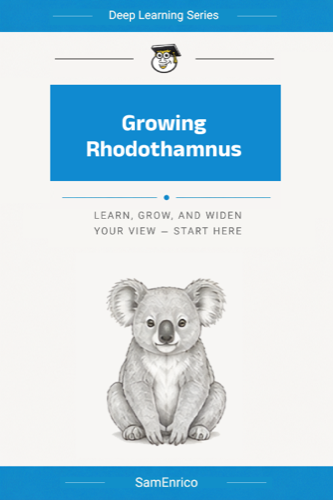
Non-FictionInformativeEducational
Growing Rhodothamnus eBook
This publication, published by SamEnrico, covers G
This publication, published by SamEnrico, covers Growing Rhodothamnus
Formats
Free sample
Chapter 1: The Seven Corpses--–- The first one arrived in a cardboard box, shipped from a nursery in the Austrian Alps. I remember holding the small pot in my palm, marveling at the tight rosettes of dark green leaves, each no larger than a pinky nail. The shipping label said Rhodothamnus chamaecistus—a name I had to practice three times before I could say it without stumbling. I had read exactly one article about this plant, written by an alpine enthusiast who described it as "challenging but rewarding." Those three words would cost me seven years and seven dead plants before I understood what they really meant.I planted that first Dwarf Alpenrose in what I thought was perfect conditions: a partially shaded corner of my rock garden, surrounded by the same gritty, acidic soil mix that made my rhododendrons thrive. The soil drained well.
The spot received morning sun and afternoon shade. I watered it carefully, never letting the roots dry out completely but never leaving them soggy. I did everything right. Three months later, the leaves turned yellow, then brown, then black at the tips. By autumn, the plant was a skeleton of dead twigs protruding from the soil like accusation.
I had no idea what I had done wrong.The second plant lasted five months. The third, six weeks. By the fourth corpse, I had stopped naming them.This is not a book about a plant that is merely "difficult." This is a book about a plant that actively resists everything we think we know about gardening. Rhodothamnus chamaecistus, the Dwarf Alpenrose, is the botanical equivalent of a Zen koan—a paradox wrapped in a riddle, presented in the form of a charming little shrub with pink flowers. It belongs to the Ericaceae family, the same clan that includes rhododendrons, azaleas, blueberries, and heathers.
Every single one of those plants demands acidic soil. Every single one will sicken and die in alkaline conditions. And yet Rhodothamnus—this impossible, contradictory, magnificent little plant—grows exclusively on pure limestone scree in the highest elevations of the Eastern Alps and the Caucasus Mountains. It is an acid-lover that requires alkalinity. A plant that needs constant moisture but will rot if its roots stay wet.
A cold-hardy mountain dweller that cannot tolerate heat but requires full, blazing sun.The seven corpses in my garden taught me something that no book had told me: Rhodothamnus is not a plant you can learn from instructions. It is a plant you must learn with—by failure, by observation, by the slow accumulation of mistakes that eventually teach you what success looks like. This chapter is the story of those failures. Because before you can grow this plant, you need to understand why almost everyone fails at it. And that story begins not with soil or water or light, but with the limestone cliffs of the Alps, where this impossible plant made its home.The Geology of Obsession The Eastern Alps stretch from Switzerland through Austria and into northern Italy, a spine of ancient rock that was thrust upward by the collision of the African and Eurasian plates some 35 million years ago.
Unlike the crystalline granite of the Western Alps, the Eastern range is dominated by limestone—specifically, the massive limestone formations of the Northern Limestone Alps, a band of pale gray rock that runs for 600 kilometers. This is the birthplace of Rhodothamnus chamaecistus.To understand why this plant matters, you have to understand what limestone scree actually is. When limestone weathers—shattered by freezing and thawing, pried apart by the roots of hardier plants, dissolved by the faintly acidic rainwater that falls on these mountains—it breaks down not into soil but into fragments. These fragments range from pebble-sized grit to house-sized boulders. Between them, there is no organic matter, no humus, no black earth.
Just sharp-edged, pale gray rock fragments that slide and settle into steep slopes called scree fields.And yet, life persists here. In late spring and early summer, these seemingly barren slopes explode into color: cushions of saxifrage, mats of gentian, and tucked among them, the tight, low-growing rosettes of Rhodothamnus. The plant has adapted to this environment in ways that are extraordinary and, for the gardener, deeply inconvenient.Adaptation One: The Alkaline Necessity. Unlike its acid-loving cousins, Rhodothamnus has evolved to extract nutrients from limestone. Its roots produce specialized enzymes that break down calcium-bound minerals, releasing phosphorus and iron in forms the plant can use.
In acidic soil, these enzymes do not function. The plant literally cannot feed itself.Adaptation Two: The Crevice Root System. In the wild, Rhodothamnus sends roots deep into the cracks between limestone boulders, chasing moisture that percolates down through the scree. These roots never sit in standing water—the gaps between rock fragments drain instantly—but they are always in contact with damp surfaces. The plant has no tolerance for waterlogged conditions, but it also cannot survive prolonged drought.Adaptation Three: The Prostrate Form.
The Dwarf Alpenrose grows flat against the ground, rarely exceeding four inches in height. This is not an aesthetic choice. At 6,000 feet elevation, winter winds can exceed 100 miles per hour. A tall plant would be shredded. The low profile also traps a layer of insulating snow, keeping roots at a stable temperature even when air temperatures drop to -30°F.Adaptation Four: The UV Tolerance.
At high elevations, ultraviolet radiation is intense. Rhodothamnus produces high concentrations of anthocyanins—the same pigments that give autumn leaves their red color—in its leaves, acting as a natural sunscreen. In lower elevations or partial shade, the plant does not produce enough of these pigments, and its leaves burn.These four adaptations explain everything that follows in this book. And they explain why my first seven plants died.Autopsy of a Failure Let me walk you through the death of Plant Number One, because it contains within it every mistake that beginners make. I want you to see this not as a tragedy but as a diagnostic.
Every corpse teaches a lesson, if you know how to read it.The Setup: I purchased a two-year-old specimen from a reputable alpine nursery in Austria. The plant arrived in early April, just as the last snow was melting from my garden in Vermont (USDA Zone 5a). The nursery had grown it in a mix of equal parts perlite, sand, and peat—a standard acidic alpine mix. The plant looked healthy: tight rosettes, dark green leaves with a slight reddish tinge at the margins, and the beginnings of what might become flower buds.My Actions: I planted it in a raised rock garden bed that I had prepared for alpines. The bed had been constructed with 50% coarse sand, 30% commercial "alpine mix" (mostly composted bark and perlite), and 20% native loam.
I added no limestone because I did not know I needed to. I placed the plant on a slight slope with southern exposure, reasoning that good drainage and morning sun would be sufficient. I mulched around it with pea gravel.The Timeline: Week one: The plant seemed to settle in. No wilting, no discoloration. Week three: I noticed the reddish margins on the leaves were fading to pale green.…
This is the end of the free sample. Get the eBook to keep going. Buy now
About this book
Details
- Author
- Malley Rosette
- Publisher
- SamEnrico
- Language
- English
- Genre
- Non-Fiction, Informative, Educational
- Released
- 2026-06-02
- Pages (approx.)
- 144
- Available as
- eBook, Audiobook

Read better in the ZLOADR app
Your eBooks on your phone or tablet. Sign in with your SamEnrico account and start reading.
More by Malley Rosette
 Starting Difficult Conversations RightMalley Rosette$11.99
 Manager Stress Resilience GuideMalley Rosette$11.99
 Long Car Ride RLS FixMalley Rosette$11.99
 Geography Memory LociMalley Rosette$11.99
 The Gacy Crime Scene PhotosMalley Rosette$11.99
 Dreams and MedicationMalley Rosette$11.99
 Retirement Assets Estate TaxMalley Rosette$11.99
 Bipolar Workplace Management ManualMalley Rosette$11.99
 PMS Bloating RemediesMalley Rosette$11.99
 Iron Tracks to the Arctic: The Race for the Northern RailwayMalley Rosette$11.99
 The Dreamkeepers of the Great Barrier Reef: Aboriginal Navigators and the Lost Knowledge of the SeasMalley Rosette$11.99
 The Red Corsairs: Soviet Partisans of the Black SeaMalley Rosette$11.99
You may also like
 Hong Kong Handover 1997Dunn Johnnie$11.99
 Zumba For Postnatal Recovery CourseNeal Christian$11.99
 Zumba for BeginnersLadner Nikia$11.99
 YouTube Comment Mining GuideHumes Pandora$12.99
 Worry Box MeditationCarlin Rudy$11.99
 Workplace Stress MeditationNguyen Lynn$11.99
 Workplace Stress and Sleep RepairHawley Ivory$11.99
 Workplace Perfectionism CureDelaney Jeffry$11.99
 Workplace Injustice Anger GuideWallen Isabelle$11.99
 Work Addiction and Burnout LinkGreenwood Ester$11.99
 Women in Yoga and WellnessBeattie Galina$11.99
 Women in Stand Up ComedyChun Evangeline$11.99