
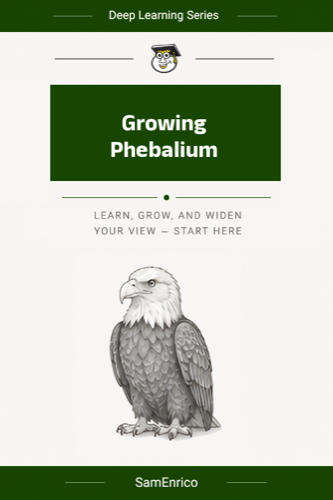
Non-FictionInformativeEducational
Growing Phebalium eBook
This publication, published by SamEnrico, covers G
by Yoder Diann
This publication, published by SamEnrico, covers Growing Phebalium
Formats
Free sample
Chapter 1: The Confession of a Serial Killer--I killed my first plant when I was seven. It was a succulent—one of those so-called “unkillable” haworthias that my grandmother assured me would survive anything, even the black hole of my bedside table. I watered it every day because that’s what love looked like to a seven-year-old. I poured my entire glass of milk into the pot on Tuesday because the plant looked “thirsty” and milk seemed nutritious. By Friday, the haworthia had dissolved into a brown, foul-smelling sludge.
My grandmother, a woman who could root a rose cutting in a glass of tap water and a prayer, looked at the pot, looked at me, and said something I have never forgotten: “You loved it too much.”That was the first time I heard the phrase. It was not the last.Over the next thirty years, I became something of a legend among my gardening friends—though not the kind of legend anyone wants to be. I was the man who could kill a mint plant. I was the one who turned a jade plant into a weeping skeleton. I once managed to murder a cast-iron plant (Aspidistra elatior), a species so notoriously indestructible that it was the preferred houseplant of Victorian Londoners who heated their homes with coal smoke and lit their rooms with gas lamps.
My cast-iron plant lasted eleven weeks. My friends started giving me plants as jokes. A peace lily for my birthday. A spider plant for Christmas. Off-brand condolences wrapped in brown paper.I accepted each gift with the quiet resignation of a man who knew what was coming.
I would water when the soil looked dry. I would fertilize when the leaves looked pale. I would move pots toward the light, away from the light, into partial shade, out of drafts. I bought moisture meters. I bought grow lights.
I bought books. I read every book. The more I learned, the more my plants died. I was over-educated and under-performing—a gardener who knew the Latin names of fifty species but could not keep a single one alive through a calendar year.Books told me to water consistently. My plants rotted.
Books told me to fertilize monthly. My plants burned. Books told me to repot every spring. My plants went into shock and never recovered. I was following instructions perfectly.
The instructions were wrong—not for everyone, perhaps, but certainly for me. I had a problem that no gardening book had ever acknowledged: I cared too much, and my care was the poison.Then, in the spring of my thirty-fourth year, a friend dragged me to a native plant sale at a community hall fifty kilometers outside the city. I went grudgingly, expecting more heartbreak. The hall smelled of damp hessian and eucalyptus. Tables were piled with scraggly, unglamorous shrubs in plain black nursery tubes.
No glossy hydrangeas. No perfumed roses. No orchids with price tags that required a second mortgage. Just grey-green sticks with scaly leaves that looked as though they had been dusted with ash.I almost walked past the table entirely. My friend stopped me.
“These are Phebalium,” she said, tapping a handwritten sign. “You can’t kill them.”I laughed. I had been told that before.But she was persistent, and I was tired, and the plants were cheap—three dollars each, cash in a coffee tin. I bought four. Not because I believed they would live.
Because I had stopped believing anything would live, and three dollars seemed a reasonable price for a few more months of failure.I planted them with zero enthusiasm. I dug holes in the worst part of my garden—a dry, rocky strip along the south fence where nothing had ever grown. The soil was sandy, almost gritty. Rain ran off it like water off a car windshield. The spot got sun for exactly four hours each afternoon and was blasted by wind every time a weather front moved through.
It was, by every measure, the worst planting location on my property. I chose it deliberately, as a kind of experiment: if these plants could survive there, they deserved to live. If they died, I would finally give up gardening forever and take up stamp collecting, a hobby where the subjects were already deceased and therefore immune to my touch.I watered each plant in once. Then I forgot about them for eight weeks.Not deliberately, at first. A work project consumed my evenings.
Then a family emergency pulled me out of state. By the time I returned to my garden, it was late spring, and I had not so much as glanced at the Phebalium strip in sixty-three days. I walked down to the south fence expecting to see grey skeletons. Instead, I stopped mid-stride, my coffee cup halfway to my lips.The plants were covered in flowers.Not just a few buds. Not a weak, apologetic bloom.
Hundreds of small, star-shaped yellow blossoms, each cluster the size of a golf ball, absolutely swarming with native bees. The foliage—that strange, scaly, silver-grey foliage—had doubled in density. The plants had grown from gangly nursery tubes into robust, rounded shrubs. They had done this without me. They had done this despite me.
In the worst soil on my property, with no fertilizer, no schedule, no fussing, no love. They had simply… thrived.I knelt in the dirt. A bee landed on my thumb. I did not move for a long time.That was the moment I understood that everything I had been taught about gardening was wrong—not wrong for everyone, but catastrophically wrong for me. I had been operating under a set of assumptions that did not apply to the plants I was trying to grow, the climate I lived in, or the person I was.
I had been gardening like a rose grower in a Mediterranean climate. I had been watering like a rice farmer in a drought-prone landscape. I had been loving my plants to death, one milk-soggy succulent at a time.The Phebalium taught me a different lesson. The lesson was this: some plants do not want your help. Some plants want you to walk away.This book is the result of that lesson.
Over the past several years, I have grown hundreds of Phebalium plants—from cuttings, from seed, from nursery stock, from salvaged branches that broke in storms. I have grown them in pots on balconies, in coastal gardens blasted by salt wind, in inland clay that I amended into something resembling soil, in pure gravel as an experiment (they grew fine). I have killed exactly three. The three I killed were the ones I could not stop touching—the ones I watered on a schedule, the ones I fertilized because I felt guilty, the ones I pruned too heavily because I was bored.The rest have thrived. Some are now over two meters tall.
One has been transplanted three times and is still blooming. Another survived an accidental week inside a closed shed during a heatwave, emerging with only a few singed leaves and a determination that I can only describe as heroic.This book is not a…
This is the end of the free sample. Get the eBook to keep going. Buy now
About this book
Details
- Author
- Yoder Diann
- Publisher
- SamEnrico
- Language
- English
- Genre
- Non-Fiction, Informative, Educational
- Released
- 2026-05-11
- Pages (approx.)
- 156
- Available as
- eBook, Audiobook

Read better in the ZLOADR app
Your eBooks on your phone or tablet. Sign in with your SamEnrico account and start reading.
More by Yoder Diann
 Diver's Gas Reclaim SystemYoder Diann$11.99
 Anapanasati For ForgivenessYoder Diann$11.99
 Veterinarian Suicide PreventionYoder Diann$11.99
 Financial Stress RegulationYoder Diann$11.99
 Commercial Fisherman Stress GuideYoder Diann$11.99
 Emergency Info PalaceYoder Diann$11.99
 Starlight Night JourneyYoder Diann$11.99
 Egyptian Mathematics GuideYoder Diann$11.99
 Affirmations For Postpartum AnxietyYoder Diann$11.99
 The Deep Blue Code: How a 19th-Century Shipwreck Rewrote HistoryYoder Diann$11.99
 The Comeback King: How Vince Lombardi Rebuilt a DynastyYoder Diann$11.99
 The Black Cross and the Baltic Inferno: The Teutonic Knights' Doomed CrusadeYoder Diann$11.99
You may also like
 Hong Kong Handover 1997Dunn Johnnie$11.99
 Zumba For Postnatal Recovery CourseNeal Christian$11.99
 Zumba for BeginnersLadner Nikia$11.99
 YouTube Comment Mining GuideHumes Pandora$12.99
 Worry Box MeditationCarlin Rudy$11.99
 Workplace Stress MeditationNguyen Lynn$11.99
 Workplace Stress and Sleep RepairHawley Ivory$11.99
 Workplace Perfectionism CureDelaney Jeffry$11.99
 Workplace Injustice Anger GuideWallen Isabelle$11.99
 Work Addiction and Burnout LinkGreenwood Ester$11.99
 Women in Yoga and WellnessBeattie Galina$11.99
 Women in Stand Up ComedyChun Evangeline$11.99