
Non-FictionInformativeEducational
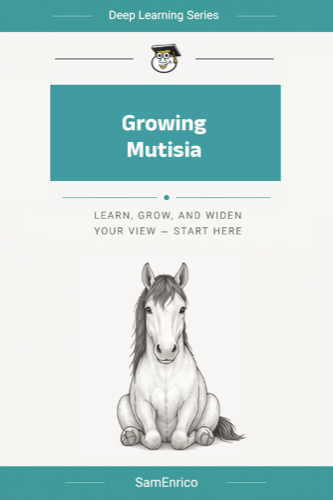
Growing Mutisia eBook
This publication, published by SamEnrico, covers G
This publication, published by SamEnrico, covers Growing Mutisia
Formats
Free sample
Chapter 1: The Vine That Refuses to Die...--Every garden has a graveyard. Mine was a six-foot stretch of south-facing wall between the kitchen window and the downspout. Over five years, I buried three clematis, two climbing roses, and a jasmine that turned brown before it ever turned white. The soil was thin, the afternoon sun brutal, and the winter winds swept down from the hills like a personal vendetta. I had convinced myself that nothing would ever grow there except moss and regret.Then a friend returned from a botanical expedition in Chile with a gift wrapped in damp newspaper and tied with twine.
It looked like a handful of twigs with a single curled tendril still clinging to life. "What is this?" I asked, already skeptical. "Mutisia spinosa," she said. "The Chilean Bellflower. It grows on the edge of the Andes where the soil is rocky and the sun is fierce and the roots stay cool under boulders while the flowers bake in the open air.
It might survive your wall."I planted it that afternoon with the grim resignation of someone setting a trap they know will never spring. I watered it in, staked the single tendril, and waited for it to die.It did not die.That first summer, it grew two feet. The second summer, it found the downspout and climbed to the roof. The third summer, it exploded in a cascade of pink flowers that stopped every person who walked past my gate. They asked what it was.
They asked where to buy one. They asked how I had finally tamed that impossible wall. And I told them all the same thing: I didn't tame it. I just got out of its way.That is the truth about Mutisia. It is not a plant that demands your expertise.
It is a plant that rewards your attention. It asks for almost nothing—well-drained soil, a moment of shade for its roots, a bit of sun for its head—and in return, it gives you a living sculpture that changes with the light, the season, and the years.This book exists because that one vine changed my garden and my gardening philosophy. I stopped trying to force plants into conditions they hated. I started looking for plants that thrived on the edge. And I found, hidden in the catalogs and the botanical gardens and the forgotten corners of horticultural history, a whole genus of climbing daisies that most gardeners have never even heard of.You are about to become one of the few who know the secret.The Hidden Gem of the Andes The Mutisia genus belongs to the aster family—the same family as sunflowers, daisies, and zinnias.
But unlike its herbaceous cousins, Mutisia climbs. It scrambles. It attaches itself to walls, trellises, shrubs, and trees using curling tendrils that emerge from the leaf axils. These tendrils are not modified stems or roots. They are the plant's own invention: specialized organs that reach out, locate a support, and then coil around it with a slow, inexorable grip that can lift the vine twenty feet into the air.More than sixty species exist in the wild, scattered across the length of the Andes from Colombia to Patagonia.
They have adapted to an astonishing range of conditions: coastal fog zones, high-altitude rocky slopes, temperate rainforest edges, and semi-arid foothills. Some species are compact and shrubby. Others are aggressive climbers that can swallow a dead tree in five years. Nearly all of them produce composite flowers that resemble miniature artichokes before opening into daisy-like blooms in shades of pink, orange, purple, red, yellow, and white.Why has Mutisia remained a secret outside of botanical collections and specialist nurseries? The answer is complicated.
Partly, it is because the plant has a reputation for being difficult—a reputation earned when early European plant hunters sent back specimens that died in English conservatories because no one understood the "roots cool, head hot" requirement. Partly, it is because Mutisia produces no scent, and gardeners have historically favored fragrant climbers like jasmine and honeysuckle. And partly, it is simply because the genus has never had its champion—never had its Martha Washington or its Gertrude Jekyll or its Monty Don to bring it into the mainstream.This book is my attempt to become that champion. Not because I am a famous gardener—I am not. And not because I have any special training—I do not.
But because I have grown Mutisia in three different climates, on two continents, in containers and in ground, from seeds and from cuttings, and I have learned what works and what fails with the intimacy that only comes from making every mistake possible.You will make mistakes too. That is fine. Mutisia is forgiving in ways that most climbers are not. Cut it back too hard? It will regrow.
Forget to water it? It has deep roots. Expose it to frost? The top may die, but the roots will send up new shoots in spring. This is not a diva plant.
This is a survivor.The Five Species You Will Grow Before we dive into the details of soil, water, light, and pruning—all of which will come in subsequent chapters—let me introduce you to the five species that will become your Mutisia family. These are the most garden-worthy members of the genus, selected for their hardiness, their flowering performance, and their availability from specialty nurseries. Each will receive a full profile in Chapter 11, but here is a quick overview to help you dream.Mutisia spinosa, the classic Chilean Bellflower, produces white to pale pink blooms with dark purple centers. Its leaves are tipped with sharp spines—hence the name "spinosa"—so plant it where you will not brush against it daily. This is the species that climbed my impossible wall.
It reaches ten to fifteen feet and blooms from late spring through summer. Hardiness: USDA Zones 8 through 11.Mutisia decurrens, the Orange Flame, is the showstopper of the genus. Its flowers are a blazing orange that you can see from across a football field. Unlike the other species, decurrens spreads by rhizomes—underground stems that send up new shoots several feet from the parent plant. This makes it excellent for ground cover on a slope or for filling a large container where its spreading habit can be contained.
Expect eight to twelve feet of growth. Hardiness: Zones 9 through 11.Mutisia ilicifolia, the Holly-leaved Mutisia, is grown as much for its foliage as for its flowers. The leaves are dark green, glossy, and shaped like holly, with red-tinted new growth that provides color in early spring before the blooms appear. The flowers are purple with yellow centers, and the whole plant stays smaller than its cousins—six to ten feet. Hardiness: Zones 8 through 11.Mutisia oligodon, the dwarf of the group, reaches only two to three feet.
This is the species for rock gardens, for small trellises on a patio, or for any space where vertical height is limited. The flowers are smaller than the other species but produced abundantly in pink to purple tones. Oligodon is also the hardiest of the five, tolerating Zone 7 winters with protection. Hardiness…
This is the end of the free sample. Get the eBook to keep going. Buy now
About this book
Details
- Author
- Hennessey Tona
- Publisher
- SamEnrico
- Language
- English
- Genre
- Non-Fiction, Informative, Educational
- Released
- 2026-05-11
- Pages (approx.)
- 125
- Available as
- eBook, Audiobook

Read better in the ZLOADR app
Your eBooks on your phone or tablet. Sign in with your SamEnrico account and start reading.
More by Hennessey Tona
 Pet Tech Growth Capital GuideHennessey Tona$11.99
 Loneliness Digital Nomad GuideHennessey Tona$11.99
 Senior Friendship BuildingHennessey Tona$11.99
 Burnout Recovery for Military SpousesHennessey Tona$11.99
 Cultural Variations in Recurring DreamsHennessey Tona$11.99
 Whistleblower ConversationsHennessey Tona$11.99
 Job Anxiety HypnosisHennessey Tona$11.99
 Antwerp Heist Mastermind ProfileHennessey Tona$11.99
 Lymphoma Remission StoryHennessey Tona$11.99
 The Skateboard Heist: How a Forgotten 18th-Century Hoax Launched a RebellionHennessey Tona$11.99
 The Last Whisper of the Sphinx: Decoding the Riddle That Shaped CivilizationHennessey Tona$11.99
 Ragnarok's Shadow: The Untold War of the JötnarHennessey Tona$11.99
You may also like
 Hong Kong Handover 1997Dunn Johnnie$11.99
 Zumba For Postnatal Recovery CourseNeal Christian$11.99
 Zumba for BeginnersLadner Nikia$11.99
 YouTube Comment Mining GuideHumes Pandora$12.99
 Worry Box MeditationCarlin Rudy$11.99
 Workplace Stress MeditationNguyen Lynn$11.99
 Workplace Stress and Sleep RepairHawley Ivory$11.99
 Workplace Perfectionism CureDelaney Jeffry$11.99
 Workplace Injustice Anger GuideWallen Isabelle$11.99
 Work Addiction and Burnout LinkGreenwood Ester$11.99
 Women in Yoga and WellnessBeattie Galina$11.99
 Women in Stand Up ComedyChun Evangeline$11.99