
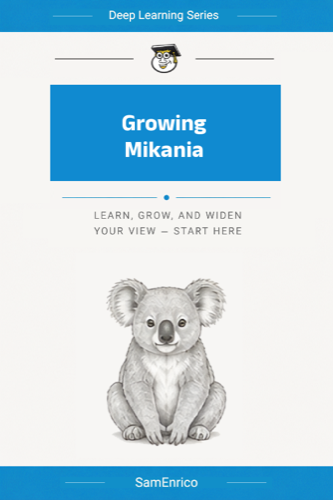
Non-FictionInformativeEducational
Growing Mikania
This publication, published by SamEnrico, covers G
This publication, published by SamEnrico, covers Growing Mikania
Formats
About this book
Free sample
Chapter 1: The Green Schism--–- On a humid morning in southern Brazil, a farmer named Joao reaches into a tangle of vines and pulls. The plant resists, then gives way with a sound like tearing canvas. In his hand is a three-meter stem that, twenty-four hours earlier, had been two meters shorter. He tosses it onto a pile that will be burned by noon. Thirty kilometers away, an herbalist named Elena carefully clips the leaves from an identical-looking vine, lays them on a drying rack, and whispers a thank-you to the plant she calls guaco.
She will steep these leaves into a tea that has eased her grandmother’s cough for eighty years.Both Joao and Elena are holding Mikania. One sees a monster. The other sees a medicine. Both are correct.This is the central paradox of the genus Mikania—a group of over 400 species that defies simple categorization. Depending on where you stand, which species you encounter, and what you intend to do with it, the same botanical family that chokes the life out of tropical forests also heals the lungs of those who live within them.
To understand how this is possible—and to determine whether you should be growing Mikania, eradicating it, or doing nothing at all—you must first understand the deep schism that runs through this remarkable genus.The Genus That Refuses to Be One Thing The Asteraceae family, to which Mikania belongs, is one of the largest plant families on Earth, comprising over 23,000 species including sunflowers, daisies, and asters. Within this vast family, the genus Mikania occupies a peculiar middle ground: not obscure enough to escape human attention, not famous enough to be well understood. Named after the Czech botanist Johann Christian Mikan, the genus was first formally described in the early nineteenth century, when European naturalists were still scrambling to classify the bewildering diversity of South American flora.What those early botanists could not have predicted was that they were documenting not one story but many. Some Mikania species would remain modest climbers in their native forests, causing no trouble and attracting no notice. Others…
This is the end of the free sample. Get the eBook to keep going. Buy now
Contents
- Chapter 1
- Chapter 2
- Chapter 3
- Chapter 4
- Chapter 5
- Chapter 6
- Chapter 7
- Chapter 8
- Chapter 9
- Chapter 10
- Chapter 11
- Chapter 12
Details
- Author
- Grayson Rosalba
- Publisher
- SamEnrico
- Language
- English
- Genre
- Non-Fiction, Informative, Educational
- Released
- 2026-06-02
- Pages (approx.)
- 143
- Available as
- eBook, Audiobook

Read better in the ZLOADR app
Your eBooks on your phone or tablet. Sign in with your SamEnrico account and start reading.
More by Grayson Rosalba
 The AgTech Capital Allocation GuideGrayson Rosalba$11.99
 Loneliness Phone Call GuideGrayson Rosalba$11.99
 Cross Industry Relationship BuildingGrayson Rosalba$11.99
 Hard Talks HandbookGrayson Rosalba$11.99
 Wholesaling Investor MeetupsGrayson Rosalba$11.99
 The Search Team DisappearanceGrayson Rosalba$11.99
 Trial Of The Antwerp GangGrayson Rosalba$11.99
 Pull Over Reset GuideGrayson Rosalba$11.99
 CrossFit Sandbag Training GuideGrayson Rosalba$11.99
 The Last Empress: How a Teenage Girl Ruled an EmpireGrayson Rosalba$11.99
 The Jade Emperor's Forgotten Dragon: A Celestial Mentor's RiseGrayson Rosalba$11.99
 The Silent Heist: How a Teen Hacker Stole $50 Million in BitcoinGrayson Rosalba$11.99
You may also like
 Hong Kong Handover 1997Dunn Johnnie$11.99
 Zumba For Postnatal Recovery CourseNeal Christian$11.99
 Zumba for BeginnersLadner Nikia$11.99
 YouTube Comment Mining GuideHumes Pandora$12.99
 Worry Box MeditationCarlin Rudy$11.99
 Workplace Stress MeditationNguyen Lynn$11.99
 Workplace Stress and Sleep RepairHawley Ivory$11.99
 Workplace Perfectionism CureDelaney Jeffry$11.99
 Workplace Injustice Anger GuideWallen Isabelle$11.99
 Work Addiction and Burnout LinkGreenwood Ester$11.99
 Women in Yoga and WellnessBeattie Galina$11.99
 Women in Stand Up ComedyChun Evangeline$11.99