
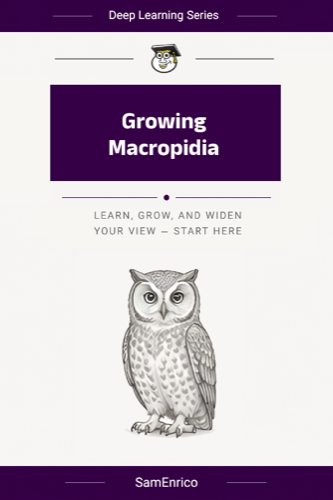
Non-FictionInformativeEducational
Growing Macropidia Audiobook
This publication, published by SamEnrico, covers G
by Andre Matha
This publication, published by SamEnrico, covers Growing Macropidia
Formats
Free sample
Chapter 1: The Flower That Shouldn't Exist--– In the summer of 1838, a young botanist named John Lindley sat in a London herbarium, staring at a pressed flower that had traveled 12,000 miles from the southwestern edge of Australia. The specimen was unlike anything he had ever seen. Its stem rose nearly a meter tall, clothed in woolly brown hairs. At its tip, a cluster of flowers unfolded in a color combination that Lindley initially thought was a mistake in preservation: deep, velvety black against a striking lime-green. No other member of the vast Haemodoraceae family had ever produced a black flower.
No other monocot, for that matter, had produced anything quite like it. Lindley named it Macropidia fuliginosa—from the Greek makros (long) and pous (foot), referring to the elongated flower stem, and the Latin fuliginosa (sooty or smoky), a nod to that impossible black.For nearly two centuries since that moment, gardeners have been chasing that same impossibility. The Black Kangaroo Paw, as it came to be known, has lured collectors across oceans, emptied wallets, filled graveyards of failed specimens, and sparked an obsession that borders on botanical masochism. This is the flower that shouldn't exist. And yet, in a narrow band of gravelly, ironstone-rich soil in Western Australia's Jarrah Forest and Mallee regions, it not only exists but thrives—on its own terms, in its own time, indifferent to the desires of the humans who try to tame it.This chapter is not about how to grow Macropidia.
That comes later. First, you must understand why this plant is different—not just difficult, but fundamentally unlike any other Kangaroo Paw, any other perennial, any other plant you have ever grown. Understanding its origins, its evolutionary isolation, its ecological stubbornness, and its ethical vulnerabilities is the foundation upon which every successful cultivation attempt is built. Without this understanding, you are not a grower. You are merely a gravedigger with good intentions.The Mystique of the Black Flower Black is not a common color in the plant kingdom.
True black—not deep maroon, not dark purple, not chocolate brown, but black—appears in fewer than one percent of flowering plants. When it does appear, it almost always serves a singular evolutionary purpose: heat absorption. In the harsh, sun-blasted landscapes where black flowers evolve, the dark pigment (usually concentrated anthocyanins) raises the temperature of the reproductive organs, encouraging pollinator activity in cold mornings or attracting…
This is the end of the free sample. Get the Audiobook to keep going. Buy now
About this book
Details
- Author
- Andre Matha
- Publisher
- SamEnrico
- Language
- English
- Genre
- Non-Fiction, Informative, Educational
- Released
- 2026-05-06
- Pages (approx.)
- 137
- Available as
- eBook, Audiobook

Listen in the VoxFlicks app
Audiobooks and audio dramas wherever you go. Sign in with your SamEnrico account and press play.
More by Andre Matha
 The MBSR for Migraine ReliefAndre Matha$11.99
 Speech Impediment Self EsteemAndre Matha$11.99
 Sales Active Listening GuideAndre Matha$11.99
 Douglas Dynasty - Michael DouglasAndre Matha$11.99
 Environment Creativity BoostAndre Matha$11.99
 Plyometric Injury PreventionAndre Matha$11.99
 Wholesaling PPC Ads GuideAndre Matha$11.99
 Left Lane Aggression GuideAndre Matha$11.99
 Forgiveness Without ChangeAndre Matha$11.99
 The Edge of the Sky: Wiley Post's Perilous Quest for the StratosphereAndre Matha$11.99
 Rhythm in the Shadows: The Untold Story of Pina Bausch's Wuppertal RevolutionAndre Matha$11.99
 Phaëthon’s Fall: The Sun Chariot DisasterAndre Matha$11.99
You may also like
 Hong Kong Handover 1997Dunn Johnnie$11.99
 Zumba For Postnatal Recovery CourseNeal Christian$11.99
 Zumba for BeginnersLadner Nikia$11.99
 YouTube Comment Mining GuideHumes Pandora$12.99
 Worry Box MeditationCarlin Rudy$11.99
 Workplace Stress MeditationNguyen Lynn$11.99
 Workplace Stress and Sleep RepairHawley Ivory$11.99
 Workplace Perfectionism CureDelaney Jeffry$11.99
 Workplace Injustice Anger GuideWallen Isabelle$11.99
 Work Addiction and Burnout LinkGreenwood Ester$11.99
 Women in Yoga and WellnessBeattie Galina$11.99
 Women in Stand Up ComedyChun Evangeline$11.99