
Non-FictionInformativeEducational
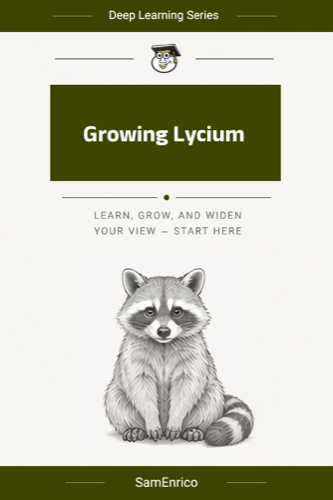
Growing Lycium eBook
This publication, published by SamEnrico, covers G
This publication, published by SamEnrico, covers Growing Lycium
Formats
Free sample
Chapter 1: The Berry That Beat Blindness--In the remote mountain villages of Ningxia, China, there is a saying older than the Great Wall: “If you want to see your great-grandchildren’s faces, plant a wolfberry bush outside your door.”For over six hundred years, the farmers of this arid region have done exactly that. They have watched their parents live past ninety with eyes clear enough to thread needles. They have watched their grandparents walk unassisted to the fields at a hundred. And when asked their secret, they do not point to medicine, or doctors, or pills from a pharmacy. They point to a small, red, wrinkled berry that most Westerners cannot even pronounce correctly.That berry is Lycium barbarum.
You likely know it by its marketing name: goji.But here is what the marketing does not tell you. The goji berry you buy in a plastic pouch at a health food store — the one that tastes vaguely like a raisin with a hint of dirt — is a shadow of what this plant can be when grown properly. It has been dried too hot, stored too long, and shipped too far. Its bioactive compounds have degraded. Its flavor has flattened.
Its medicine has weakened.And that is precisely why you need this book.You are not here to learn how to buy goji berries. You are here to learn how to grow them. Not just to save money — although you will — and not just to impress your neighbors — although you will do that too. You are here because you have heard the whispers: that this plant, this unassuming thorny shrub, might be one of the most nutritionally dense foods on earth. And you want to know if the whispers are true.They are.
But the full truth is stranger and more valuable than the marketing lets on.The Legend That Launched a Superfood The story of Lycium begins not in a laboratory, not on a supermarket shelf, but in the dusty foothills of the Himalayas, where the plant grew wild along riverbanks and grazing lands. For millennia, it was ignored by everyone except shepherds and wandering monks. Then, sometime during the Tang Dynasty (618–907 AD), a Buddhist monk discovered something peculiar.According to the legend — and there are many versions, each more embellished than the last — the monk noticed that the shepherds who drank from streams flowing through thickets of wolfberry bushes lived significantly longer than those who drank from other streams. Their eyesight remained sharp into old age. Their hair did not gray as quickly.
Their joints did not ache.The monk, being a man of observation if not yet of science, collected the berries, dried them, and began offering them to pilgrims who passed through his monastery. Word spread. Within two centuries, wolfberry had transitioned from a wild weed to a cultivated crop. Within five centuries, it had entered the Shennong Ben Cao Jing — the Divine Farmer’s Materia Medica — one of the oldest pharmacopoeias in human history.That text, written sometime between 200 and 250 AD, describes Lycium as possessing three distinct benefits: it “nourishes the liver,” “brightens the eyes,” and “extends the years.” For two thousand years, these claims were dismissed by Western medicine as folk superstition. Then, in the 1990s, scientists began testing them.What the Labs Discovered The first surprise came from a routine analysis of Lycium’s chemical composition.
Researchers expected to find vitamins — vitamin C, perhaps some B vitamins — and maybe a few antioxidants. What they found instead was a compound they had never seen in such concentration outside of marigold petals: zeaxanthin.Zeaxanthin is a carotenoid, a pigment molecule that gives certain plants their yellow and red colors. In the human body, it does something remarkable. It accumulates in the macula — the central part of the retina responsible for sharp, detailed vision — where it acts as both a sunscreen and an antioxidant filter. It absorbs damaging blue light.
It quenches free radicals before they can destroy photoreceptor cells. And the human body cannot produce it. You must consume it.Most Western diets are severely deficient in zeaxanthin. The average American consumes about 1-2 milligrams per day. Studies suggest that optimal eye health requires at least 6-10 milligrams daily.
A single ounce of properly grown, properly dried Lycium berries contains 25-35 milligrams.Let that sink in.One ounce of goji berries contains more zeaxanthin than five pounds of corn, ten pounds of eggs, or twenty pounds of broccoli. No other commonly consumed food comes close. Not spinach, not kale, not orange peppers. Lycium is, by a substantial margin, the single richest dietary source of this vision-protecting compound.But zeaxanthin was only the beginning.The Polysaccharide Puzzle When researchers analyzed the water-soluble fraction of Lycium berries, they discovered something even more unusual: a family of complex carbohydrates called Lycium barbarum polysaccharides, or LBPs for short. These molecules are large — far too large to be absorbed intact through the intestinal wall.
And yet, when consumed, they produce measurable effects throughout the body.The mechanism, now well-established in the scientific literature, works like this. LBPs are too large to enter the bloodstream directly. Instead, they interact with immune cells in the gut-associated lymphoid tissue — the GALT, in immunology shorthand. These immune cells, sensing the presence of a large foreign molecule, shift into a more active state. They begin producing signaling molecules called cytokines.
Those cytokines enter the bloodstream and travel to other organs, where they modulate immune function, reduce inflammation, and stimulate the production of natural killer cells.In plain English: Lycium polysaccharides train your immune system to be more vigilant without triggering the dangerous overreaction seen in autoimmune diseases.Clinical trials have confirmed effects ranging from increased antibody production after vaccination to reduced incidence of upper respiratory infections in elderly subjects. A 2014 study published in the Journal of Medicinal Food found that healthy adults consuming goji juice for thirty days reported significantly fewer cold and flu symptoms, better sleep quality, and improved mood compared to placebo.The sleep finding was unexpected. Subsequent research traced it back to the same polysaccharides, which appear to influence circadian rhythm regulation through the gut-brain axis. You are not taking a sedative; you are feeding the biological systems that govern your own sleep-wake cycles.The Taste of Medicine Here is where we must pause and be honest with you.Fresh Lycium berries do not taste like candy. They have a complex flavor profile that defies easy description: mildly sweet, slightly bitter, with an earthy undertone and a faint aftertaste that some describe as “medicinal” and others describe as “acquired.” If you are expecting a flavor explosion comparable to a ripe strawberry or a perfect peach, you will be disappointed.But that is not a flaw.
It is a feature.The compounds that make Lycium nutritious — zeaxanthin, polysaccharides, betaine, scopoletin — are the same compounds that give it its distinctive taste. A berry bred for sweetness alone would lose most of its medicinal value. The two traits are inversely correlated: higher sugar content generally means lower bioactive compound content.This trade-off is crucial to understand before you plant your first seed. You must decide what you are growing for: pleasure or medicine? The commercial goji…
This is the end of the free sample. Get the eBook to keep going. Buy now
About this book
Details
- Author
- Dixon Brendan
- Publisher
- SamEnrico
- Language
- English
- Genre
- Non-Fiction, Informative, Educational
- Released
- 2026-06-02
- Pages (approx.)
- 126
- Available as
- eBook, Audiobook

Read better in the ZLOADR app
Your eBooks on your phone or tablet. Sign in with your SamEnrico account and start reading.
More by Dixon Brendan
 Wholesaling Escrow Process GuideDixon Brendan$11.99
 Mindful Stress Reduction for LawyersDixon Brendan$11.99
 Vertical Merger EnforcementDixon Brendan$11.99
 Rejection Resilience at WorkDixon Brendan$11.99
 Fabric Burn Test GuideDixon Brendan$11.99
 The Third SiblingDixon Brendan$11.99
 Rib Fracture Return to SportDixon Brendan$11.99
 Low Socioeconomic Childhood WorthDixon Brendan$11.99
 Behavioral Economics ReadingDixon Brendan$11.99
 The Jungle Whisperers: Alfred Russel Wallace and the Secrets of BorneoDixon Brendan$11.99
 Fenrir's Bane: The Wolf Who Shaped the GodsDixon Brendan$11.99
 The Vanishing of the SS Marine Sulphur QueenDixon Brendan$11.99
You may also like
 Hong Kong Handover 1997Dunn Johnnie$11.99
 Zumba For Postnatal Recovery CourseNeal Christian$11.99
 Zumba for BeginnersLadner Nikia$11.99
 YouTube Comment Mining GuideHumes Pandora$12.99
 Worry Box MeditationCarlin Rudy$11.99
 Workplace Stress MeditationNguyen Lynn$11.99
 Workplace Stress and Sleep RepairHawley Ivory$11.99
 Workplace Perfectionism CureDelaney Jeffry$11.99
 Workplace Injustice Anger GuideWallen Isabelle$11.99
 Work Addiction and Burnout LinkGreenwood Ester$11.99
 Women in Yoga and WellnessBeattie Galina$11.99
 Women in Stand Up ComedyChun Evangeline$11.99