
Non-FictionInformativeEducational
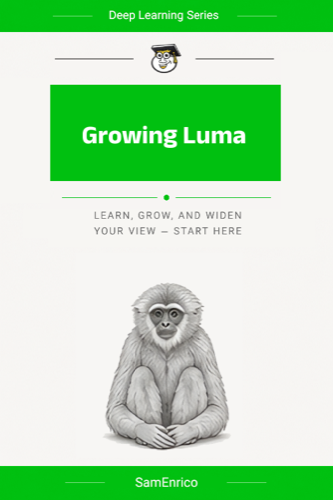
Growing Luma eBook
This publication, published by SamEnrico, covers G
by Jones Timmy
This publication, published by SamEnrico, covers Growing Luma
Formats
Free sample
Chapter 1: The Cinnamon Secret--The first time I touched a Luma tree, I thought the bark was peeling because the plant was dying.It was a gray, drizzly afternoon at the Tregrehan Mills botanical garden in Cornwall, England. I had traveled three hours to see a collection of South American plants that supposedly thrived in the maritime climate – a climate not unlike my own garden back in Seattle. I was cold, mildly disappointed by the lack of color in the winter borders, and ready to give up and find a pub. Then I rounded a corner and stopped.A tree stood alone on a slight rise, maybe fifteen feet tall, with multiple trunks twisting upward like dancers frozen mid-spin. Its bark wasn't brown or gray.
It was cinnamon – not the pale beige of dried spice, but the deep, rich red-brown of a freshly peeled cinnamon quill. And it was coming off in thin, curling sheets, exposing patches of smooth cream-colored wood underneath. I stepped closer, half-expecting the tree to be sick. Instead, I noticed that the fallen bark pieces around its base were perfectly dry, aromatic, and curled into tight scrolls that looked like someone had deliberately placed them there.I reached out and touched the trunk. The bark was cool and papery, releasing a faint, sweet spice scent onto my fingers.
Then I brushed past a low-hanging branch, and the small, glossy leaves released another smell – sharper, more herbal, like eucalyptus mixed with clove and a hint of citrus. In that single moment, standing in a drizzling English winter garden, I experienced more sensory pleasure than an entire summer of tending my boring, predictable roses.That was my introduction to Luma apiculata, also known as Arrayan, Chilean Myrtle, or – in its native Mapuche language – "the tree that perfumes the wind." I had been gardening for fifteen years. I had grown orchids indoors, built raised beds for tomatoes, propagated hundreds of cuttings, and read every book on Mediterranean gardening I could find. And yet, I had never heard of this tree. Neither had any of the so-called experts at my local nursery.
When I returned home and asked the owner of Seattle's most respected plant shop about Luma, he squinted at me and said, "Is that a new cultivar of boxwood?"It was not. And that moment of collective ignorance – the realization that one of the most beautiful, resilient, and useful small trees on the planet was virtually unknown outside of botanical gardens and a handful of obsessive collectors – is what drove me to write this book.This is not a book for people who already know everything about South American Myrtaceae. It is a book for the gardener who has never heard of Luma, who is skeptical of yet another "miracle plant" promising year-round interest, but who is curious enough to wonder: could there really be a tree that flowers in winter, smells like a spice rack, produces edible berries, peels its own decorative bark, and requires less maintenance than a lawn?The answer is yes. But the story of how this tree came to be so obscure, how it survived for millennia in the temperate rainforests of the Andes, and how it can transform your own garden – that story requires us to go back to the beginning.The Valdivian Rainforest: Where Luma Rules To understand Luma, you must first understand its homeland. The Valdivian temperate rainforest stretches along the western slopes of the Andes in southern Chile and Argentina, a narrow band of green between the Pacific Ocean and the mountains.
This is not the tropical jungle of the Amazon. This is a cool, misty, ancient forest where rainfall exceeds 100 inches per year, where summer temperatures rarely climb above 70°F (21°C), and where winter lows hover just around freezing. Fog rolls in from the ocean almost daily, draping the trees in a silver blanket that keeps the air humid even during dry spells.In this forest, Luma apiculata is not a rare oddity. It is a dominant species. It grows alongside the monkey puzzle tree (Araucaria araucana), the Chilean wine palm (Jubaea chilensis), and vast understories of ferns, mosses, and bamboo-like Chusquea.
But unlike those other plants, Luma does not demand constant moisture once it reaches maturity. It has evolved a remarkable resilience: its deep root system can tap into groundwater during the dry season, and its small, waxy leaves lose far less water to evaporation than the broad leaves of its rainforest neighbors. This duality – a love of rain in youth, a tolerance for drought in age – is one of the keys to growing Luma successfully in your garden, whether you live in damp Seattle or dry Los Angeles.The Valdivian forest is also a place of extraordinary biodiversity. It is home to the pudú (the world's smallest deer), the kodkod (a tiny wildcat), and dozens of species of hummingbirds and parrots that have adapted to the cool climate. For these animals, Luma is a keystone species.
Its winter flowers provide nectar when few other plants are blooming. Its summer berries feed birds during the critical fledging season. Its dense, evergreen foliage offers shelter from predators and weather. When you plant a Luma in your garden, you are not just adding an ornamental tree. You are inserting a small piece of a functioning, ancient ecosystem.The Mapuche: People of the Earth Before European plant hunters ever laid eyes on Luma, the Indigenous Mapuche people of Chile and Argentina had been using the tree for centuries.
The Mapuche – whose name means "people of the earth" – were skilled botanists and healers. They recognized in Luma a plant of unusual value.The most detailed accounts come from 16th-century Spanish chroniclers who observed Mapuche medicine. According to these records, the Mapuche harvested the bark of Luma apiculata and boiled it into a decoction that was used to clean wounds, reduce inflammation, and treat skin infections. The bark contains volatile oils with mild antiseptic properties – a fact that modern chemical analysis has confirmed. The wood, which is exceptionally hard, dense, and resistant to rot, was carved into digging sticks, weaving battens, and the wooden spades used for planting potatoes.
Larger trunks were fashioned into posts for ruka houses, where they would last for decades without rotting in the damp rainforest soil.But the Mapuche relationship with Luma was not merely utilitarian. The tree held spiritual significance as well. It was planted near the entrances of homes to ward off evil spirits – a practice that Spanish missionaries mistakenly interpreted as idol worship and attempted to suppress. Today, in rural parts of Chile, you can still find old Luma trees growing beside crumbling adobe houses, remnants of a tradition that survived centuries of colonialism.This history is not just interesting trivia. It matters for how we grow Luma today.
The Mapuche understood that the tree thrives in disturbance – in the edges of forests, along riverbanks, in the transition zones between open land and deep woods. They also understood that Luma is remarkably resilient to pruning and coppicing (cutting back to the ground to encourage new growth), which is why they could harvest its bark and wood without killing the tree. These observations align perfectly…
This is the end of the free sample. Get the eBook to keep going. Buy now
About this book
Details
- Author
- Jones Timmy
- Publisher
- SamEnrico
- Language
- English
- Genre
- Non-Fiction, Informative, Educational
- Released
- 2026-06-02
- Pages (approx.)
- 155
- Available as
- eBook, Audiobook

Read better in the ZLOADR app
Your eBooks on your phone or tablet. Sign in with your SamEnrico account and start reading.
More by Jones Timmy
 Scars on the EardrumJones Timmy$11.99
 Metta Walking Meditation GuideJones Timmy$11.99
 Immigrant Winery And Vineyard FounderJones Timmy$11.99
 Wholesaling Exit StrategiesJones Timmy$11.99
 Remedy Packages HandbookJones Timmy$11.99
 Hip Bursitis Recovery GuideJones Timmy$11.99
 Microscopic Fiber IdentificationJones Timmy$11.99
 Choice Architecture OfficeJones Timmy$11.99
 Adoption Self Worth JourneyJones Timmy$11.99
 The Frozen Crown: Britain's Forgotten Ice Skating PioneerJones Timmy$11.99
 The Last Transmission: The Titanic’s Wireless Room TragedyJones Timmy$11.99
 The Anatomy of Genius: Vesalius and the Birth of Modern MedicineJones Timmy$11.99
You may also like
 Hong Kong Handover 1997Dunn Johnnie$11.99
 Zumba For Postnatal Recovery CourseNeal Christian$11.99
 Zumba for BeginnersLadner Nikia$11.99
 YouTube Comment Mining GuideHumes Pandora$12.99
 Worry Box MeditationCarlin Rudy$11.99
 Workplace Stress MeditationNguyen Lynn$11.99
 Workplace Stress and Sleep RepairHawley Ivory$11.99
 Workplace Perfectionism CureDelaney Jeffry$11.99
 Workplace Injustice Anger GuideWallen Isabelle$11.99
 Work Addiction and Burnout LinkGreenwood Ester$11.99
 Women in Yoga and WellnessBeattie Galina$11.99
 Women in Stand Up ComedyChun Evangeline$11.99