
Non-FictionInformativeEducational
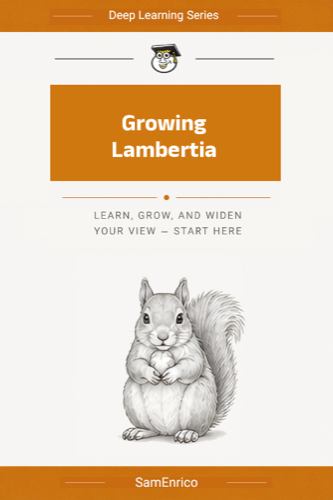
Growing Lambertia eBook
This publication, published by SamEnrico, covers G
by Webber Von
This publication, published by SamEnrico, covers Growing Lambertia
Formats
Free sample
Chapter 1: The Horned Survivor--–- It began, as most obsessions do, with a single plant that refused to die.My first encounter with Lambertia formosa was not an act of intention but of neglect. A friend had purchased a property on the New South Wales south coast, a windswept block of sandstone and sand that had been scraped clean by a bushfire two years prior. Among the blackened skeletons of introduced species—a dead photinia, a ghost of a camellia—one shrub had not only survived but thrived. It was ugly, by conventional garden standards. Its leaves were hard and prickly, like holly on steroids.
Its branches twisted in directions that seemed to have no logic. And emerging from its center were flowers the color of a warning sign: brilliant crimson-orange tubes clustered in whorls, each cluster surrounded by a collar of spiky bracts. The flowers looked like tiny explosions frozen in time.But it was the fruit that gave the plant its common name. Hard, woody, and shaped like a medieval mace, the follicles grew in pairs, each one tapering to a sharp point. They were, unmistakably, horns.
My friend, who had no interest in gardening whatsoever, called it "the devil plant." When I asked if she knew its real name, she shrugged and said, "It came with the house."That was my introduction to Lambertia formosa. And it was entirely wrong.Because Lambertia formosa is not one plant. It is ten. And the others—the round-leaved honeysuckle of Western Australia, the prickly honeysuckle of the Stirling Ranges, the many-flowered honeysuckle of the sandplains—are even stranger, even more beautiful, and even more misunderstood.The Genus That Time Forgot The genus Lambertia belongs to the Proteaceae, an ancient family that originated on the supercontinent Gondwana over one hundred million years ago. To put that in perspective: when the first Lambertia ancestors evolved, flowering plants were still a novelty.
Dinosaurs were still the dominant terrestrial vertebrates. Australia was still connected to Antarctica, South America, Africa, and India in a single landmass that stretched from the equator to the South Pole.The Proteaceae are survivors. They have weathered continental drift, dozens of ice ages, and the rise and fall of entire ecosystems. Today, their descendants are found across the southern hemisphere—Protea in South Africa, Embothrium in South America, Knightia in New Zealand, and Banksia and Grevillea and Lambertia in Australia. They are the botanical equivalent of a living fossil, a lineage that has refined its survival strategies over geological timescales.Within this ancient family, Lambertia is a modest genus.
Ten species, all endemic to Australia, all evergreen shrubs. By comparison, Banksia has over 170 species, Grevillea nearly 360. Lambertia is the quiet cousin at the family reunion, the one standing in the corner with a fascinating story that no one has thought to ask about.This book is the asking.The Ten Faces of Lambertia Before we can grow Lambertia, we must know Lambertia. The genus divides neatly into two geographical groups: the eastern species (primarily L. formosa, the Mountain Devil) and the western species (the other nine, all confined to southwestern Australia).Lambertia formosa is the most widespread and the most adaptable.
Its native range stretches along the eastern coast of Australia from southern Queensland to eastern Victoria, a distance of over 1,500 kilometers. Within that range, it occupies a remarkable diversity of habitats: coastal heathlands on pure sand, dry sclerophyll forests on sandstone, and even the margins of wet forests where rainfall exceeds 1,200 millimeters per year. No other Lambertia approaches this ecological flexibility.The flowers of L. formosa are its most distinctive feature. Each flower is a curved tube, 25 to 35 millimeters long, flaring at the tip into four lobes.
The tubes are arranged in whorls of seven to fourteen, surrounded by a collar of leafy bracts. The color ranges from deep crimson to bright orange-red, sometimes with yellow tips. When a cluster is in full bloom, it resembles a small, spiky firework frozen mid-explosion. The effect is dramatic enough that early European collectors sent specimens back to England with urgent requests for more.The fruit, as mentioned, is the source of the common name. The follicles are woody, ovoid, and tipped with a sharp point.
They mature over twelve to eighteen months, turning from green to brown to gray. When fully ripe, they split open along two seams, releasing two flat, winged seeds. But the split is not automatic. In nature, the follicles often remain closed for years, their seeds held in an extended dormancy that only fire can break. This is the mountain devil's pact with the bush: burn me, and I will release my children into the ash.The western species are a different story.
Southwestern Australia is a global biodiversity hotspot, one of the richest and most threatened plant communities on Earth. The soils are ancient, deeply weathered, and desperately poor in nutrients. The climate is Mediterranean: wet winters, bone-dry summers, and frequent fires. The Lambertia species that evolved here are specialists, adapted to conditions that would kill most garden plants.Lambertia orbifolia, the round-leaved honeysuckle, is arguably the most beautiful of the genus. Its leaves are circular, almost perfectly so, arranged in whorls around the stem like green coins.
The flowers are pale yellow to cream, smaller than those of L. formosa, but produced in such profusion that the entire shrub becomes a cloud of soft color. It grows as a dense, rounded shrub to about two meters, and in cultivation, it has an almost manicured appearance—if you can keep it alive.Lambertia echinata, the prickly honeysuckle, is the genus's extreme. Its leaves are narrow, rigid, and tipped with a sharp spine. Its flower clusters are small but intensely red, hidden within the foliage like secret treasures.
It grows slowly, rarely exceeding one meter in height, and demands perfect drainage and no summer water. It is not a plant for beginners. It is a plant for obsessives.Lambertia multiflora, the many-flowered honeysuckle, produces exactly what its name promises. Where L. formosa offers seven to fourteen flowers per cluster, L.
multiflora offers twenty to thirty—a dense head of yellow-green tubes that smells faintly of honey. It is one of the more forgiving western species, tolerating slightly heavier soils and a bit more water than its cousins.Lambertia inermis, the smooth-leaved honeysuckle, is the genus's oddity. Its leaves lack the spines and prickles of other species, and its flowers are a pale, almost translucent yellow. It is also one of the rarest, restricted to a few populations on the southern coast of Western Australia. In cultivation, it is a challenge worth taking on.The remaining western species—L.
ilicifolia, L. rariflora, L. fairallii, L. uniflora, and L. ericifolia—range from uncommon to critically endangered.
Most are known only to serious collectors and botanic gardens. Some have never been photographed in flower. Some exist in fewer than five populations in the wild. Growing these species is not gardening. It is conservation.
We will return to them in Chapter 12.The Confusion of Common Names Before we go further, a necessary detour into nomenclature. Lambertia is often called "wild honeysuckle," a name it shares with several unrelated plants across Australia…
This is the end of the free sample. Get the eBook to keep going. Buy now
About this book
Details
- Author
- Webber Von
- Publisher
- SamEnrico
- Language
- English
- Genre
- Non-Fiction, Informative, Educational
- Released
- 2026-05-07
- Pages (approx.)
- 129
- Available as
- eBook, Audiobook

Read better in the ZLOADR app
Your eBooks on your phone or tablet. Sign in with your SamEnrico account and start reading.
More by Webber Von
 Student Focus SystemWebber Von$11.99
 Biotin Hair Skin Nails GuideWebber Von$11.99
 Persuasive Investor Pitch DeckWebber Von$11.99
 BRCA Gene SurvivorWebber Von$11.99
 NVC for Project ManagersWebber Von$11.99
 Morning Routine Anger FixWebber Von$11.99
 House Dream Symbol JungianWebber Von$11.99
 Child Nonverbal Cues GuideWebber Von$11.99
 Anna Paquin TrueWebber Von$11.99
 Paws of the Pharaoh: The Hound of the NileWebber Von$11.99
 Dragonbone Whispers: The Lost Song of the Azure SerpentWebber Von$11.99
 The Ghosts of the Mary Celeste: The Last Voyage RevealedWebber Von$11.99
You may also like
 Hong Kong Handover 1997Dunn Johnnie$11.99
 Zumba For Postnatal Recovery CourseNeal Christian$11.99
 Zumba for BeginnersLadner Nikia$11.99
 YouTube Comment Mining GuideHumes Pandora$12.99
 Worry Box MeditationCarlin Rudy$11.99
 Workplace Stress MeditationNguyen Lynn$11.99
 Workplace Stress and Sleep RepairHawley Ivory$11.99
 Workplace Perfectionism CureDelaney Jeffry$11.99
 Workplace Injustice Anger GuideWallen Isabelle$11.99
 Work Addiction and Burnout LinkGreenwood Ester$11.99
 Women in Yoga and WellnessBeattie Galina$11.99
 Women in Stand Up ComedyChun Evangeline$11.99