
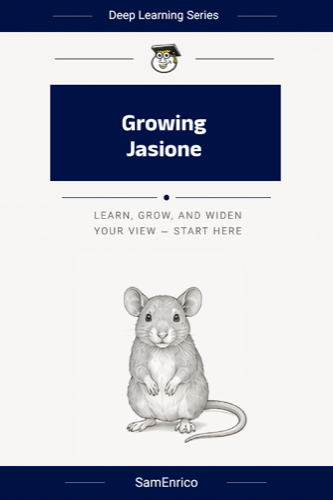
Non-FictionInformativeEducational
Growing Jasione eBook
This publication, published by SamEnrico, covers G
This publication, published by SamEnrico, covers Growing Jasione
Formats
Free sample
Chapter 1: The Blue Paradox...--–- The first time I killed a Jasione, I thought I had failed as a gardener. The second time I killed one, I realized the books had lied to me.That confession sits uncomfortably on the page, I know. We are not supposed to admit failure in gardening books. We are supposed to present ourselves as authorities who have never watched a beloved plant turn brown, collapse into mush, or simply vanish over winter without explanation. But the truth is that Jasione—this unassuming, beautiful, ecologically vital little plant—has a secret that most guidebooks either ignore or get completely wrong.
The secret is this: Jasione does not want your love. It wants your neglect.Every gardener I have ever met struggles with this concept. We enter this hobby—this obsession, this calling—because we want to nurture things. We want to coax life from soil, to protect tender seedlings from frost, to water during dry spells, to fertilize for bigger blooms. These are the rituals of gardening.
They work for tomatoes. They work for roses. They work for hostas and hydrangeas and a thousand other cultivated darlings of the horticultural world. But Jasione comes from a different world entirely—a world of wind-scoured cliffs, acid heaths where nothing else grows, and alpine screes where the concept of "soil" is barely a suggestion. In that world, love is a death sentence.
Rich soil kills. Frequent watering drowns. Fertilizer produces floppy, rotting stems that collapse under their own weight.This book is not a typical gardening guide. It will not tell you to pamper your plants, to coddle them through every season, to intervene at the first sign of trouble. Instead, it will teach you something far more difficult for the average gardener to master: restraint.
It will teach you to read the plant's signals, to understand its evolutionary history, and most importantly, to trust that a plant which has survived for millennia without human intervention probably knows what it is doing.Welcome to the paradox of Jasione. To grow it well, you must first learn to stop gardening.The Misidentification Epidemic Before we go any further, let us clear up a piece of confusion that plagues nearly every online forum, nursery catalog, and casual conversation about this plant. Jasione is not Jasmine. I cannot emphasize this enough. Jasminum is a genus of woody shrubs and vines in the olive family, prized for its fragrant flowers and used in perfumes and teas.
Jasione is a completely unrelated genus of herbaceous perennials and biennials in the bellflower family (Campanulaceae). They share only the first four letters of their name, and perhaps a tendency toward blue flowers, but nothing else.This confusion has real consequences for gardeners. I have received countless emails from frustrated growers who bought a "Jasione" from a mislabeled nursery rack, planted it in rich compost, watered it faithfully, and watched it rot within six weeks. When they search online for help, they find advice for jasmine—pruning woody vines, layering for propagation, protecting from frost in Zone 7. None of this applies.
Jasione is not a vine. It does not layer. It thrives on neglect, not attention.Even among experienced horticulturists, Jasione is often misidentified as a scabious or a knapweed. Look at the flower heads from a distance, and the resemblance is understandable. The common name "Sheep's Bit Scabious" invites this confusion, linking it to the true scabious genus (Knautia and Scabiosa).
But look closer. The pincushion shape is similar, yes, but Jasione's flowers are smaller, more densely packed, and held in a distinctive involucre of bracts that curl outward like a ruffled collar. The stamens are longer, protruding dramatically beyond the petals. And the foliage—oh, the foliage tells the true story. Jasione leaves are narrow, often hairy, and form a flat winter rosette that hugs the ground like a sundial marking the passage of seasons.So let us be precise from the beginning.
Jasione is a genus of about fourteen species, but only two matter for the purposes of this book and for almost every gardener in North America and Europe. The first is Jasione montana, known commonly as mountain sheep's bit or simply the annual or biennial form. The second is Jasione laevis, sometimes called Jasione perennis in older texts, a true perennial that spreads by stolons. Understanding the difference between these two is not a botanical nicety. It is the single most important factor in whether your plants survive or die.Two Species, Two Destinies Let me introduce you to these two plants as if they were characters in a story, because in many ways, they are.
They share a genus, a general appearance, and a set of ecological preferences. But their life strategies could not be more different, and confusing one for the other is the number one cause of Jasione death in home gardens.Jasione montana: The Beautiful Transient Jasione montana is a romantic tragedy in plant form. It germinates, grows, flowers spectacularly, sets seed, and then dies. That is its entire life cycle compressed into two or sometimes three years. Botanists call this strategy "monocarpic" — flowering once and then dying.
Biennials (two years) and triennials (three years) are both monocarpic. The plant invests everything into that single, glorious bloom, then leaves its legacy in the form of hundreds of tiny seeds scattered on the wind.In the wild, J. montana grows on acid sands, dry heathlands, and coastal cliffs where the soil is so poor that few other plants can compete. It reaches about twenty centimeters in height—eight inches for those who prefer imperial measurements—though in rich soil it can grow taller and floppier, a warning sign that it is not happy. The flowers are a vivid, true blue that seems to glow in low light, each tiny floret contributing to a sphere perhaps two centimeters across.
The whole plant has a wiry, tough appearance, as if it knows its time is short and it must make every day count.Here is what you must understand about J. montana: it is not a perennial in the way most gardeners use that term. You cannot plant it once and expect it to return year after year from the same root system. It will flower in its second year (or sometimes its third), set seed, and die. If you want it to persist in your garden, you must allow it to self-seed, or you must collect seed and sow it anew each year.
This is not a failure of your gardening skills. This is the plant's evolutionary strategy. To demand otherwise is to ask a salmon to stop swimming upstream or a monarch butterfly to skip its migration.Jasione laevis: The Steadfast Spreader Jasione laevis is a different creature entirely. It is a true perennial, meaning it returns from the same root system year after year, gradually expanding its territory. It reaches about forty centimeters in height—roughly sixteen inches—and spreads via stolons, which are horizontal stems that run along or just below the soil surface, sending up new rosettes at intervals.
Over three to five years, a single plant can form a loose mat half a meter across.Here is the anatomical…
This is the end of the free sample. Get the eBook to keep going. Buy now
About this book
Details
- Author
- Grant Cassandra
- Publisher
- SamEnrico
- Language
- English
- Genre
- Non-Fiction, Informative, Educational
- Released
- 2026-05-11
- Pages (approx.)
- 153
- Available as
- eBook, Audiobook

Read better in the ZLOADR app
Your eBooks on your phone or tablet. Sign in with your SamEnrico account and start reading.
More by Grant Cassandra
 The Second CircumnavigationGrant Cassandra$11.99
 Migraine and Weather ChangesGrant Cassandra$11.99
 Conflict To Creativity Team GuideGrant Cassandra$11.99
 The Prayer Group CultGrant Cassandra$11.99
 Blue Zone Fish IntakeGrant Cassandra$11.99
 Discord Paid CommunityGrant Cassandra$11.99
 NVC in RelationshipsGrant Cassandra$11.99
 Stress and High Blood PressureGrant Cassandra$11.99
 Rosie O'Donnell CircleGrant Cassandra$11.99
 The Silk Road's Shadow: The Untold Story of the 'Queen of Cocaine'Grant Cassandra$11.99
 The Fur Trade Frontier: Canada's Path to NationhoodGrant Cassandra$11.99
 The Deepwater Pioneers: Unlocking the Secrets of the Caspian SeaGrant Cassandra$11.99
You may also like
 Hong Kong Handover 1997Dunn Johnnie$11.99
 Zumba For Postnatal Recovery CourseNeal Christian$11.99
 Zumba for BeginnersLadner Nikia$11.99
 YouTube Comment Mining GuideHumes Pandora$12.99
 Worry Box MeditationCarlin Rudy$11.99
 Workplace Stress MeditationNguyen Lynn$11.99
 Workplace Stress and Sleep RepairHawley Ivory$11.99
 Workplace Perfectionism CureDelaney Jeffry$11.99
 Workplace Injustice Anger GuideWallen Isabelle$11.99
 Work Addiction and Burnout LinkGreenwood Ester$11.99
 Women in Yoga and WellnessBeattie Galina$11.99
 Women in Stand Up ComedyChun Evangeline$11.99