
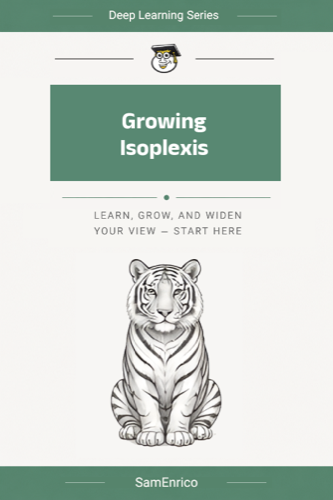
Non-FictionInformativeEducational
Growing Isoplexis
This publication, published by SamEnrico, covers G
This publication, published by SamEnrico, covers Growing Isoplexis
Formats
About this book
Free sample
Chapter 1: The Orchid Lie--–- You have been lied to by every nursery tag you have ever trusted. "Full sun," they said. "Easy to grow," they promised. "Perennial," they assured you, as you handed over forty dollars for a plant that would be dead within six weeks. The tag did not mention the afternoon sun that would scorch its leaves.
It did not warn you about the winter frost that would turn its stems to black mush. It certainly did not explain why the plant needed soil that drains like a sieve but never fully dries out — a contradiction that seems designed to make you feel like a failure.The plant on that tag was almost certainly not an Isoplexis — because most gardeners have never even heard of Isoplexis. But the lie is the same lie that surrounds every "rare" and "unusual" plant sold to enthusiastic home gardeners: the belief that if you just water it and put it in the sun, it will thrive. This book exists because that belief is wrong. And because Isoplexis — the Canary Island foxglove, the torch flower, the plant that hummingbirds will fight over — deserves better than the generic advice that kills it in ninety percent of home gardens.This chapter is not a gentle introduction.
It is a rescue mission. By the time you finish these pages, you will understand exactly what Isoplexis is, why it has remained obscure despite its spectacular beauty, and — most importantly — whether you are ready to be one of the few gardeners who can keep it alive.The Plant That Has No Name Let us begin with the name, because the name is the first obstacle. Isoplexis (pronounced eye-so-PLEX-iss) sounds like something from a pharmaceutical commercial or a dinosaur genus. It is neither. The name comes from the Greek isos (equal) and plexis (plaiting or twisting), referring to the arrangement of the flower's lower lip.
This is the kind of botanical detail that matters to taxonomists and almost no one else.What matters to you is this: Isoplexis is the botanical equivalent of a secret handshake. When you tell…
This is the end of the free sample. Get the eBook to keep going. Buy now
Contents
- Chapter 1
- Chapter 2
- Chapter 3
- Chapter 4
- Chapter 5
- Chapter 6
- Chapter 7
- Chapter 8
- Chapter 9
- Chapter 10
- Chapter 11
- Chapter 12
Details
- Author
- Haynes Sabrina
- Publisher
- SamEnrico
- Language
- English
- Genre
- Non-Fiction, Informative, Educational
- Released
- 2026-06-02
- Pages (approx.)
- 154
- Available as
- eBook, Audiobook

Read better in the ZLOADR app
Your eBooks on your phone or tablet. Sign in with your SamEnrico account and start reading.
More by Haynes Sabrina
 Migraine and Hormones GuideHaynes Sabrina$11.99
 Bhramari Humming Bee BreathHaynes Sabrina$11.99
 Gratitude for Recovery MilestonesHaynes Sabrina$11.99
 Bipolar Gender DifferencesHaynes Sabrina$11.99
 CPR and COVID SafetyHaynes Sabrina$11.99
 LinkedIn Ghostwriter StoryHaynes Sabrina$11.99
 The Hitchhiker DolphinHaynes Sabrina$11.99
 Nap Alarm Clock SelectionHaynes Sabrina$11.99
 Family First LongevityHaynes Sabrina$11.99
 The Calculators of the Nile: Egypt's Forgotten Mathematical MastersHaynes Sabrina$11.99
 Gravity’s Gambit: The Untold Story of Apollo 12’s Lightning StrikeHaynes Sabrina$11.99
 The Amber Trade: Holland’s Golden BrewHaynes Sabrina$11.99
You may also like
 Hong Kong Handover 1997Dunn Johnnie$11.99
 Zumba For Postnatal Recovery CourseNeal Christian$11.99
 Zumba for BeginnersLadner Nikia$11.99
 YouTube Comment Mining GuideHumes Pandora$12.99
 Worry Box MeditationCarlin Rudy$11.99
 Workplace Stress MeditationNguyen Lynn$11.99
 Workplace Stress and Sleep RepairHawley Ivory$11.99
 Workplace Perfectionism CureDelaney Jeffry$11.99
 Workplace Injustice Anger GuideWallen Isabelle$11.99
 Work Addiction and Burnout LinkGreenwood Ester$11.99
 Women in Yoga and WellnessBeattie Galina$11.99
 Women in Stand Up ComedyChun Evangeline$11.99