

Non-FictionInformativeEducational
Growing Deinanthe eBook
This publication, published by SamEnrico, covers G
by Mowery Jessi
This publication, published by SamEnrico, covers Growing Deinanthe
Formats
Free sample
Chapter 1: The Veiled Gem--–- The first time I killed a Deinanthe, I didn't even know what I had done wrong. I had followed the instructions that came with the plant—shade, moisture, good soil—and yet within six weeks, the leaves had turned crispy brown at the edges, the stems had collapsed, and the small, expensive division I had purchased from a specialty nursery was clearly dead. I assumed the plant was simply too difficult for a home gardener. I assumed I lacked some secret skill that only professional growers possessed. I assumed, in other words, everything except the truth: that the instructions I had followed were wrong.That was fifteen years ago.
Since then, I have grown Deinanthe in three different gardens, in two different climate zones, in containers and in the ground, from division and from seed. I have watched it thrive in conditions that would kill most perennials. I have also watched it decline and die in conditions that most gardening books would describe as ideal. The difference between success and failure with Deinanthe is not about green thumbs or expensive equipment. It is about understanding a single, fundamental fact: Deinanthe is not like other shade perennials, and treating it like one is the fastest path to disappointment.This book exists because that fact has never been properly explained to home gardeners.
You can find Deinanthe for sale online. You can find brief care instructions on nursery websites. You can find enthusiastic posts from collectors who have grown it successfully. But nowhere—not in a single book, not in a comprehensive online guide, not in the archives of the major horticultural societies—will you find a complete, step-by-step explanation of how to grow this remarkable plant from planting to maturity.I wrote Growing Deinanthe to fill that gap. This first chapter will introduce you to the plant, its history, its quirks, and its needs.
By the time you finish reading, you will understand why Deinanthe has remained a hidden gem for so long—and why it is finally time to bring it into the light.The Plant That Almost Disappeared Let me tell you a story that illustrates everything you need to know about Deinanthe's place in the gardening world.In the early 1990s, a well-known nursery in England decided to stop offering Deinanthe in its catalog. The owner had grown it for years, had propagated it successfully, and genuinely loved the plant. But he was tired of the complaints. Customers would buy Deinanthe, plant it in their gardens, watch it struggle, and then write angry letters demanding refunds. "Your plant is defective," they would say.
"It doesn't bloom. It turns brown. It dies for no reason."The nursery owner knew the problem was not the plant. The problem was that his customers were treating Deinanthe like a hydrangea—planting it in too much sun, watering it too heavily, fertilizing it too aggressively. But he could not say that in a way that made a difference.
The care instructions he provided were accurate, but customers either ignored them or misinterpreted them. After a decade of frustration, he gave up. Deinanthe disappeared from his catalog, and he never offered it again.This story repeats itself wherever Deinanthe is sold. Gardeners buy it because the flowers are stunning in photographs. They plant it without understanding its specific needs.
They watch it fail. They conclude that Deinanthe is "finicky" or "difficult" or "not worth the trouble." And the plant retreats further into the margins, known only to the dedicated few who have figured out the secret.The secret, as you will learn in the chapters ahead, is neither complicated nor mysterious. Deinanthe needs four things: consistent moisture, excellent drainage, protection from afternoon sun, and patience during establishment. Give it those four things, and it will reward you with a decade or more of reliable summer blooms. Deny it any of those four things, and it will fail.That is the entire formula.
The rest of this book is just the details.Botanical Identity: Who Is Deinanthe, Really?Before we discuss how to grow Deinanthe, we need to understand what it is. The botanical details matter here because they explain why the plant behaves the way it does.Deinanthe is a genus of herbaceous perennials in the family Hydrangeaceae. Yes, that is the same family that includes the familiar hydrangeas of suburban foundation plantings. The family connection is real, but it is distant. Think of it this way: humans and chimpanzees share a family (Hominidae), but no one would treat a chimpanzee like a human child.
Similarly, Deinanthe and Hydrangea share a botanical family, but their cultivation requirements are significantly different.The genus name comes from the Greek words deinos (strange, wondrous, or terrible—the meaning is ambiguous in ancient sources) and anthos (flower). Adrien René Franchet, the French botanist who first described the genus in 1887, seems to have intended "wondrous flower" as the meaning. After you have seen Deinanthe in full bloom on a summer morning, you will agree that the name is apt.Within the genus, there are two recognized species, and understanding the difference between them is important for any serious collector.Deinanthe caerulea: The Blue Wonder Deinanthe caerulea is the species you are most likely to encounter in commerce. It was first collected in Japan in the 1860s, though it took another two decades for it to be formally described and introduced to Western gardens. The species name caerulea means "blue" in Latin, and it refers to the remarkable color of the flowers—a waxy, translucent blue that shifts toward lavender as the blooms age.In terms of size, D.
caerulea typically reaches twelve to eighteen inches in both height and spread, though particularly happy specimens in ideal conditions may expand to twenty-four inches across over many years. The growth habit is clumping rather than spreading; Deinanthe does not run aggressively through the garden like some other woodland plants. This makes it well-behaved in mixed borders but also means you will need patience if you want to fill a large area.The leaves of D. caerulea are another distinguishing feature. They are opposite (arranged in pairs along the stem), deeply veined, and serrated along the edges.
In healthy plants, the foliage is a rich, deep green that provides an excellent backdrop for the flowers. The leaves persist through the growing season and into autumn, turning a soft yellow before the plant goes dormant for winter.The flowers deserve special attention because they are the primary reason anyone grows Deinanthe. Each flower is cup-shaped, about one to one and a half inches across, with waxy, overlapping sepals that give the bloom a sculptural quality. The flowers are held in small clusters atop sturdy stems that rise just above the foliage. The blooming period is mid to late summer—typically July and August in most climates, though the exact timing varies with latitude and weather.One of the most charming aspects of D.
caerulea is the way the flowers age. Freshly opened blooms are a pure, almost electric blue. Over the course of a week to ten days, the blue softens to a gentle lavender, then eventually to…
This is the end of the free sample. Get the eBook to keep going. Buy now
About this book
Details
- Author
- Mowery Jessi
- Publisher
- SamEnrico
- Language
- English
- Genre
- Non-Fiction, Informative, Educational
- Released
- 2026-06-03
- Pages (approx.)
- 144
- Available as
- eBook, Audiobook

Read better in the ZLOADR app
Your eBooks on your phone or tablet. Sign in with your SamEnrico account and start reading.
More by Mowery Jessi
 Outpatient Intensive Program GuideMowery Jessi$11.99
 Death Thanatophobia PeaceMowery Jessi$11.99
 The Legacy Building WorkbookMowery Jessi$11.99
 The Flying Fear MeditationMowery Jessi$11.99
 Gambling and EgoMowery Jessi$11.99
 The Delivery Driver CaptiveMowery Jessi$11.99
 Part Time Job Study BalanceMowery Jessi$11.99
 Bankruptcy And Unpaid WagesMowery Jessi$11.99
 The Calculus of the Cosmos: The Hidden Genius of Ancient African MathematiciansMowery Jessi$11.99
 Voyager Digital: Frozen AccountsMowery Jessi$11.99
 Baba Yaga's Forbidden Wisdom: The Witch Who Stole TimeMowery Jessi$11.99
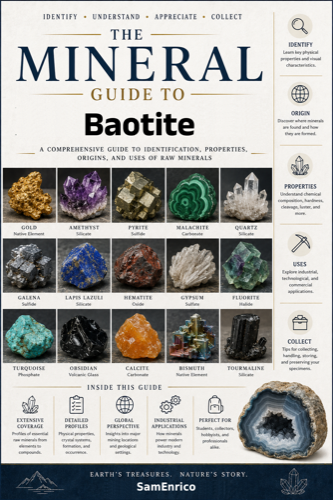 The Mineral Guide to BaotiteMowery Jessi$11.99
You may also like
 Hong Kong Handover 1997Dunn Johnnie$11.99
 Zumba For Postnatal Recovery CourseNeal Christian$11.99
 Zumba for BeginnersLadner Nikia$11.99
 YouTube Comment Mining GuideHumes Pandora$12.99
 Worry Box MeditationCarlin Rudy$11.99
 Workplace Stress MeditationNguyen Lynn$11.99
 Workplace Stress and Sleep RepairHawley Ivory$11.99
 Workplace Perfectionism CureDelaney Jeffry$11.99
 Workplace Injustice Anger GuideWallen Isabelle$11.99
 Work Addiction and Burnout LinkGreenwood Ester$11.99
 Women in Yoga and WellnessBeattie Galina$11.99
 Women in Stand Up ComedyChun Evangeline$11.99