
Non-FictionInformativeEducational
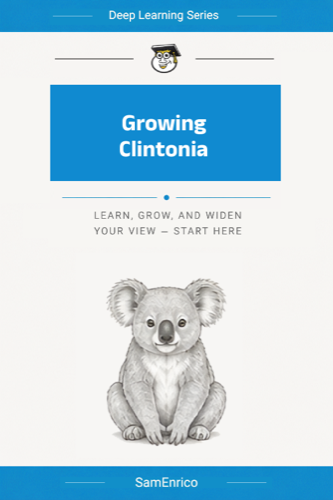
Growing Clintonia
This publication, published by SamEnrico, covers G
This publication, published by SamEnrico, covers Growing Clintonia
Formats
About this book
Free sample
Chapter 1: Beyond the Blue Bead...-- Every spring, somewhere in the shade of an eastern hardwood forest, a gardener makes the same mistake. They walk past the hosta display at the big box store, grab a six-pack of 'Guacamole' or 'June Spirit,' and head home convinced they have solved their shade problem forever. And for a few years, it works. The hostas unfurl their corrugated leaves, the slugs arrive like clockwork, and the gardener dutifully applies beer traps or iron phosphate pellets. But then something shifts.
The edge of the hosta bed begins to thin. The leaves come up smaller each May. A corner that gets just a little too much shade—the kind of shade where moss outcompetes grass—turns into a bare circle of dirt. The gardener shrugs, blames the voles, and buys another six-pack.This book exists because that bare circle of dirt is not a failure. It is an invitation.The plant that wants to live there—the one that has been waiting patiently in the soil seed bank, the one that evolved specifically for the darkest, dampest, most neglected corners of your property—is called Clintonia.
You have almost certainly never heard of it. You have definitely never seen it for sale in a big box store. And that is precisely why it is the most valuable shade plant you will ever grow.This is not an anti-hosta manifesto. Hostas have their place. They are reliable, forgiving, and come in more shades of green and blue-green than any sane person should own.
But hostas are Asian plants that evolved on the forest floors of Japan, Korea, and China. They did not evolve alongside the birds, bees, and soil microbes of North America. A hosta offers almost nothing to a native bumblebee. Its flowers are pretty but often sterile. Its leaves are ignored by native caterpillars.
And in the deepest, dampest, vole-ridden shade where hostas turn yellow and vanish year after year? That is not hosta country. That is Clintonia country.The genus Clintonia contains three species of horticultural significance in North America, and each one…
This is the end of the free sample. Get the eBook to keep going. Buy now
Contents
- Chapter 1
- Chapter 2
- Chapter 3
- Chapter 4
- Chapter 5
- Chapter 6
- Chapter 7
- Chapter 8
- Chapter 9
- Chapter 10
- Chapter 11
- Chapter 12
Details
- Author
- Peters Zachary
- Publisher
- SamEnrico
- Language
- English
- Genre
- Non-Fiction, Informative, Educational
- Released
- 2026-06-02
- Pages (approx.)
- 136
- Available as
- eBook, Audiobook

Read better in the ZLOADR app
Your eBooks on your phone or tablet. Sign in with your SamEnrico account and start reading.
More by Peters Zachary
 Self Hypnosis For Rodeo SportsPeters Zachary$11.99
 Compulsive Spending in RecoveryPeters Zachary$11.99
 The Small Business Money StressPeters Zachary$11.99
 Parent Caregiver JournalPeters Zachary$11.99
 Freudian Dream AssessmentPeters Zachary$11.99
 The Networking Audit GuidePeters Zachary$11.99
 Mindfulness Meditation Daily StarterPeters Zachary$11.99
 Anapanasati for LonelinessPeters Zachary$11.99
 Separation Anxiety MeditationPeters Zachary$11.99
 The Phantom Charge of Balaclava: The Ghostly Cavalry That Never ReturnedPeters Zachary$11.99
 The Queen of Versailles: A Palace of LiesPeters Zachary$11.99
 Monte Cassino: The Mountain of Blood and FaithPeters Zachary$11.99
You may also like
 Hong Kong Handover 1997Dunn Johnnie$11.99
 Zumba For Postnatal Recovery CourseNeal Christian$11.99
 Zumba for BeginnersLadner Nikia$11.99
 YouTube Comment Mining GuideHumes Pandora$12.99
 Worry Box MeditationCarlin Rudy$11.99
 Workplace Stress MeditationNguyen Lynn$11.99
 Workplace Stress and Sleep RepairHawley Ivory$11.99
 Workplace Perfectionism CureDelaney Jeffry$11.99
 Workplace Injustice Anger GuideWallen Isabelle$11.99
 Work Addiction and Burnout LinkGreenwood Ester$11.99
 Women in Yoga and WellnessBeattie Galina$11.99
 Women in Stand Up ComedyChun Evangeline$11.99