
Non-FictionInformativeEducational
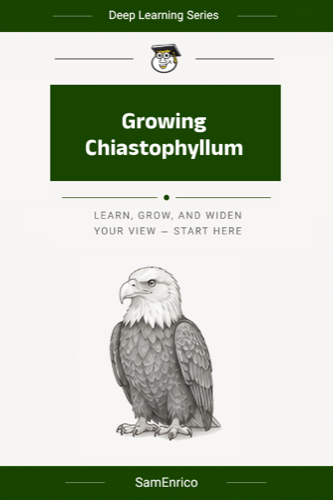
Growing Chiastophyllum
This publication, published by SamEnrico, covers G
by Hurtado Kyle
This publication, published by SamEnrico, covers Growing Chiastophyllum
Formats
About this book
Free sample
Chapter 1: The Caucasus Secret--–- The first time I saw a Chiastophyllum in its native habitat, I nearly walked past it. That is the plant's first and most enduring lesson: it does not demand attention. It does not scream for admiration with towering spikes or gaudy blooms. Instead, it waits—patient, unassuming, and utterly indifferent to the frantic pace of modern gardening. I had spent three days hiking through the mountain forests of northern Turkey, my eyes scanning for the dramatic, the showy, the obvious.
And there it was, tucked into a mossy crevice on a north-facing limestone cliff, its fleshy, golden-green leaves catching dappled light that filtered through a canopy of hornbeam and oriental spruce. The air was cool and damp. The rock beneath my fingers was wet with seepage. And the plant—this so-called "difficult" succulent—was thriving in conditions that would rot a cactus in hours and desiccate a fern in days.This is the paradox of Chiastophyllum, and it is the key to everything that follows. To grow this plant successfully, you must first unlearn what you think you know about succulents.
You must abandon the desert mindset—the gravel trays, the neglect, the fear of water—and embrace a different model entirely. Chiastophyllum is not a survivor of arid wastelands. It is a creature of cloud forests, of dripping cliffs, of the humid understory where the boundary between air and water blurs into perpetual mist. Understanding this single fact will save you more heartache than any watering schedule or soil recipe. The plant is not difficult.
It is simply misunderstood.The name Chiastophyllum comes from the Greek words "chiastos" (crosswise) and "phyllon" (leaf), a reference to the opposite leaf arrangement that distinguishes it from its relatives. But botanical etymology, while fascinating, will not keep your plant alive. What you need is a mental image: picture a mountainside in the western Caucasus, where the Black Sea's moisture-laden winds rise and condense into almost permanent cloud cover. Here, in the zone that botanists call the Colchic rainforest, Chiastophyllum has evolved for millions of years. The soil is shallow…
This is the end of the free sample. Get the eBook to keep going. Buy now
Contents
- Chapter 1
- Chapter 2
- Chapter 3
- Chapter 4
- Chapter 5
- Chapter 6
- Chapter 7
- Chapter 8
- Chapter 9
- Chapter 10
- Chapter 11
- Chapter 12
Details
- Author
- Hurtado Kyle
- Publisher
- SamEnrico
- Language
- English
- Genre
- Non-Fiction, Informative, Educational
- Released
- 2026-06-02
- Pages (approx.)
- 156
- Available as
- eBook, Audiobook

Read better in the ZLOADR app
Your eBooks on your phone or tablet. Sign in with your SamEnrico account and start reading.
More by Hurtado Kyle
 Press Release Format GuideHurtado Kyle$11.99
 The Evening Sobriety ReviewHurtado Kyle$11.99
 Sugar Addiction And Cancer Recovery GuideHurtado Kyle$11.99
 Sudden Departure Confidential Settlement GuideHurtado Kyle$11.99
 Phantom Limb Pain MeditationHurtado Kyle$11.99
 Merger Filing Fee ScheduleHurtado Kyle$11.99
 Heavy Blanket Pre TalkHurtado Kyle$11.99
 Spouse Death and HomeHurtado Kyle$11.99
 Circadian Rhythm Travel GuideHurtado Kyle$11.99
 Towers of the Forgotten Sun: The Lost Pyramids of the SkiesHurtado Kyle$11.99
 The Silk Road Naturalist: The Forgotten Botanist of the Persian CourtHurtado Kyle$11.99
 The Red Sea Tensions: A Diplomatic Powder KegHurtado Kyle$11.99
You may also like
 Hong Kong Handover 1997Dunn Johnnie$11.99
 Zumba For Postnatal Recovery CourseNeal Christian$11.99
 Zumba for BeginnersLadner Nikia$11.99
 YouTube Comment Mining GuideHumes Pandora$12.99
 Worry Box MeditationCarlin Rudy$11.99
 Workplace Stress MeditationNguyen Lynn$11.99
 Workplace Stress and Sleep RepairHawley Ivory$11.99
 Workplace Perfectionism CureDelaney Jeffry$11.99
 Workplace Injustice Anger GuideWallen Isabelle$11.99
 Work Addiction and Burnout LinkGreenwood Ester$11.99
 Women in Yoga and WellnessBeattie Galina$11.99
 Women in Stand Up ComedyChun Evangeline$11.99