
Non-FictionInformativeEducational
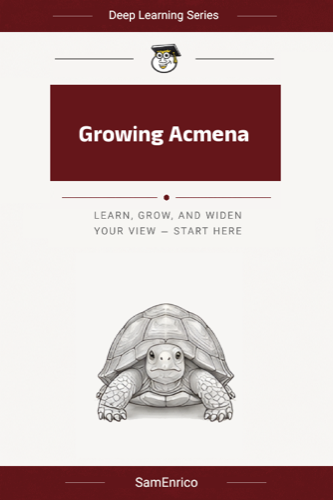
Growing Acmena eBook
This publication, published by SamEnrico, covers G
by Gray Marsha
This publication, published by SamEnrico, covers Growing Acmena
Formats
Free sample
Chapter 1: Beyond The Green Wall...--For most gardeners, the word “hedge” conjures images of monotonous green rectangles—functional, forgettable, and frankly, a little boring. It is the botanical equivalent of a beige wall: it defines a boundary, yes, but it inspires nothing. If you picked up this book, chances are you have lived with that beige wall. Perhaps you have stared at a row of weary, pest-ridden shrubs that refuse to grow straight. Perhaps you have envied a neighbor’s lush, colorful screen while wrestling with your own patchy, yellowing mess.
Or perhaps you are starting from scratch, dreaming of a living fence that does more than just sit there.Whatever brought you here, I want you to set aside everything you think you know about hedges. Forget the lumpy Photinias, the psyllid-plagued Syzygiums, the boxwoods that smell like cat urine after rain. We are going to talk about a plant that breaks every rule of the boring hedge. A plant that flushes pink, red, copper, and lime. A plant that feeds birds, bees, and you.
A plant with roots that respect your foundations and foliage that silences your neighbor’s leaf blower.That plant is Acmena smithii—better known by its common name, Lilly Pilly, though that name hardly does it justice.This chapter is not a botanical encyclopedia entry. It is an invitation. An invitation to see your garden’s edge not as a chore, but as a canvas. By the time you finish reading these pages, you will understand why Acmena is the most underrated landscaping asset in Australia, New Zealand, and beyond. You will see the “green wall” for what it can truly become: a living, breathing, productive, and stunningly beautiful feature that adds genuine value to your property and joy to your life.The Hedge That Changed Everything Let me tell you about a garden I visited ten years ago.
It belonged to an elderly retired horticulturalist named Margaret on the outskirts of Melbourne. Margaret had a problem. Her property sat on a busy corner, and for twenty years, she had battled to grow a privacy screen that actually worked. She tried Leyland cypress—too fast, too fat, too ugly. She tried Pittosporum—root rot killed half of them.
She tried Syzygium—psyllids turned the new growth into a bumpy, blistered mess that looked like a teenager’s skin after a bad week.Then, almost as an afterthought, she planted a row of Acmena ‘Red Head’ along her southern boundary. She did not expect much. She had given up on hedges.I visited in early spring. The hedge was six years old. It stood three meters tall, dense as a brick wall, and every single growing tip was exploding in fluorescent pink.
Not pale pink. Not subtle pink. Shocking, almost neon pink that looked like someone had dipped each branch in candy-colored paint. Against the deep green of the mature leaves, the effect was electric. Her neighbors, she told me, had started parking on the street just to walk past her fence.“I didn’t plant a hedge,” Margaret said, handing me a cup of tea.
“I planted a sculpture that grows.”That moment changed how I thought about plants. Acmena is not a utility. It is a performance. And unlike so many high-maintenance “ornamental” plants that demand constant coddling, Acmena delivers this performance while asking very little in return.But here is the catch, and I want to be honest with you from the start: Acmena is not magic. It will not thrive on total neglect.
It has preferences, quirks, and vulnerabilities—just like any living thing. The difference is that Acmena rewards attention generously. A little knowledge goes a very long way. And that knowledge is exactly what this book will give you.What Acmena Is (And What It Is Not)Before we go any further, let us clear up a major source of confusion that trips up even experienced gardeners. The name “Lilly Pilly” is used loosely—too loosely—to describe several different genera of plants in the Myrtaceae family.
The most common culprits are Acmena, Syzygium, and Waterhousea. From a distance, they look similar. Up close, their differences matter enormously.Acmena smithii (the subject of this book) is distinguished by:Leaf texture: Finer, denser, and more leathery than Syzygium. When you crush an Acmena leaf, it releases a mild, pleasant eucalyptus-like scent.New growth: Usually pink, red, copper, or lime-green, depending on the cultivar. The flushes are vibrant and consistent.Berry color: White to pale pink, sometimes with a faint purple blush.
(Yes, they are edible. More on that later.)Psyllid resistance: This is the big one. Acmena is not immune to psyllids—no plant truly is—but it experiences approximately 80% fewer infestations than Syzygium. For the home gardener, that is the difference between a hedge that thrives and a hedge you constantly fight.Syzygium (often sold as “Lilly Pilly” or “Brush Cherry”) is the troublemaker. It has:Larger, glossier leaves that look beautiful until they don’t.New growth that is typically bronze or pale green—less dramatic than Acmena.Purple to magenta berries that are also edible but often larger and messier.High psyllid susceptibility.
If you see a hedge covered in lumpy, pimple-like blisters, you are almost certainly looking at Syzygium. It is so common that many gardeners believe all Lilly Pillies are doomed to look terrible. They are wrong. They just bought the wrong plant.Waterhousea (Weeping Lilly Pilly) has its own charms—drooping branches, larger leaves—but it is less common in residential hedging and requires more space.Why This Distinction Matters for You If you have previously tried (and failed) to grow a Lilly Pilly hedge, I would bet money that you actually planted Syzygium. I have seen it happen hundreds of times.
A nursery labels a flat of seedlings as “Lilly Pilly Mix.” A gardener buys twenty of them, plants them with hope, and watches in despair as psyllids turn their dream hedge into a bumpy, yellowing embarrassment.That experience has given Acmena an undeserved bad reputation by association. Gardeners say, “I tried Lilly Pilly once. Never again.” But they never tried Acmena. They tried the wrong cousin.This book is your chance to start over with the right plant.The Aesthetic Case: Why Green is Boring Let us talk about color. Conventional hedges are green.
That is fine if you want your garden to look like a municipal office park. But if you crave something with personality, Acmena delivers in spades.The phenomenon is called a “flush.” When Acmena pushes out new growth—typically in spring, again in summer, and sometimes in autumn if conditions are right—the young leaves do not emerge green. They emerge in vivid, saturated colors that fade slowly over several weeks as the leaves harden off. Depending on your cultivar, you might see:Hot pink that looks like bubblegum or flamingos.Crimson red deep enough to compete with a Japanese maple.Copper and bronze that shifts in the sunlight like oxidized metal.Lime and chartreuse that glows against darker foliage.And here is the sneaky part: because different branches flush at slightly different times, a mature Acmena hedge often displays multiple colors at once. The effect…
This is the end of the free sample. Get the eBook to keep going. Buy now
About this book
Details
- Author
- Gray Marsha
- Publisher
- SamEnrico
- Language
- English
- Genre
- Non-Fiction, Informative, Educational
- Released
- 2026-05-08
- Pages (approx.)
- 134
- Available as
- eBook, Audiobook

Read better in the ZLOADR app
Your eBooks on your phone or tablet. Sign in with your SamEnrico account and start reading.
More by Gray Marsha
 The Distraction Proof Morning RoutineGray Marsha$11.99
 Mindfulness for ChoresGray Marsha$11.99
 Growth Hormone and Telomere LengthGray Marsha$11.99
 Child Loss Support Group GuideGray Marsha$11.99
 Self Talk for Anxiety ReductionGray Marsha$11.99
 Goal Setting for IntrovertsGray Marsha$11.99
 Shetland Bus Norwegian EscapeGray Marsha$11.99
 Recovery From Work BurnoutGray Marsha$11.99
 The Andersonville Massacre: The Forgotten Atrocity of the Civil WarGray Marsha$11.99
 How to Start a Hobby in BASE jumpingGray Marsha$11.99
 Undergraduate Scholarship for Africans GuideGray Marsha$12.99
 Iraq B2B Reconstruction SalesGray Marsha$12.99
You may also like
 Hong Kong Handover 1997Dunn Johnnie$11.99
 Zumba For Postnatal Recovery CourseNeal Christian$11.99
 Zumba for BeginnersLadner Nikia$11.99
 YouTube Comment Mining GuideHumes Pandora$12.99
 Worry Box MeditationCarlin Rudy$11.99
 Workplace Stress MeditationNguyen Lynn$11.99
 Workplace Stress and Sleep RepairHawley Ivory$11.99
 Workplace Perfectionism CureDelaney Jeffry$11.99
 Workplace Injustice Anger GuideWallen Isabelle$11.99
 Work Addiction and Burnout LinkGreenwood Ester$11.99
 Women in Yoga and WellnessBeattie Galina$11.99
 Women in Stand Up ComedyChun Evangeline$11.99