
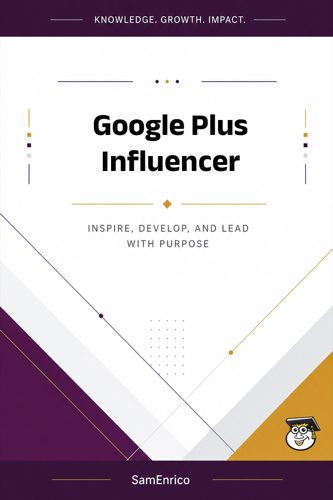
Google Plus Influencer eBook
undefined
undefined
Formats
Free sample
Chapter 1: Beyond The Like Button--–- The first time Bette Ann Fialkov ran influencer partnerships at Google+, she noticed something that would define her entire approach. The creators who generated the most business value were almost never the ones with the largest follower counts. Instead, the most effective influencers were often smaller, more focused, and deeply embedded in specific communities. A woman with 500 followers in a niche photography group drove more camera sales than a celebrity with 500,000 followers who posted about everything and nothing.This was not an accident. It was a feature of how Google's ecosystem works.
Unlike platforms that reward broadcast shouting, Google's algorithms reward authority, relevance, and trust. When you post authoritatively on Google's platforms, you are not just socializing. You are contributing to the Knowledge Graph. You are telling Google that you are an expert in something specific. And Google listens.This chapter dismantles the most common misconception in social media marketing: that influence is measured by follower counts.
It introduces the framework that will guide the entire book—a framework built on trust, authority, and measurable action rather than vanity metrics and performative popularity.The Follower Count Fallacy For the past decade, social media marketers have been obsessed with one number: follower count. The logic seemed sound. More followers meant more reach. More reach meant more sales. Brands paid premiums for influencers with millions of followers.
Agencies built strategies around "scaling audiences." The entire industry operated on the assumption that bigger was better.The assumption was wrong.Study after study has shown that engagement rates decline as follower counts increase. A mega-influencer with 10 million followers might see an engagement rate of 0.5 percent. A micro-influencer with 50,000 followers might see 3-5 percent. And a nano-influencer with 5,000 followers might see 8-10 percent. The relationship between follower count and engagement is inverse.
The larger the audience, the less each person cares.But the problem is worse than declining engagement. The problem is that follower count tells you nothing about whether an influencer can actually influence purchasing decisions. A person with 100,000 followers who posts about fashion, travel, food, politics, and their cat has built an audience around personality, not expertise. That audience follows for entertainment, not advice. When that influencer recommends a product, the audience may not trust the recommendation because the influencer is not known for that category.A person with 1,000 followers who posts exclusively about woodworking has built an audience around expertise.
Every person following them cares deeply about woodworking. When they recommend a chisel or a saw or a finishing technique, their audience pays attention. Trust has been established. Authority has been demonstrated. Influence is real.This is the follower count fallacy.
We have been measuring the wrong thing.The Creator-Influencer Distinction Before we go further, we need to establish a critical distinction that will be maintained throughout this book. The terms "creator" and "influencer" are often used interchangeably, but they describe different roles with different primary goals.Creators focus primarily on content production. They make beautiful, engaging, entertaining, or informative content. Their success is measured by views, likes, shares, and comments. They are artists, entertainers, and storytellers.
A creator can be incredibly successful without ever driving a purchasing decision.Influencers build trust that drives purchasing decisions. Their success is measured by actions: clicks, signups, purchases, downloads, leads. They are trusted advisors, category experts, and community leaders. An influencer can have a smaller audience than a creator but generate significantly more business value.These roles can overlap. Many successful people are both creators and influencers.
But the distinction is conceptually useful. When you understand which role you are playing—or which role a given piece of content is playing—you can measure success appropriately and choose the right strategies.This book is primarily for people who want to influence purchasing decisions. That includes entrepreneurs building their own businesses, marketers representing brands, and professionals seeking to establish thought leadership that leads to opportunities. If you simply want to make beautiful content and build an audience without caring about commercial outcomes, many of this book's strategies will still apply, but the emphasis on performance measurement may feel heavy.For the rest of us, the distinction matters because it tells us where to focus. Follower count is a creator metric.
Trust is an influencer metric. Engagement rate can serve both but means different things. A high engagement rate on a funny video means people enjoyed it. A high engagement rate on a tutorial means people learned something. The first is creator success.
The second is influencer success.Authority Gravity Google's ecosystem operates on a principle I call authority gravity. The more you demonstrate consistent expertise within a specific domain, the more Google's algorithms amplify your content across Search, You Tube, Maps, and other products.Authority gravity is not speculation. It is the direct result of Google's core mission: to organize the world's information and make it universally accessible and useful. Google wants to surface the most authoritative, relevant, trustworthy content for any given query. When you consistently post high-quality content about a specific topic, and when that content generates genuine engagement (comments, shares, +1s, backlinks), Google begins to associate your profile with expertise in that topic.The implications are profound.
A single well-crafted post on Google's platforms can continue driving traffic for months or years. Unlike the ephemeral content on other social networks, which disappears into algorithmic feeds within hours, content that demonstrates authority gravity accumulates value over time.Authority gravity also explains why smaller influencers can outperform larger ones. Authority is about density, not volume. A user with 1,000 followers who posts exclusively about a niche topic will have a higher authority gravity score for that topic than a user with 100,000 followers who posts about many topics. Google's algorithms can detect this.
They reward the niche expert.How do you build authority gravity? The answer has three parts:Consistency. Post regularly about your chosen topic. Not once a month. Not when inspiration strikes.
Weekly or more often. Google's algorithms need consistent signals to recognize your expertise.Depth. Go deeper than surface-level commentary. Write tutorials. Explain concepts.
Answer questions. The more value you provide per post, the stronger the authority signal.Engagement. Respond to comments. Answer questions. Participate in discussions.
Engagement is not just a metric; it is a signal to Google that your content is valuable enough that people are talking about it.The Psychology of Influence on Google Robert Cialdini's six principles of persuasion—authority, social proof, liking, reciprocity, scarcity, and commitment—are often cited in marketing books. What is less often discussed is how these principles operate differently on different platforms.On Instagram and Tik Tok, the primary driver of influence is often liking. Audiences follow people they find attractive, entertaining, or aspirational. The parasocial relationship drives engagement. Liking can lead to trust, but the path is indirect.On Google's platforms, the primary driver of influence is authority.
Audiences come to Google to learn, solve problems, and make decisions. They are in an intent-driven mindset. When they encounter content from someone who demonstrates deep expertise, they are primed to trust that person. The authority signal is direct and powerful.Social proof operates differently as well. On Instagram, social proof…
This is the end of the free sample. Get the eBook to keep going. Buy now
About this book
Details
- Author
- Anders Marybelle
- Publisher
- SamEnrico
- Language
- English
- Genre
- Non-Fiction, Biography / Google
- Released
- 2026-06-06
- Pages (approx.)
- 115
- Available as
- eBook, Audiobook

Read better in the ZLOADR app
Your eBooks on your phone or tablet. Sign in with your SamEnrico account and start reading.
More by Anders Marybelle
 Facilitating Creative Meetings GuideAnders Marybelle$11.99
 Nonviolent LeadershipAnders Marybelle$11.99
 Migraine and Exercise GuideAnders Marybelle$11.99
 The Stress Cancer Risk LinkAnders Marybelle$11.99
 Distraction Audit WorkbookAnders Marybelle$11.99
 The Cockroach InfestationAnders Marybelle$11.99
 Car Nap Safety GuideAnders Marybelle$11.99
 Blue Zone Family MealsAnders Marybelle$11.99
 The Lazarus Code: Cracking the DNA of the ImmortalAnders Marybelle$11.99
 The Silk and Gold Caravans: The Wealth of the Swahili CoastAnders Marybelle$11.99
 Power from the Deep: The Ocean’s Untapped Energy RevolutionAnders Marybelle$11.99
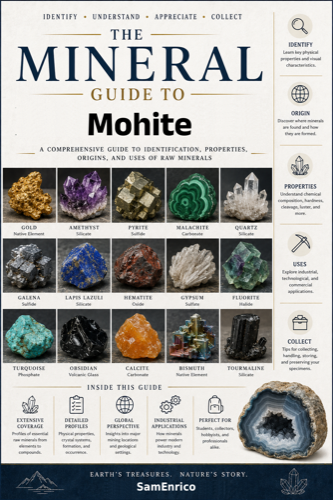 The Mineral Guide to MohiteAnders Marybelle$11.99
You may also like
 Hong Kong Handover 1997Dunn Johnnie$11.99
 Zumba For Postnatal Recovery CourseNeal Christian$11.99
 Zumba for BeginnersLadner Nikia$11.99
 YouTube Comment Mining GuideHumes Pandora$12.99
 Worry Box MeditationCarlin Rudy$11.99
 Workplace Stress MeditationNguyen Lynn$11.99
 Workplace Stress and Sleep RepairHawley Ivory$11.99
 Workplace Perfectionism CureDelaney Jeffry$11.99
 Workplace Injustice Anger GuideWallen Isabelle$11.99
 Work Addiction and Burnout LinkGreenwood Ester$11.99
 Women in Yoga and WellnessBeattie Galina$11.99
 Women in Stand Up ComedyChun Evangeline$11.99