
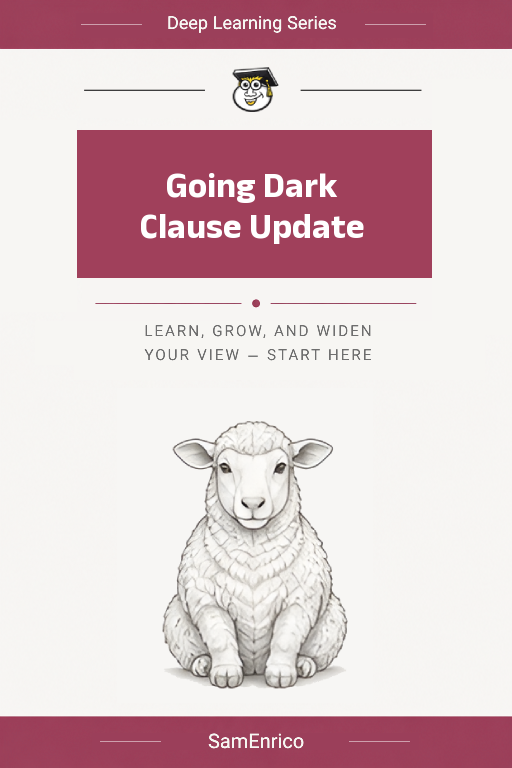
Non-FictionAnnual CheckupGoing DarkHours
Going Dark Clause Update eBook
Negotiate going dark clauses limiting landlord rig
Negotiate going dark clauses limiting landlord rights when tenants reduce hours or close locations post COVID.
Formats
Free sample
Chapter 1: The Covenant Trap--The lease was signed in 2018 with great fanfare. A regional grocery chain, Thompson’s Markets, had agreed to anchor a newly renovated strip center in suburban Cleveland. The term was fifteen years. The build-out cost $1.2 million. And buried on page forty-seven, in a paragraph that no one except the landlord’s attorney read carefully, was a Continuous Operation Covenant requiring the store to remain open seven days per week, at least twelve hours per day, every day of the year except Thanksgiving and Christmas.Three years later, in March 2021, Thompson’s was losing 40,000permonthatthatlocation.Foottraffichaddropped6240,000 per month at that location.
Foot traffic had dropped 62% compared to pre-COVID levels. The surrounding offices were half-empty because remote work had become permanent. The grocery chain’s CEO wanted to reduce hours to 8 AM to 6 PM daily—a modest reduction of only two hours per day—and close entirely on Sundays, when sales averaged less than 40,000permonthatthatlocation.Foottraffichaddropped62800 per day against staffing costs of $1,200.The landlord refused. “The lease requires continuous operation,” the property manager wrote in an email. “If you reduce hours or close on Sundays, you are in default.
We will accelerate the rent for the remaining twelve years and pursue eviction.”Thompson’s Markets filed for bankruptcy protection four months later. The shopping center lost its anchor. Three inline tenants invoked co-tenancy clauses and terminated their leases. The landlord’s CMBS loan went into special servicing. Two years after that, the center was sold at a foreclosure auction for forty cents on the dollar.All because of thirteen words buried on page forty-seven: “Tenant shall remain open for business during all hours required by Landlord’s reasonable discretion.”This chapter is about how that happened, why it is happening everywhere, and what you are going to do about it.The Hidden History of a Dangerous Clause The Continuous Operation Covenant did not emerge from some grand legal theory or judicial trend.
It emerged from shopping center economics in the 1980s, when the American retail landscape transformed from freestanding stores into interdependent ecosystems.Before 1980, most retailers operated standalone locations. A department store on Main Street did not care if the store next door closed at 5 PM or 9 PM. Each store generated its own foot traffic, and the success of one did not depend on the success of another.Then came the regional mall and the power center.Developers realized that they could charge higher rents if they assembled complementary tenants. A grocery store drew daily foot traffic. A coffee shop benefited from that traffic.
A dry cleaner benefited from both. The whole became greater than the sum of its parts—but only if all parts remained operational.The Continuous Operation Covenant was the legal glue that held this model together. It said, in effect: You cannot free-ride on the foot traffic generated by your neighbors. If you are in this center, you will remain open, fully staffed, and operating during all posted hours. You will not close early on slow nights.
You will not shut down on holidays. You will not reduce your staff to a skeleton crew that makes the store look abandoned.For landlords, the covenant protected three things: rental income (open stores generate sales, which generate percentage rent), aesthetics (dark windows signal danger, decline, and crime), and co-tenancy (if one store closes, others may have the right to reduce rent or terminate).For tenants, the covenant was simply the cost of doing business in prime locations. They accepted it because foot traffic was predictable, staffing was abundant, and the economy was growing. A store that lost money on Tuesdays in January could still be profitable overall because the covenant forced it to remain open.Then COVID-19 changed everything.Why the Covenant Never Anticipated a Pandemic Let me be precise about what the Continuous Operation Covenant assumes.First, it assumes that the tenant can operate profitably at the required hours. Not that the tenant will be profitable every hour of every day—no one expects that—but that the overall economics of the location support the required schedule.
If a store loses money on Monday mornings but makes it up on Saturday afternoons, the covenant is workable.Second, it assumes that the tenant has access to sufficient staff. A store cannot remain open twelve hours per day if there are no employees to work the shifts. The covenant does not care about labor markets; it simply demands performance.Third, it assumes that the tenant’s customers have the ability and desire to visit the store during the required hours. If government mandates restrict occupancy to 25%, or if customers are afraid to enter indoor spaces, the covenant does not adjust. It simply demands that the doors remain open.Fourth, it assumes that the landlord’s interest in continuous operation outweighs the tenant’s interest in avoiding losses.
The covenant is not balanced; it is a one-way obligation running from tenant to landlord.COVID-19 shattered all four assumptions simultaneously.In March and April 2020, government orders forced non-essential retailers to close entirely. Gyms, restaurants (dine-in), movie theaters, and many other tenant types simply could not operate. The covenant became impossible to perform, and tenants invoked force majeure clauses—or begged for forgiveness—to avoid default.But the deeper problem emerged after the shutdowns ended. Foot traffic did not return to pre-COVID levels. Remote work meant that downtown locations lost their lunch crowds.
Suburban strip centers lost the office workers who had stopped for coffee and dry cleaning on the way home. Staffing shortages made it impossible to maintain full schedules, even for tenants who wanted to remain open.The covenant that had been a minor inconvenience in 2019 became a death sentence in 2021.The Pre-COVID Case Law: Tenants Almost Always Lost To understand why the Continuous Operation Covenant is so dangerous, you have to understand how courts enforced it before the pandemic. The case law is overwhelmingly landlord-friendly.Consider Shopco v. Alliance, a 2008 decision from the North Carolina Court of Appeals. A department store anchor in a shopping center reduced its hours from the required 12 hours per day to 8 hours per day on weekdays and closed entirely on Sundays.
The store was losing money, and the reduction was an attempt to cut losses. The landlord sued for breach of the continuous operation covenant.The court held for the landlord. The covenant was unambiguous, the judge wrote, and the tenant had no right to reduce hours simply because operations were unprofitable. The lease did not contain a “profitability exception,” and the court would not read one into the contract. The tenant was ordered to resume full hours or face eviction and damages.Consider Simon Property Group v.
Taubman, a 2015 dispute involving a luxury mall anchor. The tenant closed its store for six months to renovate. The lease required continuous operation except for “temporary closures for repairs or renovations.” The landlord argued that six months was not “temporary.” The court agreed, holding that “temporary” meant days or weeks, not months, and awarded the landlord $2.3 million in lost percentage rent.Consider Kimco v. Walgreens, a 2017 case from Florida. Walgreens reduced pharmacy hours from 12 hours per day to 8 hours per day due to staffing shortages.
The landlord sued. The court held that staffing shortages were the tenant’s problem, not an excuse. “The covenant does not…
This is the end of the free sample. Get the eBook to keep going. Buy now
About this book
Details
- Author
- Dominguez Mammie
- Publisher
- SamEnrico
- Language
- English
- Genre
- Non-Fiction, Annual Checkup, Going Dark, Hours
- Released
- 2026-05-29
- Pages (approx.)
- 151
- Available as
- eBook, Audiobook

Read better in the ZLOADR app
Your eBooks on your phone or tablet. Sign in with your SamEnrico account and start reading.
More by Dominguez Mammie
 Imposter Syndrome in Creative FieldsDominguez Mammie$11.99
 TM ADHD Focus AidDominguez Mammie$11.99
 Async Meeting Notes Culture GuideDominguez Mammie$11.99
 Opioid Tapering from Chronic UseDominguez Mammie$11.99
 EQ for Social JusticeDominguez Mammie$11.99
 The Poisoned Peaks: The Medieval Alpinist Who Unlocked the Secrets of the AlpsDominguez Mammie$11.99
 Eudialyte MiningDominguez Mammie$11.99
 How to Start a Breadboards Made of Wood Business (Beginners Guide)Dominguez Mammie$11.99
 Flash Sale Zero Tool GuideDominguez Mammie$12.99
 Understanding Cranio OsteoarthropathyDominguez Mammie$17.99
You may also like
 Hong Kong Handover 1997Dunn Johnnie$11.99
 Zumba For Postnatal Recovery CourseNeal Christian$11.99
 Zumba for BeginnersLadner Nikia$11.99
 YouTube Comment Mining GuideHumes Pandora$12.99
 Worry Box MeditationCarlin Rudy$11.99
 Workplace Stress MeditationNguyen Lynn$11.99
 Workplace Stress and Sleep RepairHawley Ivory$11.99
 Workplace Perfectionism CureDelaney Jeffry$11.99
 Workplace Injustice Anger GuideWallen Isabelle$11.99
 Work Addiction and Burnout LinkGreenwood Ester$11.99
 Women in Yoga and WellnessBeattie Galina$11.99
 Women in Stand Up ComedyChun Evangeline$11.99