
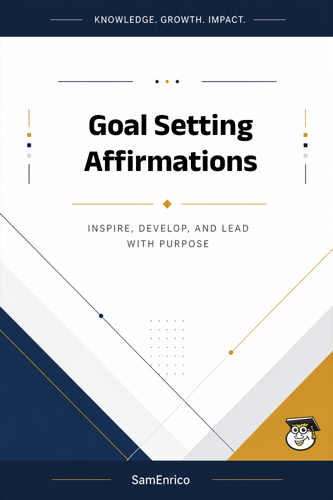
About this book
Free sample
Chapter 1: The Neurological Shortcut--–- Every morning, millions of people stand in front of mirrors and repeat phrases they desperately want to believe. "I am confident. I am successful. I am worthy." They say these words with conviction, sometimes for years, and yet nothing changes. The promotion doesn't come.
The weight doesn't drop. The business doesn't grow. And eventually, they conclude that affirmations are nonsense—new age fluff for people who prefer magical thinking over hard work.They are wrong. But they are not wrong about their experience.The failure is not in the practice of affirmations. The failure is in the misunderstanding of what affirmations actually do.
Most people treat affirmations as declarations of desired reality—as if speaking a sentence aloud could bend the universe to their will. That is not how this works. That has never been how this works. Affirmations do not change external circumstances through mystical force. They change internal neurology through a well-documented psychological mechanism called cognitive dissonance.This chapter will dismantle everything you thought you knew about affirmations and rebuild the practice from the ground up using neuroscience, not wishful thinking.
You will learn why your brain cannot tolerate inconsistency between what you say and what you do. You will discover the difference between passive wishing and active neurological programming. And you will be introduced to a three-tier framework that resolves the single greatest point of confusion in the entire field of goal-setting psychology: how to make affirmations believable enough to work, without making them so safe that they become useless.The Science of Mental Tension In 1957, a social psychologist named Leon Festinger published a book that would fundamentally change how we understand human behavior. He called his theory cognitive dissonance, and it described a simple but profound observation: human beings experience psychological discomfort when they hold two or more contradictory beliefs, ideas, or values at the same time. The brain, it turns out, hates inconsistency.
It finds tension uncomfortable. And it will go to remarkable lengths to resolve that tension, often without any conscious awareness that it is doing so.Here is what…
This is the end of the free sample. Get the eBook to keep going. Buy now
Contents
- Chapter 1
- Chapter 2
- Chapter 3
- Chapter 4
- Chapter 5
- Chapter 6
- Chapter 7
- Chapter 8
- Chapter 9
- Chapter 10
- Chapter 11
- Chapter 12
Details
- Author
- Aviles Pattie
- Publisher
- SamEnrico
- Language
- English
- Genre
- Non-Fiction, Self-Help / Affirmations
- Released
- 2026-06-09
- Pages (approx.)
- 142
- Available as
- eBook, Audiobook

Read better in the ZLOADR app
Your eBooks on your phone or tablet. Sign in with your SamEnrico account and start reading.
More by Aviles Pattie
 Initiating A Prenup TalkAviles Pattie$11.99
 Twelve Step for Incarcerated ParentsAviles Pattie$11.99
 Recording Arm CatalepsyAviles Pattie$11.99
 Chief Security Officer Jail TimeAviles Pattie$11.99
 Goal Environment Design GuideAviles Pattie$11.99
 Bill Hicks BioAviles Pattie$11.99
 Guilt After Suicide LossAviles Pattie$11.99
 The Siege of the Fort of Copacabana: Brazil's Forgotten Hostage CrisisAviles Pattie$11.99
 Sun Tzu and the Art of War: The General Who Shaped EternityAviles Pattie$11.99
 How to Start a Pin-tables Business (Beginners Guide)Aviles Pattie$11.99
 How to Produce Wrapping PaperAviles Pattie$11.99
 A Collector's Handbook to the Peugeot 201Aviles Pattie$11.99
You may also like
 Interruption AffirmationsBrunner Alysa$11.99
 Habit AffirmationsSanderson Belkis$11.99
 Spending Affirmations GuideBrandt Zelda$11.99
 Divorce Affirmations AudioMccarter Gianna$11.99
 Child Loss AffirmationsYu Tori$11.99
 Remote Work AffirmationsSegura Lina$11.99
 Pain AffirmationsHoff Connie$11.99
 Anticipatory Grief AffirmationsKirby Catarina$11.99
 Job Loss AffirmationsHarden Ayesha$11.99
 Gratitude AffirmationsLenz Amira$11.99
 Financial Stress Audio AffirmationsYarbrough Flor$11.99
 Anger Affirmations for CouplesLockwood Lynwood$11.99