
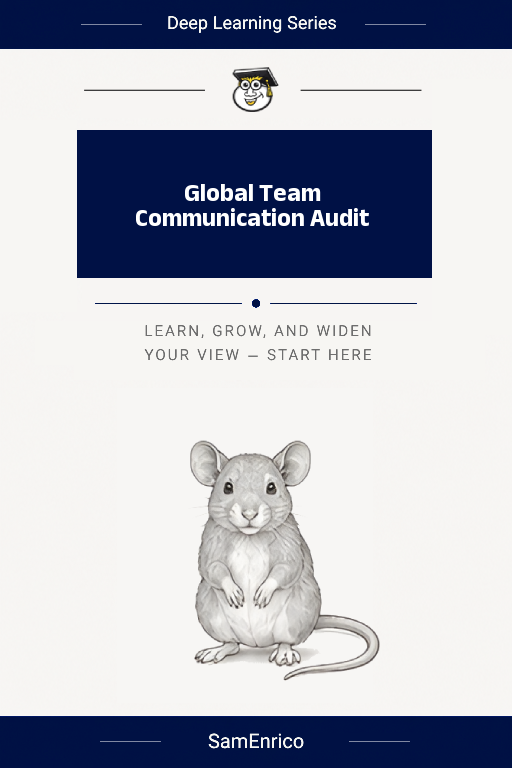
Non-FictionProfessional's Cheat SheetComms AuditAssessment
Global Team Communication Audit Audiobook
Assess current internal communication effectivenes
Assess current internal communication effectiveness across regions using surveys channel analytics and focus groups.
Formats
Free sample
Chapter 1: The Capability Gap--–- It was 3:47 PM in Singapore, 8:47 AM in London, and 2:47 AM in Chicago when the email landed. A regional director in Southeast Asia had spent six weeks preparing a market entry proposal, working through local holidays, navigating translation challenges, and incorporating feedback from three time zones. The proposal was sent to headquarters with a request for sign-off by Friday. The reply arrived Tuesday of the following week: "This looks good, but please resubmit using the standard North American template." The director stared at the screen. The submission deadline had passed.
The opportunity was gone.This story is not unusual. It is not a cautionary tale about an incompetent leader or a lazy employee. It is a story about a capability gap—a systematic failure of leaders and organizations to design communication systems that work across cultures, time zones, and regional realities. The director in Singapore was not failing. The headquarters leader was not malicious.
Both lacked the tools, frameworks, and methodologies to recognize that their communication problem was not technical (wrong template) but adaptive (different expectations about how decisions are made and communicated).This chapter introduces the central thesis of The Global Team Communication Audit: global teams do not fail because leaders are incompetent or indifferent. They fail because leaders lack structured methods to diagnose and remediate cultural communication mismatches. The problem is not bad leadership. The problem is blind leadership. And blindness is not a character flaw—it is a missing capability that this book will remedy.The Myth of the Incompetent Leader Walk into almost any global organization and ask why a cross-regional initiative failed.
The answers follow a predictable pattern: "The regional office didn't understand the urgency." "Headquarters is out of touch with local realities." "No one listens to us." "They don't speak our language—literally and figuratively." Behind each of these complaints is an unspoken assumption: someone else dropped the ball.This assumption is deeply comforting. If failure is someone else's incompetence, then success is simply a matter of replacing that person or sending a strongly worded email. But this assumption is also wrong. The research on global team failure consistently points away from individual incompetence and toward systemic and cultural gaps. A landmark study by the Project Management Institute found that poorly defined or mismatched communication expectations were the primary contributor to project failure in 56 percent of global initiatives—more than budget overruns…
This is the end of the free sample. Get the Audiobook to keep going. Buy now
About this book
Details
- Author
- Ransom Sallie
- Publisher
- SamEnrico
- Language
- English
- Genre
- Non-Fiction, Professional's Cheat Sheet, Comms Audit, Assessment
- Released
- 2026-06-01
- Pages (approx.)
- 151
- Available as
- eBook, Audiobook

Listen in the VoxFlicks app
Audiobooks and audio dramas wherever you go. Sign in with your SamEnrico account and press play.
More by Ransom Sallie
 Cannabis Sleep MemoryRansom Sallie$11.99
 Navigating Passive AggressionRansom Sallie$11.99
 Retirement Downsizing Financial GuideRansom Sallie$11.99Retirement Downsizing Financial GuideRansom Sallie$11.99
 Etsy Digital Planner Shop Audit CourseRansom Sallie$11.99
 Cholera Vaccine Watery DeathRansom Sallie$11.99
 Whispers of the Lost Library: The Secret Scrolls of AlexandriaRansom Sallie$11.99
 The Silent Architect: How One Chief of Staff Shaped the Cold WarRansom Sallie$11.99
 How to Become a ButlerRansom Sallie$11.99
 Quarterly Board Meeting GuideRansom Sallie$12.99
 Understanding Chlamydia PneumoniaeRansom Sallie$17.99
 Kitchen CookRansom Sallie$11.99
You may also like
 Hong Kong Handover 1997Dunn Johnnie$11.99
 Zumba For Postnatal Recovery CourseNeal Christian$11.99
 Zumba for BeginnersLadner Nikia$11.99
 YouTube Comment Mining GuideHumes Pandora$12.99
 Worry Box MeditationCarlin Rudy$11.99
 Workplace Stress MeditationNguyen Lynn$11.99
 Workplace Stress and Sleep RepairHawley Ivory$11.99
 Workplace Perfectionism CureDelaney Jeffry$11.99
 Workplace Injustice Anger GuideWallen Isabelle$11.99
 Work Addiction and Burnout LinkGreenwood Ester$11.99
 Women in Yoga and WellnessBeattie Galina$11.99
 Women in Stand Up ComedyChun Evangeline$11.99